

Table of Contents

Win more bids. Close more jobs. Start with our newsletter.
Get exclusive insights, tips, and trends your competition doesn't want you to know.

Key takeaways
- A double pitch roof has two planes sloping in opposite directions from a central ridge, with the gable roof as its most common form and gambrel, mansard, and saltbox as related but distinct shapes.
- Pitch selection is a code, material, and labor cost decision that determines what coverings can legally be installed and how the underlayment, flashing, and ventilation must be detailed.
- According to IBHS, roof-related damage drives 70 to 90% of insured residential catastrophic losses in most years, which makes deck, underlayment, and edge details more critical than the surface material.
- Valleys, gable ends, and penetrations are where double-pitch roofs fail first. Detailing those zones correctly saves more long-term cost than upgrading the shingle line.
- JobNimbus gives roofing contractors one platform to manage double-pitch jobs, from pitch measurements to proposals to crew scheduling. See the roofing CRM platform built for the job.
Most pitched roofs in North America are double pitch roofs, even when nobody calls them that. The simple gable on the average suburban house, the steeper rear plane of a saltbox, and the asymmetrical wings of a modern farmhouse all share the same underlying geometry: two roof planes sloping in opposite directions from a common ridge.
That geometry decides almost everything that follows on the job site, from framing inspection to drainage detailing to which roofing materials can legally cover the surface. This guide walks roofing contractors through how to identify a double pitch roof and its variants, when the shape performs best, how to talk pitch with customers, and where the leak-prone details live.
What is a double pitch roof?
A double pitch roof is any roof formed by two planes sloping in opposite directions from a central ridge. The ridge can run lengthwise or end-to-end, and the two slopes can be equal (symmetrical) or unequal (asymmetrical). Everything else is variation on that theme.

Two roof planes, one apex, many names
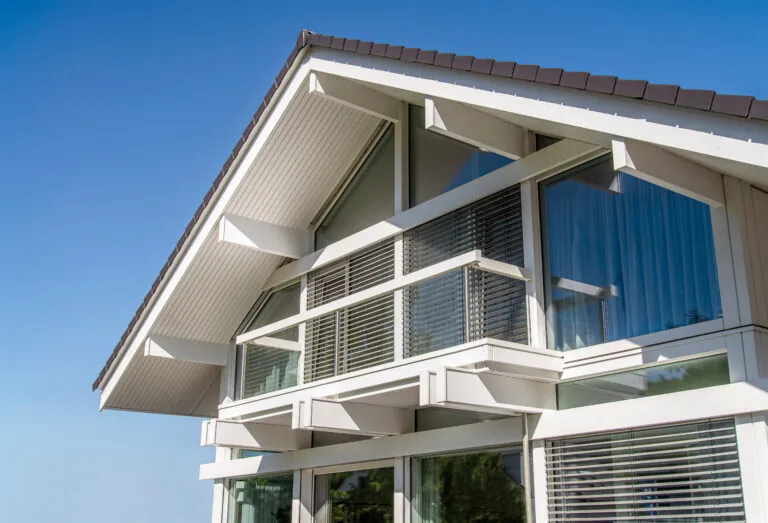
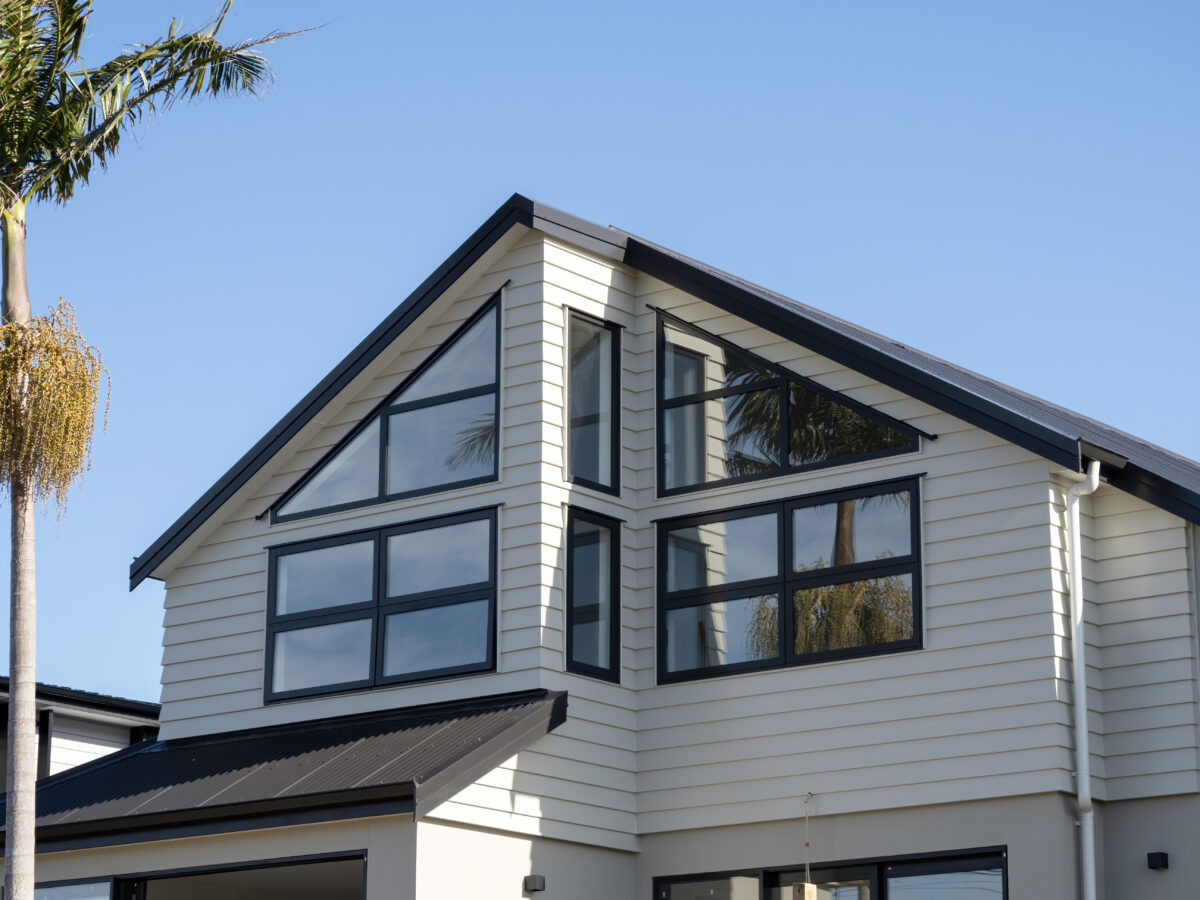
The simplest form is the symmetrical gable: equal pitch on both sides, triangular gable walls at each end. It is the most-built residential roof shape in the United States because it sheds water cleanly, frames easily, and accepts almost any roofing material above the minimum slope.
The asymmetrical gable uses different pitches on each side, often to gain ceiling height on one wing or to lower the eave on a sun-facing wall. Modern and farmhouse-style homes use this variant deliberately.
A saltbox is technically an asymmetrical gable where the rear roof extends much further down to cover a single-story addition behind the main house. The geometry is double-pitch even though the silhouette is distinctive.
Double-pitched vs gable, gambrel, and other look-alikes
Several roof shapes get confused with double-pitch roofs because they share the two-plane visual:
- Gambrel roofs (the classic barn shape) have two slopes per side, four planes total. Not a double-pitch roof.
- Mansard roofs use four steep lower slopes and four shallow upper slopes for nearly flat tops. Not a double-pitch roof.
- Hip roofs slope on all four sides toward the walls, with no gable ends. Not a double-pitch roof.
- Shed (or skillion) roofs have a single plane sloping in one direction. Half a double-pitch.
When a customer says "pitched roof," they usually mean any sloped roof in general. When they say "gable roof," they almost always mean the symmetrical double-pitch shape. The terms overlap, but the framing, drainage, and detailing requirements are not interchangeable. For a broader catalog of how these shapes compare, see the JobNimbus rundown of different roof types.
When double pitch roofs perform best by climate and exposure
The double-pitch geometry is climate-flexible, but it does not perform equally everywhere. Three exposure categories dictate where the shape needs reinforcement on the bid.
Rain and drainage performance
Steeper double pitches shed water faster, which reduces capillary action, granule wear, and saturation of underlayment seams. A 6:12 or 8:12 gable in a rainy region will outlast a 3:12 version of the same materials. Eaves, rakes, valleys, and penetrations remain the focal points where rain finds its way in regardless of slope.
Snow, ice dams, and drifting
Slope behaves differently in snow climates. Steeper roofs shed snow faster but create site safety issues at entries and walkways. Shallower roofs hold snow longer and reduce shedding hazards but raise ice dam risk at warm eaves.
The ice dam pattern starts when warm attic air melts snow on the roof field and the meltwater refreezes at the cold eave. Better attic air sealing and balanced ventilation prevent the cycle; ice-and-water shield at eaves manages the consequences if it still occurs.
Wind performance and gable-end vulnerability
Hip roofs outperform gables in high wind because hipped corners deflect uplift. Gable ends present a flat wall to the wind and a roof edge that can fail catastrophically without proper bracing and connections. The roof-to-wall load path (sheathing fastened to rafters, rafters anchored to top plates, plates strapped to walls) is where high-wind double-pitch roofs are won or lost. FEMA's Coastal Construction guidance and IBHS FORTIFIED specifications focus heavily on these connections.

Choosing the right roof pitch for a double-pitched roof
Pitch is a code constraint, a material constraint, and a labor cost driver in one decision.
Pitch selection tied to roofing material limits
Each roofing material has a minimum legal slope under the International Residential Code (IRC) Chapter 9:
Going below a material's minimum voids manufacturer warranties, fails inspection, and invites chronic leaks. The JobNimbus guide to calculate roof pitch walks through how to measure pitch in the field for accurate estimating.
Pitch tied to architecture, access, and labor cost
Steeper pitches mean more attic volume on the job (which matters for ventilation strategy and conditioned-attic spray foam scope) and more visual presence from the street. Anything above roughly 8:12 forces fall protection setup that slows production and shows up in your labor cost per square. Plan harness anchors, roof jacks, and tie-off points before the bid is signed, not after the crew is on the roof. Snow shedding zones below eaves need to be flagged in the customer conversation so they understand why the satellite dish, deck furniture, or AC condenser may need to move. Dormers, skylights, and complex intersections add square footage to the bid and architectural interest for the customer, but each one becomes a flashing detail that can leak years later if executed sloppily, which means each one is a future warranty call your crew owns.
Framing basics: rafters, trusses, and load paths
Two framing approaches dominate residential double-pitch construction, and crews encounter both regularly on tear-offs and reroofs. Knowing which one is overhead changes how you scope deck repairs.
Rafters versus trusses
Stick framing (rafters, ridge boards or beams, ceiling joists or rafter ties) gives full attic flexibility. On a tear-off, you can usually reach any deck zone from inside the attic to inspect for moisture damage, daylight at penetrations, or rotted sheathing. Older homes are almost always stick-framed.
Engineered roof trusses are pre-fabricated wood assemblies designed for the specific span, load, and pitch. Most homes built since the 1970s use trusses. Standard trusses fill the attic with web members, which limits movement during inspection and means deck repairs from above are usually the only option. Never cut or modify a truss without engineering review. A truss is engineered as a system, and notching one chord can compromise the whole assembly.
When bidding new construction or a major addition, the choice usually comes down to attic plan, ceiling complexity, and local labor market.
Ridge boards, ridge beams, and structural ties
A ridge board is a non-structural connector that aligns rafter tops. Rafter ties or ceiling joists at the bottom must resist outward thrust, or the walls will spread under load. If you encounter a stick-framed roof with a missing ceiling joist or a hacked-out rafter tie (often the result of a finished-attic remodel done by a previous owner), flag it on the inspection report. That is a structural issue that needs an engineer.
A ridge beam is a structural member that carries vertical load from the rafters to bearing points at each end. Ridge beams allow cathedral ceilings but require sized lumber or engineered glulam, plus end posts that transfer load to the foundation.
Skipping rafter ties on a ridge-board system to "open up" a ceiling is one of the most common DIY framing failures, and it shows up months later as wall cracking, drywall separation, and ridge sag, all of which the homeowner will blame on the roof if it leaks too.
Span, spacing, and loads
Local snow and wind loads determine rafter or truss size, on-center spacing, and connection requirements. The IRC and AWC publish span tables that assume specific lumber grades and load assumptions. In high-snow regions, mountain communities, or coastal high-wind zones, "standard" framing fails inspection. If framing is part of your scope, get an engineered design rather than relying on a generic span table.
Decking, underlayment, and ventilation
The deck and underlayment are the roof beneath the roof. When the surface material fails, they decide whether the building stays dry.
Sheathing and fastening
The APA (Engineered Wood Association) sets sheathing thickness and span ratings tied to rafter spacing. For most residential double-pitch roofs framed at 24 inches on center, 5/8-inch (or 15/32-inch in many regions) plywood or OSB is the standard. Edge spacing, blocking, and nailing patterns matter as much as panel thickness, especially in uplift zones near gable ends and corners. IBHS FORTIFIED specifications go further than code, requiring ring-shank nails in tighter patterns to nearly double the deck-to-rafter connection strength.
Underlayment strategy by slope and climate
Underlayment has shifted from a single layer of #15 felt to a tiered strategy based on slope and exposure:
- 4:12 and steeper, mild climate: single layer of synthetic or felt underlayment per IRC.
- 2:12 to 4:12, any climate: double underlayment application required by IRC R905.2.2 for asphalt shingles.
- Cold climates with average January temperature at or below 25°F: ice barrier (self-adhered membrane) at eaves, valleys, and penetrations.
- Hurricane and high-wind zones: sealed roof deck per IBHS FORTIFIED, using flashing tape over panel seams plus underlayment, or full self-adhered membrane.
The IBHS sealed roof deck approach reduces water intrusion by approximately 95% when the roof cover is damaged. That is a survivability advantage no shingle upgrade can match.
Ridge-and-soffit ventilation that works
Balanced intake at the soffits and exhaust at the ridge is the standard ventilation approach for double-pitch roofs. "Balanced" means roughly equal net free area at intake and exhaust, with intake equal to or slightly greater than exhaust. Mixing ridge vents with gable vents typically short-circuits airflow and is generally not recommended.
Insulation baffles at the eaves preserve airflow paths between insulation and roof deck. Without baffles, blown insulation blocks the soffit intake.
Unvented or conditioned attic assemblies make sense when HVAC equipment lives in the attic, when roof geometry is too complex for continuous ridge ventilation, or in wildfire ember zones where vented soffits are an ignition risk. These assemblies use closed-cell spray foam or rigid foam at the underside of the deck.
Flashing, valleys, and the leak-prevention zone
Most double-pitch roof failures happen at transitions: where two roof planes meet, where the roof meets a wall, where penetrations break the surface.
Material fit on a double pitch
Asphalt shingles dominate residential double-pitch roofs because the slope range matches the material range and crews are widely available. ASTM D3161 and ASTM D7158 wind classifications determine what wind speeds the product is rated for, with Class F (D3161) and Class H (D7158) at the top tier.
Metal panels work well on steeper double-pitch roofs and are the easiest substrate for solar mounting. Tile and slate require structural review for the dead load. Wood shakes and shingles are subject to local fire restrictions.
Valleys are the highest-risk line
A valley collects water from two converging planes, doubling or tripling the flow rate. Open valleys (exposed metal) handle high water volume and ice better but show more visually. Closed-cut valleys (shingles woven across) look cleaner but rely entirely on underlayment to manage water that gets under the lap. In snow climates, valleys are also drift collectors, and ice barrier under valleys is non-negotiable.
Step flashing and penetrations
Where a roof plane meets a wall (chimneys, dormer sides, intersecting wings), step flashing weaves between each shingle course and behind the wall cladding. Skipping a step or using a single piece of L-flashing instead is one of the most common installation errors, and it shows up as wall stains and rotted sheathing two to five years later.
Kick-out flashing at the bottom of a sidewall directs water away from the wall into the gutter. Without it, water runs behind the cladding. Plumbing vents, skylights, and exhaust penetrations need boots or curbs sized for the roof pitch and material. Layout planning that keeps penetrations out of high-flow water paths reduces leak risk dramatically.
Code, permits, and resilience programs
Code is the floor for double-pitch roof projects. Resilience programs go further.
Slope minimums and product approvals
IRC Chapter 9 sets the minimum slope and underlayment requirements summarized earlier. Local amendments often add ice barrier rules, wind speed thresholds, and fire classifications. Manufacturer instructions and Evaluation Reports (ICC-ES, Miami-Dade NOA, Florida Product Approval, Texas Department of Insurance) tie product compliance to the assembly that gets approved.
For tear-off and reroof projects, jurisdictions vary on whether overlay is allowed, whether deck attachment must be upgraded to current code, and whether secondary water barriers are required. The JobNimbus guide to price a roofing job covers how to scope these triggers into a compliant bid.
IBHS FORTIFIED as a sales angle
The IBHS FORTIFIED Roof program is the most widely recognized voluntary standard for resilient roofing. It requires:
- Ring-shank nails in enhanced patterns for deck attachment
- A sealed roof deck (taped seams or full self-adhered membrane)
- Wider drip edge and a fully adhered starter strip
- Wind-rated covers (ASTM D3161 Class F or ASTM D7158 Class H for asphalt shingles)
- Optional hail supplement for impact-resistant covers (UL 2218 Class 4)
For contractors in storm-prone regions, FORTIFIED designation is a real differentiator at bid time. Customers in Gulf Coast and Southeast hail markets often qualify for wind premium discounts when they install a FORTIFIED-designated roof, which gives you a payback story the customer can take to their agent. Becoming an IBHS FORTIFIED-trained contractor opens up a higher-margin segment of the reroof market.
Cost drivers and lifecycle planning
Two double-pitch roofs with the same square footage can land 30 to 50% apart in price based on factors that have nothing to do with the surface material. Knowing where those factors hide writes tighter bids and protects more margin.
What drives cost on a double-pitch roof project
Five variables move the bid most:
- Pitch steepness and height. Anything above 8:12 raises labor cost because crews need fall protection and slow down. Two-story and three-story buildings add staging.
- Number of valleys, dormers, and penetrations. Each one adds flashing labor, material waste, and risk.
- Tear-off and deck condition. Hidden rotted sheathing, multiple existing layers, and old skip-sheathing all expand scope mid-project.
- Material choice and crew familiarity. A standing seam install requires different skills than asphalt; bidding it from a shingle baseline is how scope creep happens.
- Site access and disposal. Tight lots, limited driveway access, and dump fees vary widely by region.
For accurate field measurement on irregular double-pitch roofs, the JobNimbus rundown of roof measurement tools covers what crews actually use.
What to flag during inspections
On double-pitch roofs, the inspection priority list changes by season:
- After windstorms: lifted shingles, ridge cap displacement, gable-end damage, exposed nail heads.
- After snow events: valley buildup, drift zones, ice dam evidence at eaves, clogged ridge vents.
- Year-round: gutter clearance, valley debris, sealant condition at penetrations, kick-out flashing presence.
- Annual: attic check for moisture stains on rafters, daylight at eaves, blocked soffit intake.
Granule loss in gutter outflow, nail pops, and rust streaks at flashing are early warning signs you can show the customer with photos to convert an inspection into a repair or replacement bid before the leak forces an emergency call.
Scoping a bid that reduces change orders
A bid that fails to spec underlayment level, flashing scope, ventilation work, and a deck repair allowance will run change orders. A bid that itemizes those four categories explicitly will not. The JobNimbus collection of roofing sales tips breaks down how to position a tighter bid against a low-baller.
How contractors win double-pitch jobs
Double-pitch is the most common steep-slope geometry crews encounter, which means the bidding edges that win these projects are different from the edges that win on rare or specialty roofs.
Where the easy double-pitch jobs hide
Simple-footprint single-story gables in cold and mixed climates are the workhorse of residential roofing. They frame predictably, accept the broadest range of materials, and deliver the best durability-per-dollar. If your bid pipeline is light on these jobs, your marketing or lead generation has a problem you can fix faster than your operations.
Where the margin lives on complex double-pitch
Saltboxes, asymmetrical gables, and multi-wing homes are where contractors who bid carefully separate themselves from price-shoppers. Each valley, intersection, and dormer multiplies the flashing scope and the leak risk, which justifies a higher per-square price than a simple gable. Customers who get three quotes and see one that itemizes valleys, dormers, and penetration count will trust that bidder more than the one who quotes a flat rate.
Where double-pitch projects fail crews
Gable-end walls in high-wind zones are where the warranty calls come from when deck attachment, drip edge, or starter strip get value-engineered out of the spec. If a customer is shopping you against a low-baller in a hurricane region or a hail corridor, walk the prospect through what FORTIFIED specifies and let the low bidder explain why their proposal does not include it.
Run double-pitch projects smarter with JobNimbus
Double-pitch roofs are common, but the projects are not interchangeable. Pitch, valleys, dormers, and access dictate scope, and the contractor who tracks those variables tightly wins more bids and protects more margin.
JobNimbus gives roofing crews and offices one place to:
- Track every job by pitch, scope, and stage in a single visual pipeline.
- Capture pitch measurements, photos, and material orders against the right job automatically.
- Send branded proposals and contracts in minutes, with line items that match how a 6:12 reroof, a cathedral install, and a saltbox addition should each be priced.
- Document warranties, code-compliance details, and FORTIFIED designations for handoff to the customer.
- Keep crews, subs, and office staff connected in one mobile app from estimate to final inspection.
See the pricing plans and start a free trial at jobnimbus.com to see why thousands of roofing contractors run their business on JobNimbus.

Freqently Asked Questions

Blog / Guide Title CTA
Once you've created a strong Linkedin profile, you can leverage it as part of your broader marketing strategy. Use your Linkedin to share content, join industry groups, and network with others in the contracting space.
If you're looking for additional marketing support, consider partnering with JobNimbus Marketing to maximize your business growth. Schedule a call with our team to learn how to boost your marketing efforts today.
Blog / Guide Title CTA
Once you've created a strong Linkedin profile, you can leverage it as part of your broader marketing strategy. Use your Linkedin to share content, join industry groups, and network with others in the contracting space.
If you're looking for additional marketing support, consider partnering with JobNimbus Marketing to maximize your business growth. Schedule a call with our team to learn how to boost your marketing efforts today.
Download Our Free Tips for Recession-Proofing Your Company
We’ll show you five simple things you can do to help your business survive a recession.