

Table of Contents

Win more bids. Close more jobs. Start with our newsletter.
Get exclusive insights, tips, and trends your competition doesn't want you to know.

Running a roofing business means juggling crews, managing leads, handling estimates, coordinating materials, and somehow getting paid on time. When you're wearing every hat in the company, stress piles up fast and profitability takes a hit.
The good news? You don't need to work harder. You need to work smarter.
This article breaks down practical, proven strategies to help you reduce daily chaos, tighten your operations, and boost your bottom line. Whether you're a solo operator or managing multiple crews, these tips will help you take back control of your business.
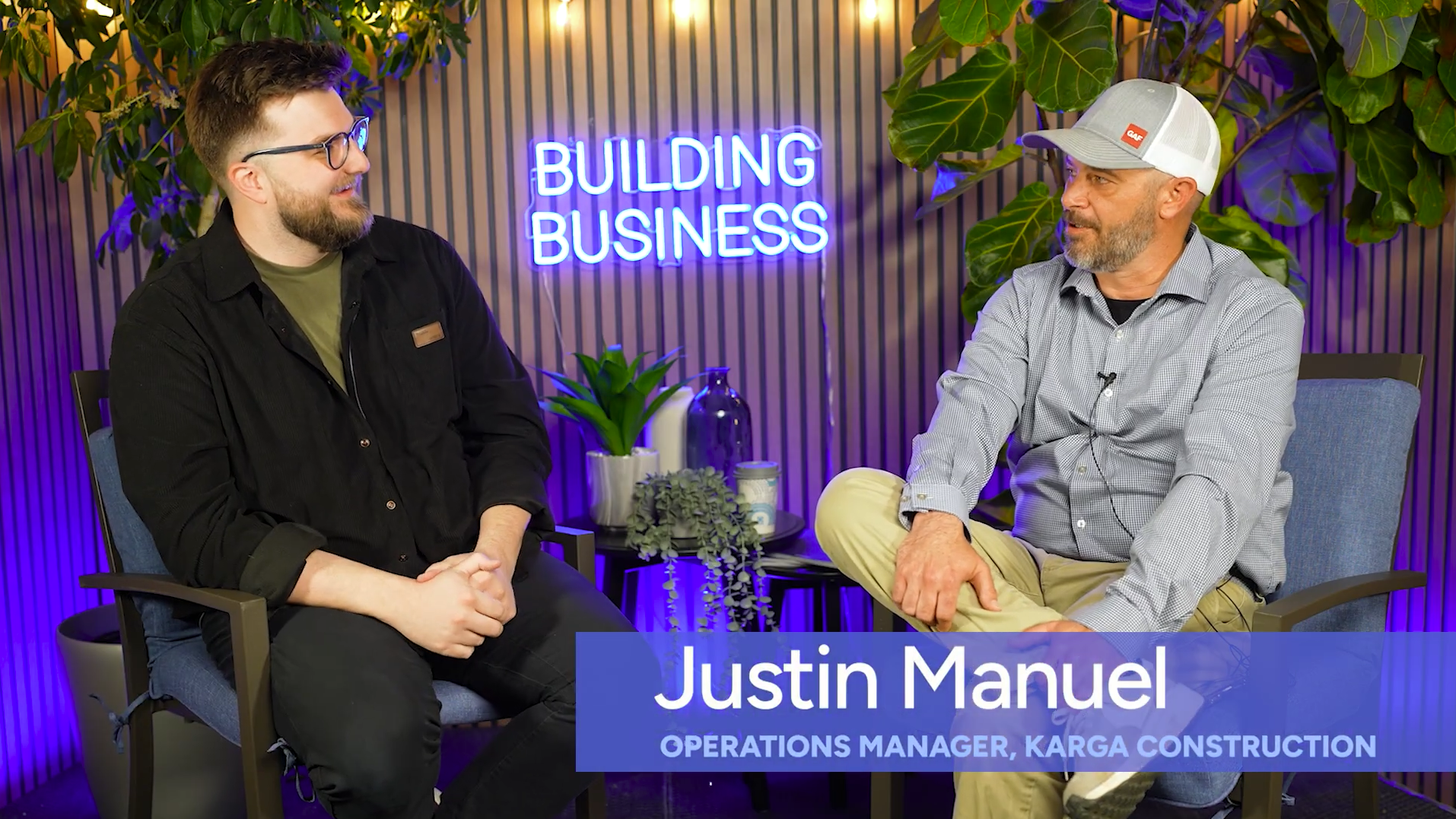
Watch The Full Building Business Podcast Episode
Get Organized Before You Scale
Disorganization kills growth. When leads live in your phone, estimates sit in your truck, and job details scatter across sticky notes, you're creating stress and leaving money on the table.
"The business before JobNimbus was very chaotic, disorderly. We spent a lot of time looking for things than actually doing the job we needed to do," says Justin Manuel, Operations Manager at Cara Construction.
Start by centralizing everything. Every lead, every job, every payment should live in one place where your whole team can access it. Going paperless isn't just about looking professional. It's about saving hours every week that you'd otherwise spend hunting for information.
According to McKinsey & Company, the average employee wastes nearly 20% of their workweek—about 9.3 hours—just searching for and gathering information. That's time you could spend closing deals or managing jobs instead of digging through paperwork.
Build Systems That Work Without You
The biggest growth killer in roofing businesses? The owner becoming the bottleneck.
When every estimate, every follow up, and every customer question runs through you, adding more jobs doesn't scale your business. It just exhausts you. The fix is documentation and process.
Start with these core systems:
- Lead management: How leads enter your system, get qualified, and move through your pipeline
- Estimating process: Standard steps for measurements, pricing, and proposal delivery
- Job workflow: Clear stages from contract signing through completion and payment
- Communication standards: When and how you update customers at each stage
- Quality checks: Post-job review process and photo documentation
Field service businesses that implement documented job processes report significantly fewer errors and callbacks. The goal isn't perfection. It's consistency. A written checklist your team actually uses beats a perfect system sitting in someone's head.
Speed Up Your Response Time
Here's a stat that should get your attention: 35 to 50 percent of sales go to the first responder.
When a homeowner fills out a contact form or calls your number, they're also contacting your competitors. The contractor who responds first sets the tone, earns the first conversation, and most often wins the job.
Research shows that responding within five minutes makes you nine times more likely to connect with the lead. Wait one hour and the odds of qualifying that lead drop by ten times.
To achieve faster follow up:
- Set up instant notifications in your CRM so your team is alerted the moment a lead arrives
- Use automated confirmation messages that immediately thank the homeowner
- Assign clear responsibilities for who follows up first, especially during evenings and weekends
Even a brief message like "Thanks for reaching out! I received your request and can call you shortly to discuss your project" goes a long way toward securing trust and keeping the homeowner engaged.
Stop Leaving Money on the Table with Poor Follow Up
Most contractors lose jobs not because of skill or pricing, but because follow up isn't prioritized or tracked.
Consider these statistics:
- 80 percent of sales require five to twelve follow ups to close
- 44 percent of salespeople stop after one follow up
- Only 2 percent of sales happen on the first contact
- 95 percent of conversions occur after six or more interactions
If your current process stops at one or two follow ups, you're walking away from the majority of potential revenue.
The best follow up cadence includes eight to ten touches over four to six weeks, using multiple communication channels. Early contacts are spaced closely to keep momentum high, while later ones taper off to avoid overwhelming the prospect.
Each message should offer new information or reassurance, not just a repeated "checking in." Share a blog link about roof preparation for winter, a quick video explaining material warranties, or a testimonial from a similar project. These small touches reinforce your expertise and keep homeowners engaged.
Automate the Repetitive Stuff
What's time consuming now will only get worse as your business grows. Repetitive tasks are the worst offenders, but automations can handle them for you so you can focus on what matters.
Automations can:
- Send appointment reminders the day before a job
- Trigger follow up emails after a customer signs your estimate
- Request reviews automatically after job completion
- Update job statuses when certain milestones are hit
- Send payment reminders for past-due invoices
"JobNimbus solved a lot of bottleneck issues, problems we had with transferring information from our sales guys to the production team. Scheduling was a mess, and the time it took to order jobs was way too long," says Brett from Reliable Roofing.
Automation saves time, drives speed, reduces errors, cuts costs, and keeps processes uniform. It ensures things are done the same way every time, which is exactly what you need to scale.
Get Paid Faster
Cash flow problems keep roofing business owners up at night. When invoices go out late or inconsistently, when customers pay by check that takes weeks to arrive, and when you're chasing down past-due accounts, your business suffers.
The solution is making payment as easy as possible:
- Send invoices immediately after job completion
- Offer multiple payment options including credit cards, ACH, and text-to-pay
- Automate payment reminders for past-due balances
- Sync everything with your accounting software to eliminate double entry
When you can collect payments digitally and track everything in one system, you get paid faster and spend less time on administrative work.
Fit the Crew to the Job
Not all crews are created equal. Some are better at certain types of work than others, and matching the right team to the right job makes everything run smoother.
As Justin Manuel from Cara Construction puts it: "I kind of break it down on, you know, for me, and another thing I've learned over the years is you fit the crew to the job. So, I mean, there's there's crews that are better at some things than others. Um you just have to be able to try to identify that. And it'll make your life a lot easier in the end in the in the back end of that."
Know your crews' abilities. Some can handle everything exterior, while others excel at specific tasks like roofing or siding. Matching skills to projects improves quality, reduces rework, and keeps everyone working at their best.
Track What Matters
You can't improve what you don't measure. The most successful roofing contractors track key metrics that tell them how their business is actually performing.
Track these numbers monthly:
- Monthly revenue
- Gross margin
- Revenue per client
- Lead-to-close rate
- Average job value
Update a simple scorecard by the 5th of each month. Note what changed and why. Over time, your numbers tell you when to hire, when to raise prices, when to cut a service that isn't carrying its weight, and when to reinvest in marketing.
Invest in the Right Tools
Disconnected tools create invisible drag on your business. Separate apps for scheduling, invoicing, customer notes, and job photos mean your team wastes time managing software instead of serving customers.
For roofing contractors, an all-in-one platform handles lead tracking, job management, estimates, invoicing, and payments in one place. This eliminates the disconnected app problem that slows most growing companies down.
The right tools should:
- Centralize all your business information in one place
- Work seamlessly on mobile devices for field crews
- Automate repetitive tasks and reminders
- Integrate with the other tools you already use
- Provide clear visibility into job status and profitability
Build Systems Before You Scale
Some companies want to grow so much that they decide to scale first and fix problems later. That doesn't work. The greater the demand, the harder it is to meet while changing your process.
Before expanding:
- Perfect your products and services
- Document your processes so anyone can follow them
- Get organized and go paperless
- Implement automation for repetitive tasks
- Figure out your funding needs
- Build the team you need to support growth
"Before you scale or, you know, I've had I've heard guys do you know, they want to open another location maybe a little bit prematurely. You got to make sure all your systems and your SOPs are are where they're 100% perfect this first before you start scaling in in a bigger direction. Cuz if you don't have this in place, then that's where you're not going to figure out until you're a little bit bigger. Then that's when you start to things start to unravel," Justin advises.
The contractors who grow most consistently are those who build solid foundations first, then scale deliberately.
Learn how JobNimbus facilitates production.
The Bottom Line
Reducing stress and boosting profitability in your roofing business comes down to building systems that work without you, responding faster than your competition, following up consistently, and using tools that eliminate chaos.
You don't need to implement everything at once. Pick one or two areas where you're struggling most and start there. Document your process, automate what you can, and measure your results.
The roofing businesses that thrive aren't necessarily the ones working the hardest. They're the ones working the smartest, with clear systems that let them focus on growth instead of daily firefighting.
When you get organized, speed up your response time, follow up consistently, and use the right tools, you'll spend less time stressed and more time profitable. That's the difference between building a job and building a business.

Frequently Asked Questions
You should aim to respond within five minutes. Research shows that 35 to 50 percent of sales go to the contractor who responds first, and waiting just one hour decreases your chances of qualifying that lead by ten times. Setting up instant CRM notifications and automated confirmation messages can help you secure that crucial first connection and beat your competitors to the punch.
A successful follow-up cadence includes eight to ten touches over four to six weeks. While 44 percent of salespeople give up after just one attempt, data shows that 80 percent of sales actually require five to twelve follow-ups to close. Instead of just "checking in," make these touches valuable by sharing relevant blog posts, videos about material warranties, or testimonials from similar jobs.
You must document your standard operating procedures (SOPs) and perfect your foundational systems before attempting to expand or open new locations. If every estimate and customer question still runs directly through the owner, adding more jobs will just create a bottleneck. Focus on centralizing your job data, going paperless, and automating repetitive tasks so your company can handle increased demand without unraveling.

Blog / Guide Title CTA
Once you've created a strong Linkedin profile, you can leverage it as part of your broader marketing strategy. Use your Linkedin to share content, join industry groups, and network with others in the contracting space.
If you're looking for additional marketing support, consider partnering with JobNimbus Marketing to maximize your business growth. Schedule a call with our team to learn how to boost your marketing efforts today.
Blog / Guide Title CTA
Once you've created a strong Linkedin profile, you can leverage it as part of your broader marketing strategy. Use your Linkedin to share content, join industry groups, and network with others in the contracting space.
If you're looking for additional marketing support, consider partnering with JobNimbus Marketing to maximize your business growth. Schedule a call with our team to learn how to boost your marketing efforts today.
Download Our Free Tips for Recession-Proofing Your Company
We’ll show you five simple things you can do to help your business survive a recession.