Table of Contents

Win more bids. Close more jobs. Start with our newsletter.
Get exclusive insights, tips, and trends your competition doesn't want you to know.

Key takeaways
- Asphalt shingles still cover roughly three-quarters of U.S. residential roofs, but the right choice depends on slope, climate, code, and how long the building is expected to stand.
- Lifespan varies wildly by material, from 15 years for basic 3-tab asphalt to 100-plus years for natural slate and copper, so cost-per-year is a far more useful comparison than sticker price.
- Most premature roof failures trace back to installation, not material choice. Flashing, fasteners, ventilation, and underlayment usually decide whether a roof reaches its rated life.
- Wind and hail account for about 42% of all U.S. homeowners insurance losses, which makes impact ratings and wind uplift design the single biggest resilience lever in storm-prone regions.
- Roofing contractors who organize jobs by roof type, scope, and stage close more work and protect more margin. JobNimbus gives roofing crews and offices one place to track every job, every photo, and every payment without dropping a thread.
Introduction
There is no single best roof. There are only roofs that fit a specific slope, climate, code requirement, building use, and budget, and roofs that quietly fail because someone tried to force a mismatch.
This guide walks through the major roof types contractors install and property owners actually choose between: asphalt shingles, metal panels, clay and concrete tile, slate, wood, single-ply membranes, and specialty systems like green roofs and solar shingles. Each section covers what the system does well, where it struggles, and what fails first when corners get cut, with pricing, lifespan, and code tradeoffs pulled into a comparison table later in the guide.
Roof type decision map for homes and commercial buildings
Before comparing materials, narrow the field with three filters: slope, climate, and use.
Match the roof to slope, climate, and building use
Slope is the first hard constraint. The International Residential Code defines steep-slope roofing as a pitch of 2:12 or greater, and most shingle, tile, and slate systems require this minimum to perform as designed. Anything below 2:12 is functionally a low-slope roof and needs a continuous membrane system like TPO, EPDM, PVC, modified bitumen, or built-up roofing. Installing steep-slope materials on near-flat decks is one of the fastest ways to void a manufacturer warranty and create chronic leaks.
Climate is the second filter. Hail corridors reward Class 4 impact-rated shingles or metal. Hurricane and high-wind zones call for enhanced fastening, sealed underlayments, and ES-1 tested edge metal. Cold regions need ice-and-water shield in eaves and valleys. Hot, sunny climates favor tile, light-colored metal, or cool-rated asphalt.
Building use is the third. A home, a hospital, and a refrigerated warehouse may each have flat roofs, but they have very different drainage, foot traffic, and insulation requirements. Cabins in wildfire zones need Class A fire ratings on the entire roof assembly, not just the surface material.
Eliminate options before you compare them
A short elimination pass saves hours of pricing work later:
- Local code or fire rating requirements that immediately rule out wood shakes or untreated assemblies in wildland-urban interface areas.
- HOA or historic district rules that mandate specific materials, colors, or profiles.
- Structural load limits. Slate, clay tile, and intensive green roofs can weigh four to ten times as much as asphalt shingles. Older buildings often need engineering review or truss reinforcement before heavy materials are even on the table.
- Roof complexity. Lots of valleys, dormers, hips, and penetrations multiply flashing details and labor cost, often pushing the budget toward simpler material choices.
For a deeper breakdown of residential roofing materials and what they typically cost to install, see the JobNimbus overview.
Asphalt shingle roof types: 3-tab, architectural, and premium
Asphalt shingles are the dominant residential roofing material in North America, covering roughly 75% of U.S. homes. They sit at the intersection of low cost, fast installation, and broad availability, which is why most re-roofs default to them.
3-tab vs architectural vs designer profiles
Three-tab shingles are the original mass-market product: a single layer with cutouts that create three visible tabs. They are the cheapest option and typically last 15 to 20 years.
Architectural or laminated shingles bond two layers together for a thicker profile, longer rated life (often 25 to 35 years), and better wind resistance. They now make up more than half of the asphalt segment, having largely replaced 3-tab as the standard re-roof spec.
Designer or luxury shingles add weight, dimension, and styling that mimic slate or shake. Manufacturers often warrant them for 50 years or even lifetime, but practical service life still depends on installation, ventilation, and climate.
A common misconception is that thicker shingles automatically mean a higher wind rating. Wind ratings come from tested assemblies, including nail pattern and underlayment. A premium shingle nailed in too few spots can fail at lower wind speeds than a properly installed mid-tier product.
Where asphalt shingles win and where they struggle
Best-fit scenarios include starter homes, mid-market re-roofs, fast turnaround timelines, and tight budgets. Asphalt is also the easiest material to repair in pieces. Where it struggles: extreme heat that bakes off granules, severe hail (Class 4 ratings exist but are not standard), and high winds when fastening is rushed or the roof has weak corners and edges.
Metal roof types: standing seam, exposed fastener, and metal shingles
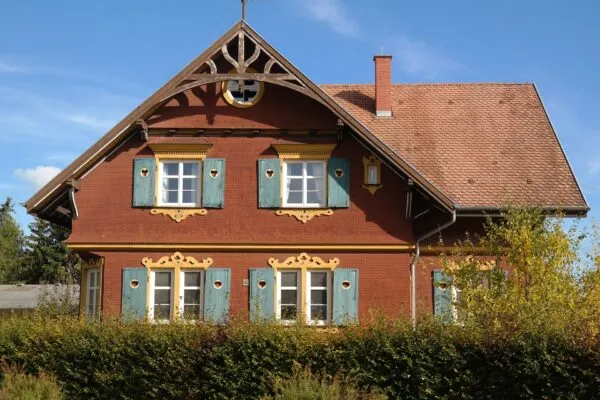
Metal roofing has grown faster than any other steep-slope category for over a decade, driven by longevity, fire resistance, and solar compatibility.
Standing seam metal roofing
Standing seam panels are joined by raised vertical seams that hide all fasteners, creating a continuous surface that sheds snow, water, and debris. They are the premium choice for commercial buildings, agricultural facilities, and high-end residential projects, and they are the easiest substrate for solar mounting because seams accept clamp-on rails without roof penetrations.
Expect a 40 to 70 year service life on quality painted steel or aluminum, longer on zinc or copper. Buyers should ask about thermal expansion provisions and oil canning, the visible waviness common on broad flat panels.
Exposed-fastener and metal shingles
Exposed-fastener panels (also called R-panel or 5V-crimp) screw directly through the panel face. They cost less than standing seam and install quickly, which makes them popular on barns, outbuildings, and budget commercial roofs. The tradeoff is maintenance: rubber fastener washers age and shrink, screws back out over time, and each fastener is a potential leak path. Plan on a fastener inspection every five to ten years.
Metal shingles and stone-coated steel offer the look of asphalt, slate, or shake with the durability of metal. They work well on retrofits where weight or aesthetic guidelines limit standing seam. Properly installed, they are no louder in rain than asphalt thanks to deck and underlayment damping, despite the persistent myth.
Tile roof types: clay tile vs concrete tile roof systems
Tile is the signature roof of the American Southwest, Florida, and much of the Mediterranean and Latin American world. It looks beautiful and lasts for generations, with caveats.
Clay tile vs concrete tile
Clay tile delivers the longest service life in the category, often 75 to 100 years, with excellent heat performance and fire resistance. Color is fired in and does not fade. Clay is also the most fragile of common roofing materials, which makes maintenance work risky and individual repairs expensive.
Concrete tile is heavier, less expensive, and typically rated for 50-plus years. Color stability has improved dramatically in the last two decades, but freeze-thaw cycling can still surface-spall lower-quality concrete tiles in cold climates. Both materials require trusses or rafters engineered to carry the substantial dead load.
The underlayment is the real roof
In tile systems, the underlayment is what actually keeps water out. Tiles shed the bulk of rainfall, but driven rain, wind, and capillary action push water under the tiles, where the underlayment carries it back to the eave.
The National Roofing Contractors Association notes that tile underlayments typically need replacement every 25 to 40 years, well before the tiles themselves fail. A clay tile roof advertised as a 100-year roof is really a 100-year tile sitting on a 30-year membrane. Owners who plan for one or two underlayment replacements get the longevity they paid for; owners who do not end up tearing off perfectly good tile to chase a leak.
Slate roof types: natural slate vs synthetic slate
Slate is the long-game answer to "what is the most durable roof?" When properly installed, natural slate from Vermont, New York, or Pennsylvania quarries can last 100 to 200 years.
The catch: slate is heavy, expensive, and unforgiving. Roofs need to be engineered for the load. Installation requires copper or stainless flashings, slate hooks or copper nails, and crews who know how to work the material without cracking it. Slate quality matters as much as the category itself. Hard slate from premium quarries holds up for over a century. Softer slate from lower-grade sources can delaminate in 50 to 75 years.
Synthetic or composite slate uses molded polymer or rubber to mimic the look at a fraction of the weight and cost. It installs on standard residential structure without engineering upgrades and offers strong impact resistance. The tradeoff is unproven longevity. Most synthetic slate products on the market today have only been installed for 15 to 20 years, so manufacturer 50-year warranties are projections rather than track records.
Wood roofing types: cedar shakes vs wood shingles
Wood roofs are a niche product today, mostly used on historic homes, lakefront cabins, and high-end traditional architecture.
Cedar shakes are split for a thick, irregular look and typically last 30 to 40 years with good ventilation. Wood shingles are sawn to a smooth, tapered profile and last 20 to 30 years. Both require proper underlayment, ventilation, and routine cleaning.
Fire is the major constraint. Many jurisdictions require treated wood for Class B or Class C ratings, and wildland-urban interface zones often prohibit wood entirely. Moss, algae, and trapped moisture under debris are the most common premature failure modes. Owners who want a wood look without the maintenance often choose synthetic shake instead.
Low-slope and flat roof types: TPO, EPDM, PVC, modified bitumen, BUR
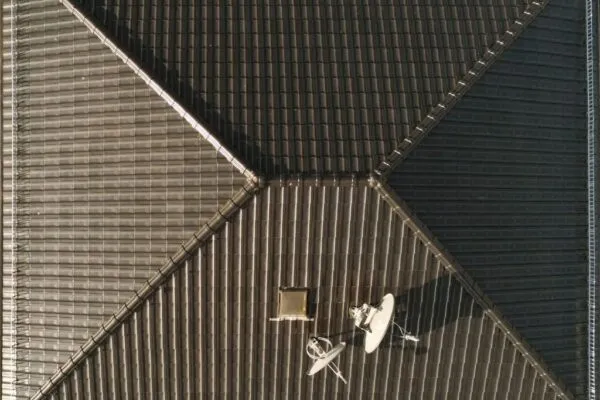
Most commercial buildings and an increasing number of modern residences have low-slope or flat roofs, which require fundamentally different systems. The deck is functionally a giant tray that has to drain, and the membrane keeps water from sitting in it.
TPO, EPDM, and PVC single-ply membranes
Single-ply membranes are now the dominant low-slope category. They differ in chemistry and behavior:
- TPO (thermoplastic polyolefin) is white by default, cool-roof rated out of the box, and seamed by hot-air welding. It is the most-installed commercial membrane in the U.S.
- EPDM (ethylene propylene diene monomer) is a black synthetic rubber known for cold-weather flexibility and a long track record. Seams are adhered or taped rather than welded.
- PVC (polyvinyl chloride) is chemically welded, highly resistant to grease and oil (a favorite over restaurants and food plants), and tends to carry the longest membrane warranties.
Attachment method matters as much as material. Mechanically attached systems are fastest and cheapest. Fully adhered systems hold up better in wind. Ballasted systems use stone weight and are nearly extinct in new construction.
Modified bitumen and built-up roofing
Modified bitumen ("mod bit") is asphalt reinforced with polymer modifiers (SBS for cold flexibility, APP for heat resistance) and applied in two or three plies. It tolerates foot traffic better than single-ply and is easy to repair, which makes it a workhorse on roofs with heavy mechanical loads.
Built-up roofing (BUR) layers asphalt and felt to create a thick, redundant membrane finished with gravel or a cap sheet. It remains popular on large-footprint buildings where simple, replaceable layers are more valuable than the latest technology.
The supporting cast that decides flat-roof success
On a flat roof, drainage design is roughly half the system. Internal drains, scuppers, taper insulation, parapets, and edge metal control whether water leaves the roof or pools on it. Ponding water is the leading cause of premature membrane failure, alongside poor terminations at parapets and curbs.
Specialty roof types: green roofs, solar shingles, and coatings
Specialty systems do not replace the categories above. They sit on top of them or extend them.
Green (vegetative) roofs add a soil and plant layer over a waterproofing membrane. Extensive systems use shallow soil and drought-tolerant plants for stormwater management; intensive systems are essentially rooftop gardens. Both add structural load and complicate leak detection, but they reduce HVAC load, manage runoff, and qualify for stormwater credits in many jurisdictions.
Solar shingles and building-integrated photovoltaics combine roofing and electricity generation in one product. They make sense when aesthetics rule out rack-mounted panels, when the roof is being replaced anyway, or when an HOA blocks traditional solar. They cost meaningfully more per watt, and replacement complexity remains a long-term concern.
Roof coatings (silicone, acrylic, polyurethane) are restoration tools, not standalone systems. Applied over a sound substrate, they can extend a low-slope roof's life by 10 to 15 years and improve solar reflectance. Applied over a wet or incompatible substrate, they trap moisture and accelerate failure.
Cost, lifespan, and code compliance compared
The cleanest way to compare roof types is across three dimensions at once: install cost, expected service life, and compliance with the codes and ratings most likely to affect insurance and resale.
Installation cost is shown as relative ($ to $$$$$) because regional labor rates, complexity, tear-off requirements, and material spikes change absolute pricing constantly. For current 2025 pricing detail, see the JobNimbus guide to new roof cost.
Codes, fire ratings, and wind uplift
Code is the floor, not the ceiling. The International Residential Code Chapter 9 sets minimums for slope, underlayment, and material assemblies. Local amendments often add ice barrier requirements, wind speed thresholds, and fire classifications.
Fire ratings (Class A, B, C) describe the assembly, not just the surface material. A Class A asphalt shingle becomes Class B if installed over the wrong underlayment in some configurations. Crews that know their local roofing codes protect themselves, the building, and the warranty.
Wind uplift is highest at corners and edges, which is why FEMA fastening guidance specifies different nail patterns and edge metal in those zones. According to the Insurance Information Institute, wind and hail accounted for about 42% of all U.S. homeowners insurance losses from 2018 through 2022, and the average wind/hail claim ran around $13,500. Class 4 impact-rated shingles and ES-1 tested edge metal are the levers contractors actually pull to bring those numbers down.
Cool roof metrics worth comparing
The U.S. Department of Energy reports that conventional dark roofs can hit 150°F on a sunny summer day, while reflective roofs can stay more than 50°F cooler. That differential translates to lower cooling loads, longer roof life, and qualifying utility rebates in many jurisdictions. The metrics that matter:
- Solar reflectance measures how much sunlight bounces off rather than getting absorbed (0 to 1 scale).
- Thermal emittance measures how readily the surface releases absorbed heat (0 to 1 scale).
- Solar Reflectance Index (SRI) combines both into a single comparable number.
The Cool Roof Rating Council publishes tested values for thousands of products, which lets owners compare a "cool" asphalt shingle against a white TPO membrane on equal terms.
Run roof type complexity smarter with JobNimbus
Knowing the difference between TPO and PVC, or clay and concrete tile, only matters if the operation behind the bid runs cleanly. Roofing contractors lose more deals to disorganized follow-up, missing photos, and slow proposals than to material misjudgment.
JobNimbus is the roofing CRM software trusted by thousands of contractors to:
- Track every job by roof type, scope, and stage in a single visual pipeline.
- Send branded proposals and contracts in minutes, with templates that match how a 3-tab re-roof, a standing seam install, and a TPO recover should each be priced.
- Document job photos, warranties, and material orders against the right job automatically.
- Keep crews, subs, and office staff connected in one mobile app, with project visibility the office and the field both trust.
- Capture leads from a free roofing estimate page and route them straight into the pipeline.
Try JobNimbus free for 14 days and see why it is rated #1 for roofing contractors at jobnimbus.com.

Frequently Asked Questions
TPO stands for Thermoplastic Polyolefin — a blend of polypropylene and ethylene-propylene rubber formed into single-ply roofing membrane sheets.
SRI is a composite measure of a roofing material's ability to reject solar heat, combining solar reflectance and thermal emittance into a single score. Higher SRI values indicate a cooler roof surface. White TPO typically achieves SRI values well above the ENERGY STAR minimum threshold for low-slope roofs.
PDM is ethylene propylene diene monomer, a black synthetic rubber single-ply membrane known for cold-weather flexibility and a long commercial track record.
Asphalt shingles are the most popular roof type, covering roughly 75% of U.S. residential roofs because of their low cost, fast installation, and broad availability.
Natural slate is the longest-lasting common roofing material, with documented service life of 100 to 200 years on premium hard slate. Copper roofing can last over a century as well.
In many jurisdictions, yes, metal panels can be installed over a single layer of asphalt shingles if the deck is sound and code allows it. Always confirm local code and the metal manufacturer's installation requirements before specifying an overlay.

Blog / Guide Title CTA
Once you've created a strong Linkedin profile, you can leverage it as part of your broader marketing strategy. Use your Linkedin to share content, join industry groups, and network with others in the contracting space.
If you're looking for additional marketing support, consider partnering with JobNimbus Marketing to maximize your business growth. Schedule a call with our team to learn how to boost your marketing efforts today.
Blog / Guide Title CTA
Once you've created a strong Linkedin profile, you can leverage it as part of your broader marketing strategy. Use your Linkedin to share content, join industry groups, and network with others in the contracting space.
If you're looking for additional marketing support, consider partnering with JobNimbus Marketing to maximize your business growth. Schedule a call with our team to learn how to boost your marketing efforts today.
Download Our Free Tips for Recession-Proofing Your Company
We’ll show you five simple things you can do to help your business survive a recession.