

Table of Contents

Win more bids. Close more jobs. Start with our newsletter.
Get exclusive insights, tips, and trends your competition doesn't want you to know.

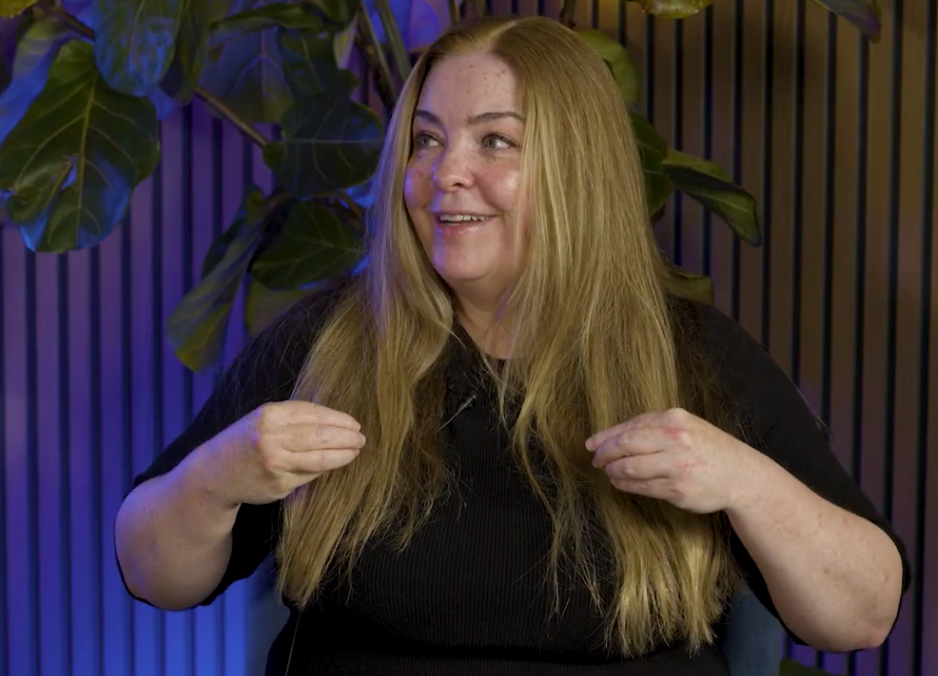
Building an unstoppable roofing team isn’t about working harder, but about understanding what truly drives people. Executive coach Dawni Angel has spent years mapping the patterns behind why employees leave jobs and what makes teams thrive. Her answer is surprisingly simple: “Every single thing I do in my personal and business life, I filter through the triple win.”
The triple-win framework is a decision-making filter that aligns individual motivation with company profitability. It's a fundamental shift in how roofing business owners can approach team building, employee satisfaction, and sustainable growth. When you understand what motivates your people at their core, everything changes.
Watch the full building business episode
Why most roofing teams burn out
High turnover in the roofing industry is rarely just a compensation problem. When talented project managers, estimators, or crew leaders walk away from stable roles, they’re usually looking to leave an environment that’s left them burnt out.
Through years of coaching entrepreneurs, Dawni noticed that "people were walking away from stability, security, and money. What was so unbearable about it?" So she dove into the answers and identified four distinct friction points that consistently break a team's drive:
- Micromanagement. Capable professionals shut down when they have little to no agency over their daily schedules or project execution.
- Broken trust. When team members feel they can’t take concerns to their managers or speak their minds without fear of repercussions, transparency dies.
- Missing belonging and connection. If team members only interact during high-stress problem-solving, they won't feel connected to the people they work with. Worse is when employees feel ostracized or punished for their work.
- Unfairness. Nothing kills a high-performer's motivation faster than watching leadership bypass company policies, play favorites, or distribute workloads unequally. Even if unfairness is merely perceived, it drives talented people away.
The Triple-Win: a framework for strategic scale
To build a business that can scale without your constant intervention, every operational decision must pass a simple three-part test. For every decision, ask: Is this a win for the individual, a win for the company, and a win for the world at large?
"If any one of those elements is losing, it's not actually a win," Dawni emphasizes.
Here's how it works in practice:
- The individual win
Your people cannot build your dream if their fundamental needs are consistently unmet.
For roofing business owners, this means understanding what drives each team member. Some are motivated by autonomy, others by connection, still others by workability and efficiency. You have to ensure each member of your team has the clear tools, predictable schedules, and operational support they need to succeed without sacrificing their personal lives.
When an individual feels their role directly supports their personal growth and autonomy, they naturally transition from a survival mindset to a high-performance mindset.
- The company win
The business must thrive too. It isn’t sustainable if the company is struggling to stay competitive. A true Triple-Win ensures that the company maintains strong gross profit margins, healthy production backlogs, and scalable systems. The magic happens when you realize these two concepts aren't at odds. As Dawni observes, "When the human element is harmonized, the revenue grows, and it grows sustainably.”
- The world win
The third element of a Triple-win is a broader impact, like "the world at large, the environment, the people outside, the customer," Dawni explains.
In the residential and commercial roofing space, a "world win" means delivering uncompromising craftsmanship, treating homeowners with respect, and advancing the industry as a whole. A company with a strong external mission naturally attracts better talent, making recruitment significantly easier and cheaper.
Shifting from surviving to thriving
Most roofing operations exist in a state of perpetual urgency. Many roofers treat every delayed material drop, missed sales target, or weather delay like an emergency. While roofing is a fast-paced space, running a company in constant crisis mode keeps your team's brains locked in a survival response.
The reality is that you can’t expect your team to create thriving results if they themselves are only surviving. Dawni points out that when you’re in survival mode, "You are not going to be creating anything. If we are asking people to create, if we are asking people to collaborate, if we're asking people to have a vision and accomplish, those are all thriving mode energies." Creativity and problem-solving require psychological safety.
The difference in how leadership approaches these two mentalities is stark. When a manager comes from a stressful meeting and tells the team, "Our numbers are down, and we’re dropping the ball," the team immediately retreats into self-preservation mode.
But if that manager were to say instead, "We have some amazing opportunities right now to capture more of the market share of homeowners in our area this quarter, but we’re currently behind. Let's get creative, brainstorm, and build a plan to fix it," the energy shifts completely. The transparency is the same, but the outcome is entirely different.
Leadership tools to implement right now
Transforming your company culture into a high-trust, accountable setup requires practical communication tools. You can’t just say you value fairness; you have to build systems that demonstrate it every day.
Use the 1-to-10 scale for requests
When your company treats every task as an emergency, your team will quickly burn out. To eliminate unnecessary panic in your office and field operations, implement a strict 1-to-10 scale to communicate importance. A 1 represents a casual preference ("Hey, look at this when you get a minute"), while a 10 is a non-negotiable, company-threatening crisis.
The secret to success with this scale is to use tens very rarely. If a manager approaches the team and says, "Listen, this is a 10. If we lose this client, it threatens our ability to stay in business," everyone will immediately rally behind it. But if you flag a routine corporate policy or a minor data-entry error as a 10, you have effectively cried wolf, and your team will stop listening.
Build trust through fairness and integrity
In a roofing business, if your crews and project managers see executives exempting themselves from the company rules, cultural trust instantly evaporates.
Dawni emphasizes, "If you're in a company where you see the executives or even your direct leader not having to live the company rules, there's a lack of equity or equitableness. You will be upset by it."
True integrity means leaders are never above the baseline work of the business. She shares an example of a wealthy, highly successful leader who cleans the office bathroom when it’s dirty: "He's very successful, and he is not above a single task." That willingness to step into any task, regardless of status, is what builds unshakeable trust across an entire organization.
Focus on understanding, not just fixing
When a team member is struggling or falling behind, the instinct is often to fix the problem quickly. High-performance leaders stop to ask: Do I actually understand what this job takes, or am I oversimplifying it?
Dawni illustrates this with the story of her videographer husband. His company's leadership would routinely toss tasks his way, saying, "It’s just a 10-minute video, throw it together real quick." Frustrated by the lack of understanding, he recorded a time-lapse video of his actual workflow, proving that creating that "quick" 10-minute video actually required 12 hours of intense labor. Before you criticize a team member's speed or output, take the time to map out their friction points and master what their role actually demands.
The Triple-Win in action: a nine-year case study
The true power of this framework is that it saves high-performing businesses from losing irreplaceable talent. Dawni recalls coaching a key employee at a highly successful company who was completely frustrated and ready to walk away from a stable, lucrative career.
Through her coaching, they realized his core issue wasn’t the money, but a total lack of autonomy and influence over his team. Dawni coached him on how to approach his direct manager with radical clarity: "Hey, here's the problem for me. I know you can tell I'm not happy. Here's what's actually going on."
Because his manager was willing to listen and adjust, they re-engineered his role to give him the agency he needed. The result? That employee is still with the same company today, nearly nine years later.
This case study is the ultimate model for the Triple-Win:
- The Individual Win: The employee got the autonomy he needed to transition out of burnout and thrive.
- The Company Win: The business kept an employee who is a massive asset and avoided a costly, disruptive recruitment cycle.
- The World Win: Production quality remained seamless, directly benefiting the customers.
Building a Culture That Attracts and Retains Elite Talent
Having worked closely with nearly a hundred professionals at JobNimbus, Dawni notes that building a high-growth, high-retention culture doesn’t happen by accident. It requires two distinct traits from leadership: humility and willingness.
“Humility and willingness are the key,” Dawni explains. “And then it goes into accountability. It goes into the willingness to be self-aware because that can be very uncomfortable.”
For an eight-figure roofing business owner, fostering this level of self-awareness means engineering an environment where transparency beats ego. It means your team feels safe bringing up operational bottlenecks, fairness is visible in how promotions and workloads are distributed, and company growth is never bought at the literal expense of employee health.
When you unify your internal human element, outstanding customer service and sustainable revenue growth naturally follow.
The Path Forward: Balancing Systems and Humanity
Ultimately, scaling a roofing company requires a fundamental realization about why you build processes in the first place. As Dawni cleanly puts it: "Humans are not meant to work for systems. Systems are meant to work for humans."
The Triple-Win is an intentional, daily lifestyle for your business. When you take the time to deeply understand human motivations—starting with your own tendencies as a leader and moving down to individual crew members—the benefits ripple far beyond your profit margins. The same self-awareness that prevents employee turnover can fundamentally transform your perspective as a parent, spouse, and peer.
Before you roll out your next operational change, software update, or production quota, filter it through the Triple-Win lens: Is this a win for the individual, a win for the company's financial health, and a win for our reputation in the community? When those three variables are aligned, you aren't just chasing a high top-line number, but building a highly valuable, self-sustaining machine.
The question isn't whether you can afford to invest in understanding and supporting your team. The question is whether you can afford not to.

Frequently Asked Questions
The Triple-Win framework is a decision-making filter that ensures every decision results in a win for the individual team member, a win for the company (revenue/health), and a win for the world at large (customers/community/environment). If any single element loses, the entire system will eventually fail.
High-performing employees rarely leave over money. Instead, they leave due to four major friction points: a lack of autonomy and agency, broken psychological trust, feeling ostracized, and perceived unfairness in workload, pay, or promotions.
Start by cultivating rigorous self-awareness to identify your own blind spots as a leader. Out in the field, build immediate trust by demonstrating that management is never above any task—even cleaning a bathroom if it needs to be done. Finally, protect your team's daily energy by using a disciplined 1-to-10 scale for internal requests so your organization stops treating routine tasks like operational emergencies.

Blog / Guide Title CTA
Once you've created a strong Linkedin profile, you can leverage it as part of your broader marketing strategy. Use your Linkedin to share content, join industry groups, and network with others in the contracting space.
If you're looking for additional marketing support, consider partnering with JobNimbus Marketing to maximize your business growth. Schedule a call with our team to learn how to boost your marketing efforts today.
Blog / Guide Title CTA
Once you've created a strong Linkedin profile, you can leverage it as part of your broader marketing strategy. Use your Linkedin to share content, join industry groups, and network with others in the contracting space.
If you're looking for additional marketing support, consider partnering with JobNimbus Marketing to maximize your business growth. Schedule a call with our team to learn how to boost your marketing efforts today.
Download Our Free Tips for Recession-Proofing Your Company
We’ll show you five simple things you can do to help your business survive a recession.