

Table of Contents

Win more bids. Close more jobs. Start with our newsletter.
Get exclusive insights, tips, and trends your competition doesn't want you to know.

If you are walking away from a job site without giving the homeowner a financing option, you are leaving money on the table — and handing that job to a competitor who will.
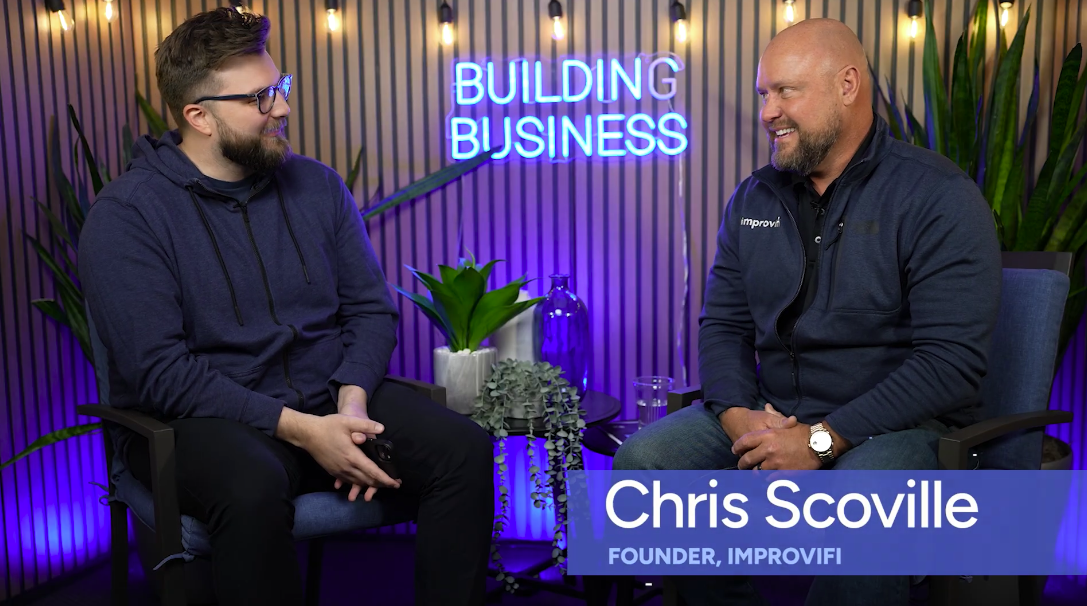
That is the core message from Chris Scoville, CEO of Improvifi and a 30-year veteran of roofing and finance, in his conversation on the Building Business Podcast. With decades of experience watching contractors succeed and struggle, Chris has developed a clear framework for turning financing from an afterthought into the engine that drives business growth.
Here is what every roofing contractor needs to know.
The Contractor Who Helps the Homeowner the Most Always Wins
Chris opened with a principle he has built his entire philosophy around:
"The contractor that helps the homeowner the most at the point of sale — whether they win the job or not — will always win."
This is not just feel-good advice. It is a competitive strategy.
When a homeowner calls you about a damaged roof, they are stressed. They may not have the cash to cover a $15,000 to $25,000 job. If you show up with a great proposal and no financing option, you have solved half their problem. The contractor who shows up with the same quality proposal and a clear path to affordability wins the job.
Homeowners remember the contractor who made their life easier. That is how you build referrals, reviews, and repeat business.
The New Reality: Millennials and Gen Z Are Buying Homes
The homeowner landscape has changed. Millennials are now the largest group of homeowners in the country, and Gen Z is entering the market fast. These are buyers who grew up with Amazon, Affirm, and Apple Pay. "Buy now, pay later" is not a novelty to them — it is an expectation.
If your roofing business does not offer financing at the point of sale, you are not just behind the times. You are invisible to a large and growing segment of buyers.
The contractors who adapt to this reality will capture market share. The ones who do not will wonder why their close rates are slipping.
The 5 Pillars of a Business Growth Engine
According to Chris, integrating financing into your business is not just about offering a payment option. Done right, it becomes a full growth engine built on five pillars:
- Financing options at the point of sale — Give homeowners a way to say yes today, not after three weeks of "thinking about it."
- Faster cash flow — Get paid the moment you install the roof, not 90 days later. That difference in cash timing changes everything for payroll, materials, and growth.
- Higher average job values — Homeowners who finance often choose better materials and more complete scopes of work because monthly payments make the upgrade feel manageable.
- Increased close rates — Price resistance drops dramatically when you can break a $20,000 job into $200 a month.
- Competitive differentiation — In many markets, fewer than half of contractors offer financing. Offering it well makes you stand out immediately.
Together, these pillars shift financing from a feature into a system that drives revenue across every part of the business.
Build a Lending Ladder for Near-100% Approval Rates
One of the most practical frameworks Chris shared is what he calls the Lending Ladder.
Most contractors who offer financing work with one lender. When that lender declines a homeowner, the contractor shrugs and moves on. The Lending Ladder changes that entirely.
The concept is simple: stack multiple financing options at different credit tiers so that nearly every homeowner qualifies for something. A homeowner who gets declined at the premium tier gets moved to a mid-tier lender. If that does not work, there is another option below it.
The result is a near-100% approval rate across your customer base. You stop losing jobs because someone could not get approved, and homeowners feel taken care of rather than embarrassed.
Building a Lending Ladder means:
- Partnering with multiple lenders across credit tiers
- Training your sales team to move smoothly between options
- Presenting financing as a normal, expected part of every proposal
Understand Your Three Buyer Buckets
Not every homeowner thinks about their roof the same way. Chris breaks buyers into three distinct buckets, and knowing which bucket a homeowner falls into changes how you sell.
Bucket 1: The Grudge Purchase
This homeowner does not want a new roof. They want to fix a leak, stop the damage, and spend as little as possible. A new roof is not exciting to them — it is a bill.
For grudge-purchase buyers, the pitch is about protection and value. Financing helps because it makes the unavoidable cost feel smaller and more manageable. Do not try to upsell them aggressively. Make the process easy and the decision painless.
Bucket 2: The Need Purchase
This homeowner knows they need a roof and has accepted it. They are comparing contractors, evaluating options, and looking for the right combination of quality and price.
For need buyers, financing is a differentiator. Showing that you offer flexible payment options signals that you are a professional, modern business. It gives them a reason to choose you over the company down the street.
Bucket 3: The Ego Purchase
This homeowner wants the best roof on the block. They are interested in upgrades — premium materials, better warranties, enhanced curb appeal. They see their home as an investment and an expression of who they are.
For ego buyers, financing unlocks the full scope of what they actually want. Instead of choosing between a good roof and their savings account, they can have the premium system they are excited about at a monthly payment that works. This is where contractors see the biggest bump in average job value.
Knowing which bucket your homeowner is in within the first five minutes of a sales conversation determines everything — how you present options, how you talk about price, and where financing fits into the close.
Technology Is the Multiplier
Chris also addressed how technology separates the contractors who scale from those who stay stuck.
The contractors running lean, growing businesses are not doing it on paper and spreadsheets. They are using software to track jobs, automate follow-ups, manage communication, and capture financing applications in the field — all from a mobile device.
The margin difference between a contractor using modern tools and one still doing things manually is not small. It compounds over time. Every hour saved on admin is an hour spent closing jobs or managing crews. Every automated follow-up is a job that does not fall through the cracks.
Tools like JobNimbus plug directly into this model — giving your team a single place to manage leads, jobs, payments, and communication so nothing gets missed and nothing slows down.
What This Means for Your Business Right Now
The takeaway from Chris's framework is not complicated. The contractors winning right now are the ones who have made it easier for homeowners to say yes.
That means:
- Offering financing at every sales appointment, not just when a homeowner brings up price
- Building a Lending Ladder so approval rates stay high across all buyer types
- Matching your pitch to the buyer bucket in front of you
- Using technology to stay organized and follow through
The homeowner you help the most today is the one who calls you back next year, refers you to their neighbor, and leaves a five-star review. That is the growth engine.
Watch the Full Episode
Chris Scoville goes deep on all of this — and more — in the full Building Business Podcast episode. Watch it here:
Want to learn more about Improvifi and how to set up financing for your roofing business? Visit improvifi.com or schedule a demo at scheduling.improvifi.com/widget/bookings/improvifi-demo.
Ready to Run a Smarter Roofing Business?
JobNimbus gives contractors the tools to manage jobs, communicate with customers, track payments, and grow — all in one place.

Frequently Asked Questions
Offering financing at the point of sale removes the biggest barrier between a homeowner and a signed contract — upfront cost. When a homeowner can break a $20,000 roof into a manageable monthly payment, price objections drop and close rates go up. It also speeds up cash flow: instead of waiting 60 to 90 days for a homeowner to "think about it" or arrange their own financing, you get paid as soon as the job is complete. With Millennial and Gen Z homeowners now making up the largest share of the market, financing is increasingly an expectation, not a bonus — contractors who offer it win jobs that others do not even get a chance to close.
A Lending Ladder is a financing strategy where a contractor partners with multiple lenders across different credit tiers so that nearly every homeowner qualifies for some form of financing. Instead of relying on a single lender — and losing the job when that lender declines a customer — you move the homeowner down the ladder to the next tier until you find a product that works. The result is a near-100% approval rate across your customer base. Building a Lending Ladder means identifying lender partners at the prime, near-prime, and subprime levels, training your sales team to present each option smoothly, and making financing a standard part of every proposal rather than a last resort.
Not every homeowner thinks about a roof the same way, so a one-size-fits-all pitch will cost you jobs. There are three buyer types to recognize. The first is the grudge buyer — someone who does not want a new roof but needs one. They care about minimal disruption and cost, so keep the pitch simple and use financing to make the unavoidable feel manageable. The second is the need buyer — someone who has accepted the purchase and is comparing contractors. Here, offering financing sets you apart as a professional, modern business and gives them a reason to choose you. The third is the ego buyer — someone who wants the best and sees their home as an investment. Financing is the key to unlocking the full scope of what they actually want, because it lets them choose premium materials without draining their savings. Identifying which type of buyer you are working with early in the conversation changes everything about how you close.

Blog / Guide Title CTA
Once you've created a strong Linkedin profile, you can leverage it as part of your broader marketing strategy. Use your Linkedin to share content, join industry groups, and network with others in the contracting space.
If you're looking for additional marketing support, consider partnering with JobNimbus Marketing to maximize your business growth. Schedule a call with our team to learn how to boost your marketing efforts today.
Blog / Guide Title CTA
Once you've created a strong Linkedin profile, you can leverage it as part of your broader marketing strategy. Use your Linkedin to share content, join industry groups, and network with others in the contracting space.
If you're looking for additional marketing support, consider partnering with JobNimbus Marketing to maximize your business growth. Schedule a call with our team to learn how to boost your marketing efforts today.
Download Our Free Tips for Recession-Proofing Your Company
We’ll show you five simple things you can do to help your business survive a recession.