Table of Contents

Win more bids. Close more jobs. Start with our newsletter.
Get exclusive insights, tips, and trends your competition doesn't want you to know.

Updated on October 7, 2026
Quick Answer
To retain employees in the trades, keep job sites safe, recognize good work often, ask for feedback and act on it, hold regular one-on-one check-ins, and show every worker a clear path to more pay and responsibility. Crews that feel safe, valued, and able to grow are the ones that stay.
Good crews are hard to find. Keeping them is where you protect your schedule, your margins, and your reputation. Every time a trained worker walks off, you pay to recruit, onboard, and train someone new while jobs wait.
This guide covers why retention matters in roofing and the trades, what drives people to leave, and the practical steps contractors use to keep their best people.
Key Takeaways
- The labor pool is tight. Construction needs about 349,000 new workers in 2026 just to meet demand, so keeping the crew you have is cheaper than replacing it.
- Two-thirds of roofing companies keep annual turnover at 5% or less. Poaching, burnout, limited career paths, and culture shock drive most of the rest.
- Safety comes first. Roofers have one of the highest fatal injury rates of any job in the U.S., and people don’t stay where they feel unsafe.
- Recognition, regular check-ins, and acting on feedback cost little and pay off fast.
- Clear career ladders tied to training and pay give ambitious workers a reason to grow with you instead of leaving.
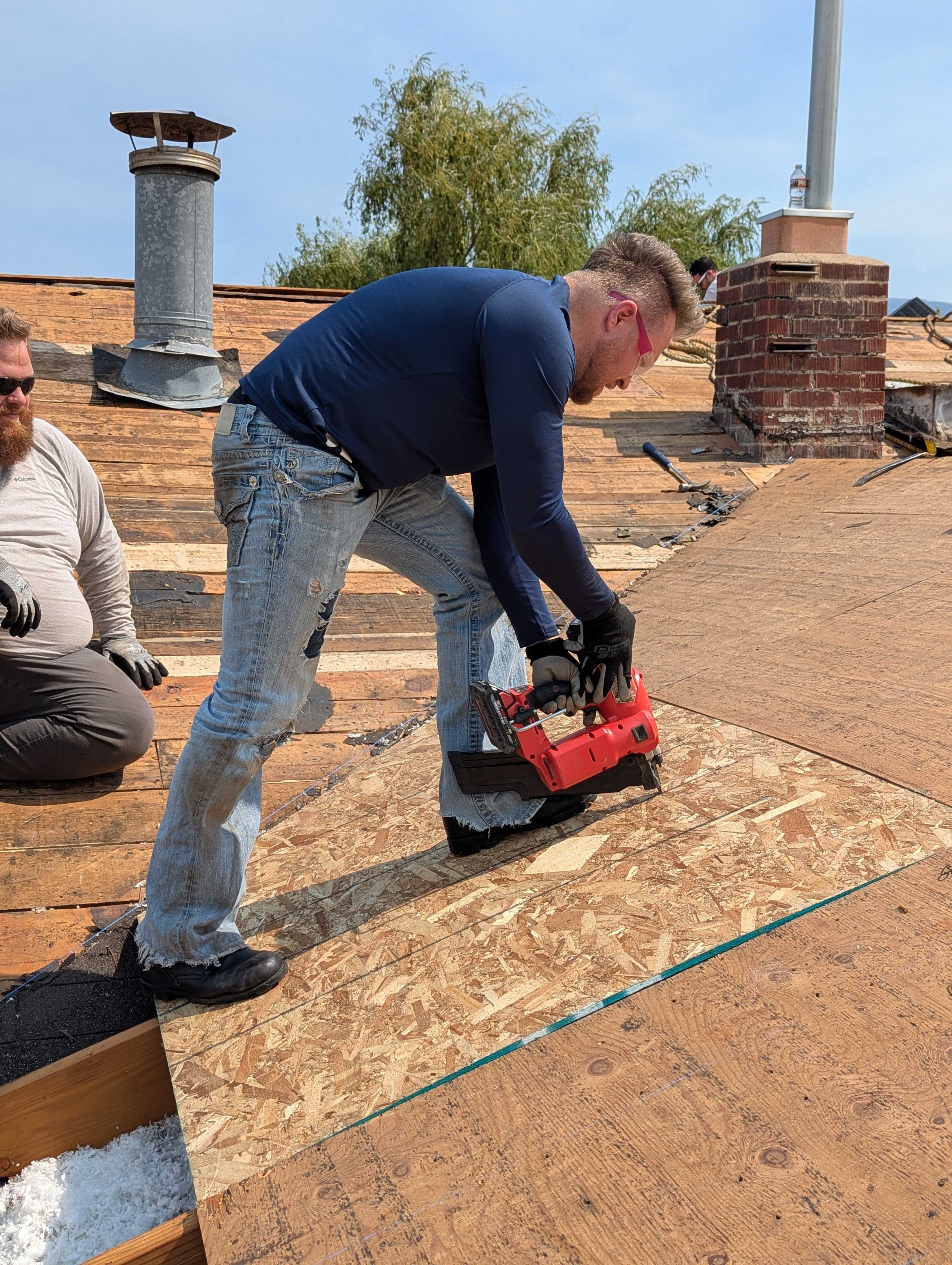
Why is employee retention important in the trades?
Retention matters because replacing skilled workers is slow and expensive, and the pool of new workers is shrinking. Associated Builders and Contractors estimates the construction industry needs to attract about 349,000 new workers in 2026 just to keep labor supply and demand in balance.
Roofing feels that squeeze directly. In JobNimbus’s Peak Performance 2026 report, 9 in 10 roofers said finding skilled labor is their biggest challenge. Hiring construction workers during a labor shortage is only half the battle. Once you land good people, you need to keep them.
High turnover hurts your business in a few clear ways:
- Lost production. Short crews mean slower jobs and a backed-up schedule.
- Higher hiring and training costs. Every new hire takes time to recruit, onboard, and get up to speed.
- Lower morale. The people who stay pick up the slack, and burnout spreads.
What is a normal turnover rate for a roofing company?
Most roofing companies keep turnover low. According to Peak Performance 2026, 66% of roofing companies have a churn rate of 5% or less, while 5% lose more than a quarter of their workforce each year. The top reasons people leave are poaching by competitors, burnout, limited career paths, and culture shock after a merger or acquisition.
If your turnover sits above 5%, look at those four causes first. Each one has a fix you control.
How do you retain employees in the trades?
The contractors with the most stable crews do a handful of things consistently. Here’s where to focus.
Retention strategyWhat it fixesWhere to startSafe job sitesInjury risk and fear on the roofDaily fall protection checksRecognitionFeeling invisible or taken for grantedCall out wins in team huddlesFeedback surveysProblems you don’t hear aboutShort anonymous survey each quarterRegular check-insBurnout and quiet frustrationShort one-on-ones with each leadCareer pathsDead-end roles and poachingTie certifications to raises
How does job site safety affect employee retention?
Nobody wants to work for a company that gambles with their life. Roofing is one of the most dangerous jobs in the country. Bureau of Labor Statistics data for 2024 shows roofers had a fatal injury rate of 48.7 per 100,000 full-time workers, compared to 3.3 for all U.S. workers.
Make safety part of every day, not a once-a-year meeting. Run fall protection checks before crews go up, replace worn gear without hesitation, and know what to expect during an OSHA inspection. When your team sees you put their safety ahead of the schedule, they trust you more and stay longer.
Why does recognition keep crews from leaving?
A simple “thank you” or “good job” goes a long way. Crews work in heat, cold, and wind, and they notice when the effort goes unseen.
Recognition doesn’t need a big budget. Call out a clean tear-off in the morning huddle. Share a homeowner’s five-star review with the crew who earned it. Hand out a gas card to the lead who mentored a new hire. These small moments build a team culture people want to stay in.
How should you collect feedback from employees?
Ask, then act. A short anonymous survey once a quarter gives crews a safe way to raise problems they won’t bring up face to face. Free form builders make this easy to set up in a few minutes.
The key is follow-through. Asking for feedback and then doing nothing tells people their opinion doesn’t matter, and that pushes them out the door faster than not asking at all. Share what you heard, what you’ll change, and when.
How often should you check in with your team?
Don’t save conversations for the first day and the exit interview. Regular one-on-ones help you spot burnout, solve small problems early, and coach people before frustration turns into a resignation. Peak Performance 2026 recommends weekly check-ins and recognition loops for crews and leads.
Managers carry a lot of weight here. Gallup’s State of the Global Workplace 2026 report found that global manager engagement fell from 27% to 22% in 2025, its sharpest one-year decline since 2022, and overall engagement sank to 20%. Your foremen and project managers need check-ins too. A burned-out lead can drive good workers away fast.
How do career paths help you keep good workers?
Ambitious workers leave when they can’t see what’s next. Peak Performance 2026 found that 60% of roofing companies lack consistent performance tracking or training systems. That gap makes it hard to promote people fairly or show them how to earn more.
Build a simple ladder, such as laborer to installer to crew lead to foreman. Spell out the skills and certifications each step requires, and tie them to pay. Then track progress with real numbers. Reporting tools like JobNimbus Insights show job performance across your team, so promotion and raise decisions rest on data instead of guesswork.
How can software help you keep your crew?
Disorganization burns people out. Crews get frustrated when they show up to a job without the right materials, the right address, or the latest change order. Office staff burn out chasing paperwork and re-entering the same information twice.
A CRM built for contractors keeps everyone working from the same information. JobNimbus Boards and Workflows give your office and field teams real-time visibility into every job, from lead to final payment. Less chaos means fewer frustrating days, and fewer frustrating days means people stick around.
Try out JobNimbus by filling out the form below!

Frequently Asked Questions
Retention matters because skilled workers are hard to replace. Every departure costs you recruiting, onboarding, and training time while jobs slow down. With the construction industry needing about 349,000 new workers in 2026, keeping the crew you already have is the fastest way to protect your schedule and margins.
Most roofing companies keep turnover at 5% or less per year. According to JobNimbus’s Peak Performance 2026 report, 66% of roofing companies stay at or under 5%, while 5% lose more than a quarter of their workforce each year.
The most common reasons are poaching by competitors, burnout, limited career paths, and culture shock after a merger or acquisition. Unsafe job sites and managers who ignore feedback also push good workers out.
Start with five steps: keep job sites safe, recognize good work often, run short feedback surveys and act on the results, hold regular one-on-one check-ins, and build a clear career ladder that ties new skills and certifications to higher pay.
Workers stay where they feel safe. Roofers had a fatal injury rate of 48.7 per 100,000 full-time workers in 2024, far above the 3.3 rate for all U.S. workers. Daily fall protection checks and well-maintained gear show your crew you put their safety first.

Blog / Guide Title CTA
Once you've created a strong Linkedin profile, you can leverage it as part of your broader marketing strategy. Use your Linkedin to share content, join industry groups, and network with others in the contracting space.
If you're looking for additional marketing support, consider partnering with JobNimbus Marketing to maximize your business growth. Schedule a call with our team to learn how to boost your marketing efforts today.
Download Our Free Tips for Recession-Proofing Your Company
We’ll show you five simple things you can do to help your business survive a recession.