


Table of Contents

Win more bids. Close more jobs. Start with our newsletter.
Get exclusive insights, tips, and trends your competition doesn't want you to know.

Key takeaways
- Most fence bids leak money in predictable places: missed gates, undercounted hardware, ignored tear-out, vague mobilization, and slope assumptions written nowhere in the proposal.
- A repeatable bid workflow beats a faster one: lead intake, site walk, takeoff, cost build, proposal, follow-up. Skip a step and the change order will find you.
- Material takeoff and labor production rates are the two numbers contractors get most wrong. Both deserve documented templates by fence type, soil condition, and crew makeup.
- Scope language wins more disputes than price wins jobs. Spell out what you install, what you remove, what you do not touch, and what assumptions sit underneath the number.
- Job costing is a profit lever, not a back-office chore. Tracking actuals against estimates is what makes the next bid sharper instead of repeating the same loss.
- Fence contractors using JobNimbus tie estimates, measurements, materials, and profit tracking into one workflow, so the bid that goes out the door reflects what the crew can actually deliver.
Bidding fencing jobs sounds simple right up until the auger hits caliche, the homeowner asks for a second walk gate that nobody priced, and the foreman discovers the property line was a guess. Estimating fences is a discipline, not a gut check, and it rewards contractors who build a system over those who keep eyeballing it.
According to the U.S. Bureau of Labor Statistics, fence erectors earn a mean hourly wage of $22.43, and burdened crew costs run substantially higher once payroll taxes, workers' comp, equipment, and overhead get layered on. Every hour a crew spends fixing a scope problem is an hour that should have been priced in the first proposal.
This guide walks the full bid lifecycle: qualification, site walk, takeoff by material type, labor and cost build, pricing strategy, proposal language, and the job-costing feedback loop that makes every future quote more accurate.
Why most fence bids leak money before the site visit
Most fence quotes are not lost on price. They are lost on assumptions. The number on the proposal looks reasonable, the homeowner signs, and the crew shows up to find a slope nobody measured, a gate nobody priced, and an old fence nobody planned to demo.
The leaks are predictable: missed walk gates and drive gates, hardware upgrades the salesperson promised verbally, tear-out and disposal that got mentioned but never quantified, mobilization for jobs outside the normal service area, and concrete quantities calculated from a "standard" post depth the soil will not allow.
Before pricing a single foot, a fence contractor needs three internal answers locked in:
- What margin is non-negotiable by fence type and job size, not "whatever we can get."
- Which job profiles you avoid: terrain, timelines, client risk, access constraints, payment history.
- What minimum job size keeps the crew profitable once mobilization, load-out, and travel time are honestly counted.
Once those answers exist, the next leverage point is tiered pricing. Instead of a single number, present a Good, Better, Best structure with material upgrades, hardware tiers, and warranty options. This is not a sales gimmick. It is margin protection. When the customer chooses, they are anchored to the value of what they are getting, not just the cost of the cheapest line. An add-on menu for stain or sealant, decorative caps, and upgraded hardware lets buyers self-select upgrades without renegotiating the whole bid. Contractors using purpose-built fence software can build these tiered templates once and reuse them across every estimate.
Qualify the lead and walk the site like an estimator, not an installer
A site visit costs real money: fuel, drive time, the estimator's hourly cost, and the opportunity cost of the next lead. Qualifying before the truck rolls is how good fencing contractors keep their close rate up and their wasted miles down.### Five qualification questions before you drive out
A short call before scheduling the visit should answer:
- What fence type and approximate height are you considering?
- How much linear footage, and is any of it a corner or transition?
- Is there an existing fence to remove, and who handles disposal?
- What is your timeline to start, and who is the decision-maker?
- Has the property line been surveyed or staked, or are we going off best guesses?
The last one is the trap. "Match my neighbor's fence" sounds friendly and turns into a property-line dispute six months later. Get the answer in writing before the bid lists a price.### Run the site walk to produce defensible measurements
The measurement method has to be repeatable and defensible. Walk and record total linear footage by run, then count corners, ends, transitions, and gate openings separately. Note slope handling for each run: stepped, racked, or contoured. Document gate swing direction, clearance, and latch placement. Photograph each run.
Soil and access kill production rates faster than anything else. Rocky soil, caliche, frost line depth, and high water tables all change the auger and concrete plan. Carry distance from the truck to the farthest post matters. So does staging area, equipment access, and whether the driveway needs protection.
Measurement tools that capture footage, post counts, gate positions, and photos in one place reduce the chance of a missed dimension making it into the bid. JobNimbus's measurement tools integrate site capture into the same record that drives the estimate, so the measurement and the price stay tied together.
Utilities, permits, and the people problem
Underground utility damage is not rare. The Common Ground Alliance reported nearly 200,000 incidents of damage to buried utilities in the U.S. and Canada in 2024, with locate timeliness and failure to call 811 cited as persistent root causes. Bake the utility-locate workflow into the bid timeline. Permit responsibility, HOA approval, and neighbor notification are bid milestones, not afterthoughts. Decide who pulls, who pays, and who schedules inspections, and put the answer in the proposal.
Take off materials by fence type
Material takeoff is where bids quietly bleed margin. The trick is to use a checklist by fence type rather than recalculating from scratch every time. The components are knowable. What changes is quantity, spec, and waste factor.
What gets missed on each material
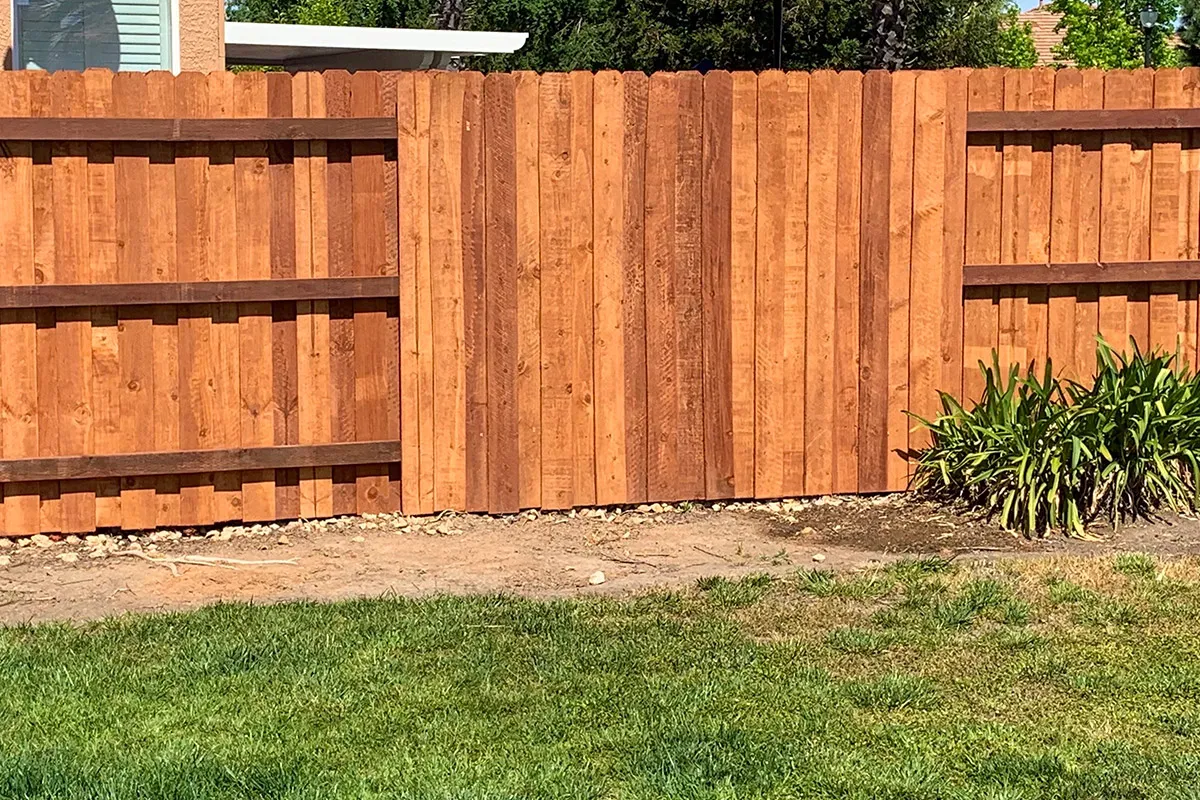
For wood privacy, the killer is moisture movement. Treated lumber, cedar, and redwood all move differently. Order tighter and the fence gaps in three months. Order looser and pickets cup. Stain and sealant prep, masking, and cleanup are real costs that get waved off as "we'll just throw a coat on it."
For vinyl, expansion and contraction over a 100-degree temperature swing dictates layout tolerances and reinforcement. Specialty brackets and gate kits are line items, not afterthoughts.
For chain link, post spacing, fabric gauge, and fittings tie directly to the spec. A commercial spec calling for 9-gauge fabric prices very differently from a residential 11.5-gauge install.
For ornamental aluminum and steel, rackable panel limits decide whether a slope can be racked or stepped, and stepping changes post counts. Powder coat warranties and fastener compatibility need to match the manufacturer's documentation.
A reusable materials calculator tied to fence type, height, and run length keeps takeoffs consistent and prevents the "we forgot the gate hardware" problem from showing up in week two.
Calculate labor and total job cost without missing line items
Labor is the second number contractors get wrong. Posting a base wage of $22 per hour and calling it a day is how shops end up unprofitable. Crew cost has to be fully burdened.
Build a fully burdened crew rate
Burdened crew rate includes wages for foreman, lead, and helper at their actual mix; payroll taxes; workers' compensation, which is significant in fencing given exposure to ladders and lifting; benefits and paid time off; foreman premium and overtime; and paid travel time.
Add these up and the crew rate often lands 35 to 50 percent above straight wages. Quote the burdened number internally. Quote per linear foot or lump sum externally.
Production rate drivers that belong in the bid
Feet per day depends on:
- Post hole digging speed by soil type and depth (hand dig, auger, or rock drill)
- Concrete set time before the next phase begins
- Gate setting and hardware alignment, consistently underestimated
- Travel between staging and install
- Weather, daylight, and crew fatigue on multi-day runs
Document benchmarks for each. A wood privacy crew might run 100 to 150 feet per day in normal soil but drop to 60 feet in caliche. Without a benchmark, the bid is a guess.
Direct costs that quietly get missed
Beyond labor and the obvious materials, here are the line items that disappear from bids most often:
- Concrete bags and gravel, calculated against actual post depth and diameter
- Disposal fees for tear-out, including tip fees and trailer rentals
- Saw blades, screws, nails, and brackets consumed during install
- Gate hardware upgrades, drop rods, stops, and latches
- Auger or skid-steer rental, plus delivery surcharges
- Rock drilling or core drilling for hard substrate
- Mobilization charges for trip count, load-out, and tool setup
- Painting, staining, or sealing prep and supplies if included in scope
Overhead, profit, and contingency stay separate
Lumping overhead, profit, and contingency into one fuzzy markup is how margin gets eaten. Track them independently. Overhead is the cost of running the business divided across crew-days. Profit is the target return for risk and capital deployed. Contingency is reserved for genuinely unknown conditions, not a buffer for sloppy takeoffs. According to the American Institute of Architects' research on change orders, average cost change ranges from about 3.2 percent on the smallest projects to over 5 percent on $1 to $5 million projects. Residential fence work without that documentation tends to absorb cost variance directly into the contractor's pocket.
Estimating workflows that tie estimates to job costing on the back end let contractors see, by job, where the bid was right and where it was off.
If you're doing this math manually for every job, there's a better way. JobNimbus for fencing contractors handles estimates, job tracking, and payments in one place — so you can bid faster and stop leaving money on the table.
Price to win without racing to the bottom
There are two ways to win a fence job: be the cheapest, or be the clearest. Cheapest is a race that ends with bankruptcy. Clearest is a strategy that compounds.
Unit pricing works when variables are controlled. Standard wood privacy on a flat lot with normal soil and no tear-out can be priced per linear foot all day long. Lump sum works when complexity is high. Slope, mixed materials, custom gates, retaining tie-ins, and tear-out push the bid toward a single number with detailed scope. A hybrid bid, with a base unit price plus adders for unknowns like rock or extra depth, is often the cleanest answer for jobs in between.
Competitive positioning beyond price is the real moat. Faster start dates win when the homeowner is on a timeline. Stronger warranty terms in plain language win on trust. Clear material specs signal expertise and reduce the buyer's anxiety about being upsold. Photos of past installs, named references, and certifications such as the American Fence Association's Certified Fence Contractor credential add proof points that price alone cannot match.
Adders and alternates protect margin by giving the contractor permission to charge for what costs more. Build standard adders for rock, deeper post depths, slope work, long carry distance, and tight access. Offer alternates for thicker posts, upgraded hardware, better wood species, or premium finish.
Write a fence proposal that prevents disputes and change orders
Change orders are common in construction. AIA research found average cost increases ranging from 3.2 percent on the smallest building projects to over 5 percent on mid-sized projects. The single biggest driver is design and scope ambiguity, which on a fence job translates directly to vague proposal language.
A defensible fence proposal does three things in plain English:
- Spells out exactly what gets installed: type, height, style, material grade, finish, layout notes, gate count and hardware spec.
- Spells out what gets removed and disposed: old fence, footings, debris, and what does not get touched, like landscaping or irrigation lines.
- Lists assumptions and exclusions explicitly: property line verification, utility locate dependency, weather delays, and material lead times.
Payment terms belong in the proposal too. A deposit tied to materials and mobilization, progress payments on larger commercial runs, and a final balance on completion is standard. Warranty scope should distinguish workmanship from materials, and call out exclusions like normal wear, storm damage, and abuse.
Closing the proposal with a pre-construction checklist gives the buyer a glimpse of what professional execution looks like: permit and HOA steps, utility locate scheduling, access plan, pet plan, material delivery and staging, start date confirmation, and the change-order process. Buyers sign faster when they can see the operation behind the price. Standardized estimate templates make this kind of detailed proposal repeatable instead of one-off.
Use job costing to make every future fence bid sharper
Estimating is a feedback loop or it is a guessing game. The contractors who get more accurate over time track actuals against the bid and update their pricing library every quarter.
Track actuals by component, not just by job total. Feet installed per day by fence type. Gate hours versus the assumption. Tear-out and disposal variance. Concrete volume against the bag count quoted. The point is to find systematic gaps, not to litigate one job.
Post-job review questions worth asking on every project larger than a typical residential install:
- What slowed the crew unexpectedly, and was that risk identifiable in the bid?
- Which materials caused rework, callbacks, or warranty calls?
- Where did the proposal language fail to prevent a dispute or change request?
- Which subs or vendors hit their dates, and which did not?
Update the pricing library on a regular cadence: standard adders by soil type, slope, access, and season; vendor price-change frequency and quote-validity rules; and a running list of "known problem neighborhoods" with HOA quirks or repeat property-line issues. A profit tracker that surfaces estimate-versus-actual variance by job makes this loop visible instead of buried in spreadsheets.
Bidding with confidence is a habit, not a skill
Fence bidding becomes confident when the system does the heavy lifting: site-walk checklists, reusable takeoff templates, burdened crew rates, production benchmarks, scope-tight proposals, and a job-costing loop that closes feedback into the next estimate.
For fencing contractors ready to move from one-off quoting to a repeatable bid system, JobNimbus brings estimates, measurements, materials, and the sales workflow into one place built for the trades. See how it fits your shop and start protecting margin on the next bid.

Frequently Asked Questions
Pricing a fencing job starts with a defined scope, an accurate material takeoff, a fully burdened crew rate, and documented production rates. The total bid combines materials, labor, equipment, and indirect costs, with overhead, profit, and contingency tracked separately and adders priced for site-specific variables.
Lump sum works for complex jobs with mixed materials, slope, tear-out, or custom gates. Per linear foot works for straightforward runs with controlled variables. A hybrid approach, base unit price plus adders for unknowns, fits jobs that mix simple and complex segments.
Change orders shrink when the proposal spells out scope, assumptions, exclusions, and site restoration boundaries in writing. Pricing for property line verification, utility locate dependency, and unknown subsurface conditions up front prevents the most common disputes from becoming change orders later.
Build a fully burdened hourly crew rate that includes wages, payroll taxes, workers' comp, benefits, foreman premium, and paid travel time. Multiply that rate by documented production hours for the specific fence type, soil, and slope conditions, then add mobilization separately for short jobs.

Blog / Guide Title CTA
Once you've created a strong Linkedin profile, you can leverage it as part of your broader marketing strategy. Use your Linkedin to share content, join industry groups, and network with others in the contracting space.
If you're looking for additional marketing support, consider partnering with JobNimbus Marketing to maximize your business growth. Schedule a call with our team to learn how to boost your marketing efforts today.
Blog / Guide Title CTA
Once you've created a strong Linkedin profile, you can leverage it as part of your broader marketing strategy. Use your Linkedin to share content, join industry groups, and network with others in the contracting space.
If you're looking for additional marketing support, consider partnering with JobNimbus Marketing to maximize your business growth. Schedule a call with our team to learn how to boost your marketing efforts today.
Download Our Free Tips for Recession-Proofing Your Company
We’ll show you five simple things you can do to help your business survive a recession.