Table of Contents

Win more bids. Close more jobs. Start with our newsletter.
Get exclusive insights, tips, and trends your competition doesn't want you to know.

Building a roofing company to $10 million in annual revenue is an incredible milestone. The phones are ringing, crews are on roofs, and on paper, you look like a market leader. But behind the scenes, many eight-figure contractors are discovering an uncomfortable truth: a massive top line can easily hide a crumbling bottom line.
“We see roofing companies get up to 10 million in revenue annually, and they‘re not even breaking even,” says Bryan Oram, Chief Revenue Officer at JobNimbus. “And it’s because they don‘t know their margins. They don‘t know their numbers.”
Scaling past this plateau isn't about working harder or chasing more volume. It requires a fundamental shift from being a great tradesperson to being a master of your business. Here’s how to protect your margins, stabilize your growth, and ensure your revenue actually translates into wealth.
Watch the Full Building Business Episode
Know your numbers or risk everything
The ultimate trap in a growing roofing business is assuming that a bigger bank account means a healthier business. It doesn‘t. When your company is small, you can feel your numbers intuitively.
At $10 million, that intuition turns into a liability. “If you don‘t know your margins,” Bryan says, “it gets really difficult to properly estimate on a job. It gets really difficult to actually fulfill and pay your staff and see the return that you‘re looking for.” Without fully grasping your true financial health, scaling up simply means multiplying inefficiencies at a much higher cost. To sustain a $10 million business, you have to replace guesswork with hard data.
The margin reality check
According to JobNimbus‘s Peak Performance 2026: Roofing Industry Benchmarks for Success report, 66% of roofers report gross profit margins between 21–40%, with the most falling in the 21–30% range. If you‘re already at the lower end of this spectrum, any unexpected costs or project delays can push you into dangerous territory.
Here‘s what knowing your margins actually means:
- Understanding the true cost of every job, including materials, labor, overhead, and hidden expenses
- Properly estimating projects so you‘re not leaving money on the table or underpricing yourself into losses
- Knowing exactly how many jobs you need to close at what margins to hit your profit goals
- Being able to pay your staff competitively while maintaining healthy business margins

The reverse math that changes everything
True financial control allows you to stop guessing what your year-end numbers will look like and start building them from the top down. If you understand your margins and know your annual revenue target, you can calculate exactly how many jobs you need, what your close rate needs to be, and how many leads you have to have to hit those numbers.
Bryan explains that this framework will change your daily focus: “If our goal is to accomplish some financial objective at the end of the year, what‘s it going to take quarterly, monthly, weekly, and daily from our employee base, from my team, to go accomplish that financial objective?”
Instead of hoping you‘ll hit your goals, you know exactly what needs to happen each day, week, and month to get there.
Build predictable revenue streams
The second major pitfall for $10 million roofing companies is relying too much on a single revenue source. If your business depends entirely on storm work or insurance jobs, you're vulnerable to changes beyond your control.
The 2026 Peak Performance report reveals that roofing companies doing both retail and insurance work perform strongest in the 21–30% gross profit category. This diversification provides crucial flexibility when one revenue stream slows down.
Consider these four strategies for building predictable revenue:
- Develop a strong retail presence: Don‘t wait for storms to drive your business. Build marketing systems that generate consistent retail leads year-round. This retail presence gives you control over your pipeline rather than relying on weather patterns.
- Create multiple service offerings: Look for ways to capture more value from every roof you step on. According to the 2023 Peak Performance report, 69% of high-revenue roofing companies offer gutters, and 56% offer siding as secondary services. These complementary services smooth out seasonal fluctuations and increase customer lifetime value.
- Implement maintenance programs: Create predictable cash flow by offering ongoing inspection and maintenance agreements. These maintenance programs keep your brand top-of-mind and secure a steady stream of recurring revenue during slower months.
- Balance your portfolio: Actively manage your project mix. The most successful roofing contractors maintain a healthy mix of insurance and retail work. This balance protects you from market volatility while maximizing opportunities in both segments.
Optimize operations through technology
At $10 million in revenue, manual processes and disconnected systems drain your bottom line. High-growth contractors use integrated tech stacks so that information flows automatically between the field, office, and bank. The roofing companies that scale successfully treat software as an asset, not an expense.
By connecting your CRM, estimating tools, and project management into a single tech stack, you eliminate the human errors and double-entry that stall production.
Automated workflows
From lead capture to final payment, automation eliminates manual tasks that slow you down and create opportunities for errors. When a deal closes, material orders are triggered automatically, schedules are updated, and teams receive notifications without anyone lifting a finger.
Real-time financial visibility
You need to see your numbers in real-time, not weeks after the fact. Modern software gives you instant visibility into job costs, margins, and profitability so you can make informed decisions quickly.
Connected data
When your CRM, project management, accounting, and payment systems talk to each other, information flows seamlessly. You eliminate double entry, reduce errors, and give everyone on your team access to the data they need.
Mobile access
Your field teams need information at their fingertips. Mobile apps let crews update job statuses, capture photos, collect payments, and communicate with the office from anywhere.
According to the 2026 Peak Performance report, nearly 50% of high-performing roofers use 2–3 integrated software tools to support their operations. The key is integration. Multiple disconnected tools create more problems than they solve.

Invest in your people
Your team is your most valuable asset, and at $10 million in revenue, the quality of your people determines whether you can keep scaling. You’ve got to hire A-players and help your team level up.
An "A-player" isn't just someone who checks boxes on a job description; these individuals take genuine ownership of their outcomes and push the business forward. Tolerating underperformance from B- or C-players ruins your company culture and slows down your entire operations.
Bryan notes that when teams struggle, the root cause almost always traces back to the top: “There are no bad teams, only bad leaders. If my team was underperforming, it was my fault because I hadn‘t empowered them enough, or I hadn‘t trained them enough, or I hadn‘t given them enough ownership over their circumstances.”
Building your team for scale
There are four things you should do to build your team for scale: hire for impact, provide structure and standards, empower through ownership, and focus on discipline over motivation.
- Hire for impact: Look for candidates naturally driven by results. You want people who see your performance benchmarks and naturally try to exceed them.
- Provide structure and standards: Bill Walsh‘s philosophy resonates here: “Winners act like winners before they‘re winners. The culture precedes the positive result.” Establish clear performance standards for every role. Your team needs to know exactly what winning looks like in their position.
- Empower through ownership: Give your team ownership over their work. When people understand how their daily activities connect to the company‘s bigger goals, they perform at a higher level.
- Focus on discipline over motivation: Fleeting bursts of inspiration won't sustain a high-growth company. Motivation comes and goes, but discipline drives consistent results. Bryan shares, “It‘s not motivation that drives us to a successful quarter. It‘s discipline—daily discipline—across the entire company.” True success builds on the daily, unglamorous habits and operational consistency across every department.
Embrace the industry‘s evolution
The roofing industry is changing rapidly, and the standard practices that worked a decade ago are rapidly becoming obsolete. To stay competitive and profitable, look at three of the major shifts that are reshaping the landscape:
The rise of private equity
“Private equity has increased its share of the market up to almost 20%, which is wild,” Bryan notes. Whether you intend to sell your business or stay independent, you’re now competing against corporations, so you have to run your company with a matching level of financial sophistication.
Tech-forward contractors
The average roofing business owner is under 40. This younger generation is inherently digital, leveraging lean, automated systems to scale their businesses and manage massive volume without dramatically growing their internal staff overhead.
AI acceleration
AI is making jobs easier by allowing contractors to do more work in less time. From automated damage assessment to streamlined estimating, contractors who embrace these tools will have a significant competitive advantage.
“If roofers take advantage of it, learn it, embrace it, I think they‘re going to be the ones that ultimately compete with private equity and win,” Bryan adds.
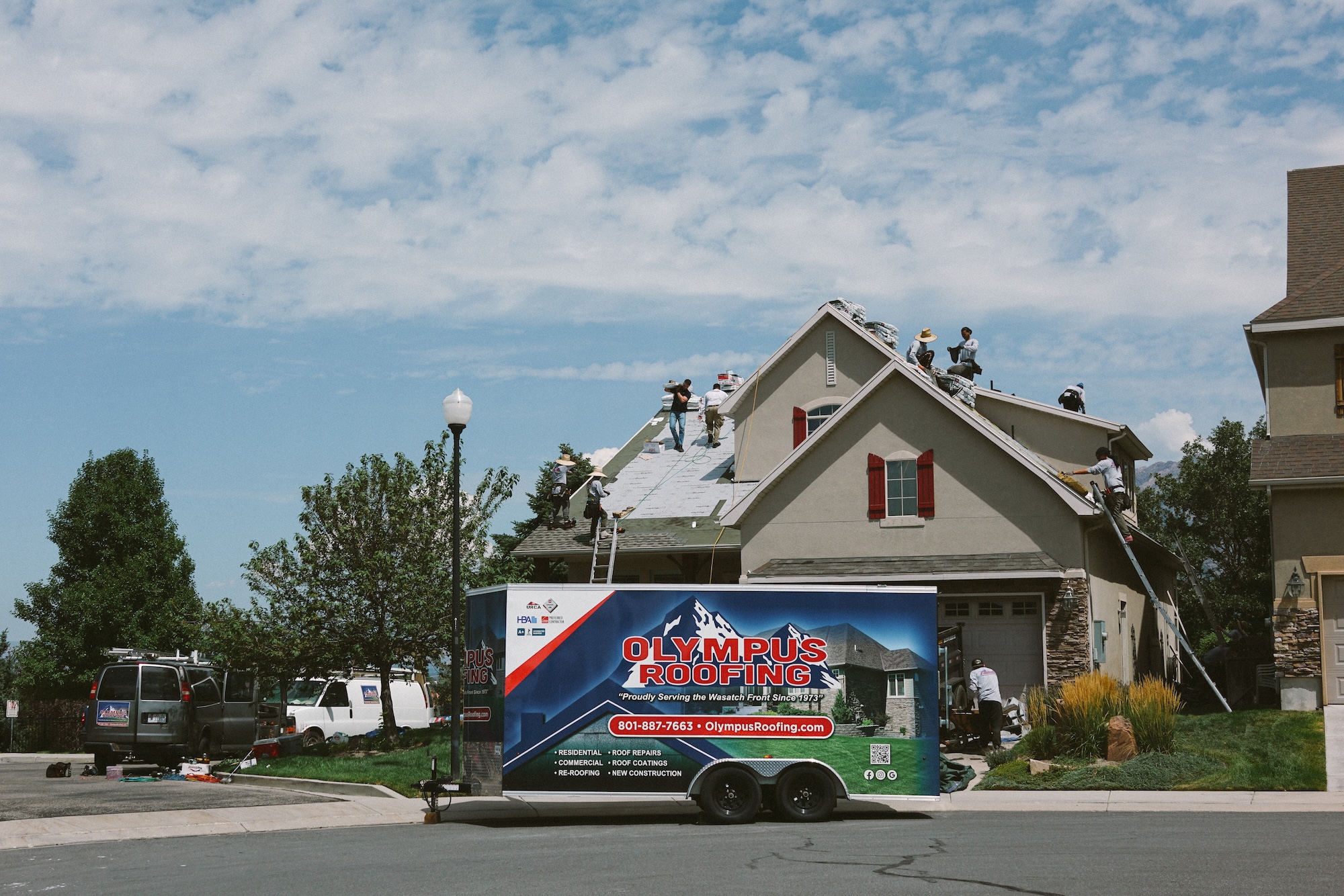
The Path Forward
Stepping back from the day-to-day chaos of a $10 million roofing company is incredibly difficult, but it is the only way to unlock true profitability. Growth at this scale requires a complete evolution in how you view your responsibilities as a business owner.
“Your job is not to be the star quarterback as a leader,” Bryan notes. “Your job is to be on the sidelines as a coach, and the players—the star players—are winning the game. That‘s the goal.”
Build the systems, develop your team, and create the structure that allows your business to win consistently. That's how you unlock true profitability and build a roofing company that generates revenue and creates lasting wealth.

Frequently Asked Questions
Many roofing companies hitting $10 million aren‘t breaking even because they lack a clear understanding of their financial fundamentals, specifically their margins and the true cost of every job. You must balance revenue with profitability by accurately estimating and tracking costs.
Roofers can stabilize cash flow by diversifying away from unpredictable storm work by building an inbound retail marketing engine, adding secondary trades like siding and gutters, and establishing recurring maintenance service agreements.
The biggest mistake is relying on manual processes and siloed, disconnected software. Scaling successfully requires integrating technology to automate workflows, get real-time financial visibility, and connect data to eliminate errors and inefficiencies.

Blog / Guide Title CTA
Once you've created a strong Linkedin profile, you can leverage it as part of your broader marketing strategy. Use your Linkedin to share content, join industry groups, and network with others in the contracting space.
If you're looking for additional marketing support, consider partnering with JobNimbus Marketing to maximize your business growth. Schedule a call with our team to learn how to boost your marketing efforts today.
Blog / Guide Title CTA
Once you've created a strong Linkedin profile, you can leverage it as part of your broader marketing strategy. Use your Linkedin to share content, join industry groups, and network with others in the contracting space.
If you're looking for additional marketing support, consider partnering with JobNimbus Marketing to maximize your business growth. Schedule a call with our team to learn how to boost your marketing efforts today.
Download Our Free Tips for Recession-Proofing Your Company
We’ll show you five simple things you can do to help your business survive a recession.