

Table of Contents

Win more bids. Close more jobs. Start with our newsletter.
Get exclusive insights, tips, and trends your competition doesn't want you to know.

Updated on July 6, 2026
Not long ago, a roofing company could rely almost entirely on referrals and storm-driven demand. A few yard signs, a recognizable truck, and word of mouth often meant a steady pipeline of work. That has changed. Homeowners now search Google, ask AI assistants, and read AI-generated search summaries before they ever pick up the phone. In fact, 45% of consumers now use AI tools like ChatGPT or Gemini to find local business recommendations, up from just 6% the year before. (BrightLocal, 2026) Understanding how to market a roofing company has become critical, and the right roofing company marketing strategies are now a key driver of growth.
What worked when you were a small team doing $700K in revenue will not carry you when you are scaling to $5 million and beyond. Each stage of growth requires a different marketing approach, according to JobNimbus's Peak Performance 2026 report. Spend too little, and you will stall out. Spend too much in the wrong places, and you will burn through cash without results.
The good news? With the right strategy, roofing companies can build a predictable pipeline of leads that scales as their business grows.
Quick Answer
A roofing company’s marketing strategy must evolve at every stage of growth. Under $1M in revenue, focus on visibility and credibility. Between $1M and $5M, build predictable lead flow and operational efficiency. Above $5M, invest in full funnel campaigns, brand leadership, and in-house marketing talent.
Key Takeaways
In this guide, you will learn:
How roofing marketing evolves at four revenue stages: Sub-$1M, $1M–$3M, $3M–$5M, and $5M+ ARR.
How to market a roofing company at each stage of growth.
What percentage of revenue roofing companies should spend on marketing, based on current benchmarks.
How to allocate that budget across agency fees, ad spend, tools, and team.
Which roofing company marketing strategies deliver the strongest ROI at each stage.
Why does a roofing company's marketing strategy need to change as it grows?
A roofing company's marketing strategy must change as it grows because each revenue stage requires different systems, budgets, and priorities.
Most roofing companies start small: the owner running estimates, a couple of crews on jobs, and marketing limited to a simple website, some business cards, and referrals. At that level, basic tactics can keep the business going.
But as revenue climbs, understanding how to market a roofing company correctly means shifting from survival to scalable systems. That includes refining your funnel, expanding your digital presence, investing in both paid and organic strategies, and eventually building in-house marketing leadership.
Roofing contractors who fail to evolve their roofing company marketing strategies hit a ceiling. Lead flow dries up, competitors get ahead online, and growth slows. Those who adapt their strategy at each stage are the ones who book jobs consistently, expand crews, and build long-term market presence.
What are the four common stages of roofing company growth?
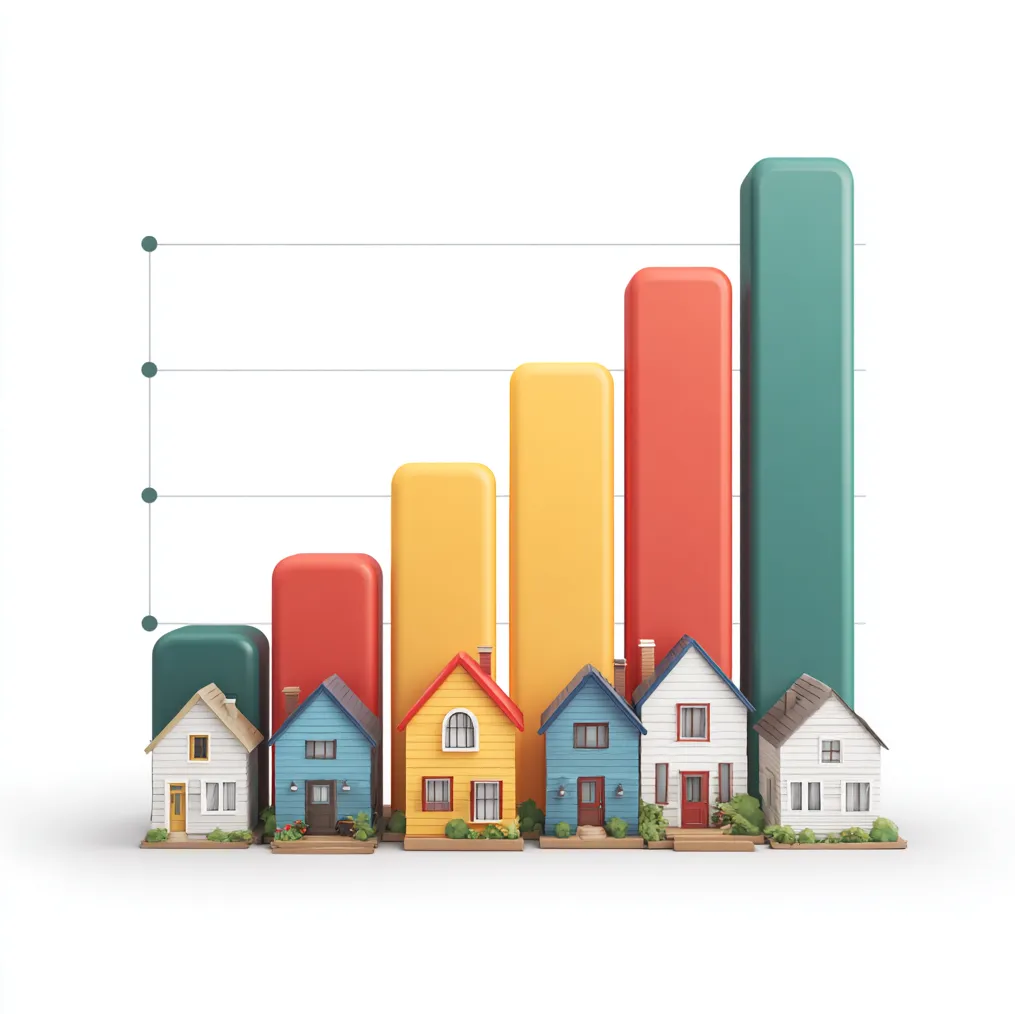
The four common stages of roofing company growth are Sub-$1M ARR, $1M–$3M ARR, $3M–$5M ARR, and $5M+ ARR.
While every business is different, most roofing companies follow a similar path as they expand. Each stage comes with its own challenges, priorities, and roofing company marketing strategies. Knowing these stages helps you set realistic budgets and pick the right approach to market your roofing business.
Full funnel campaigns and regional brand leadership
These stages are not rigid boundaries, but useful milestones. Knowing where you stand helps prevent overspending too early or underinvesting when growth opportunities are highest. The stakes are real: the U.S. roofing market is projected to grow from $32.66 billion in 2025 to $34.66 billion in 2026, (Mordor Intelligence, 2026) and 78% of roofing contractors expect their own sales volume to increase this year. (Roofing Contractor, 2026) The companies that adjust their marketing at each stage are the ones positioned to capture that growth.

What marketing works best for roofing companies under $1M ARR?
The best marketing for roofing companies under $1M ARR focuses on visibility, credibility, and simple lead generation.
At the earliest stage, the business is defined by hustle. The owner wears every hat, crews are small, and cash flow can be unpredictable. You do not need hundreds of leads; you need the right dozen each month. The goal is not to look big, but to be credible and easy to find when homeowners are searching. This is where learning how to market a roofing company effectively is critical. The foundation, your Google Business Profile, reviews, and a professional website, matters more than big campaigns.
Reputation already carries most of the weight at this stage. Referrals account for 95% of roofing leads and networking for another 72%, according to Peak Performance 2026. (Peak Performance 2026) Half of all homeowners choose their roofer through a referral. That means your reputation matters before you spend a single dollar on ads.
Recommended marketing strategies:
Google Business Profile: Claim and fully optimize it. It is often your biggest early lead source.
Local SEO: Rank for core intent terms in your city, such as roof repair, storm damage, and roof replacement. See a full local SEO blueprint for roofers.
Website foundation: A clean, mobile-friendly site with clear calls to action and click-to-call buttons.
Reviews and referrals: Ask after every job. Make it one-tap simple for customers to leave feedback.
Targeted PPC: Modest campaigns for high-intent keywords. Pause what does not convert.
Suggested budget & allocation:
Total marketing: 12%–20% of revenue (≈$84K–$140K if you’re at $700K ARR). New contractors in their first three to five years typically need to invest at the higher end of this range to build visibility from scratch. Source: Boomcycle, 2026.
Agency/consultant: $18K–$36K annually (site, GBP, SEO basics, light PPC).
Ad spend: $12K–$36K annually (seasonality + storm response).
Tools & website: $3K–$6K annually (hosting, reviews, call tracking).
Success at Sub-$1M is not about doing everything; it is about focusing on the roofing company marketing strategies that bring consistent results and align with your current growth stage. Reviews matter more than ever: 68% of consumers now say they will only consider a business with 4 or more stars, up from 55% just a year earlier. (BrightLocal, 2026) If you can generate repeatable leads from your Google Business Profile, reviews, local SEO, and a small PPC test, you will stabilize cash flow, keep crews busy, and set the stage to scale. The signal you are ready for Stage 2 is when you are booking jobs predictably, closing rates are steady, and you are prepared to invest in systems that reduce the need for you to micromanage campaigns.
What marketing helps roofing companies between $1M and $3M ARR?
The most effective marketing for $1M–$3M ARR roofing companies builds predictable lead flow with multi-channel marketing and a stronger brand.
Crossing the $1M mark is a major milestone. It shows the market trusts you, your crews are productive, and your processes work. The challenge now is not proving you belong, it is ensuring your lead flow does not dry up between storm events or busy seasons. To keep multiple crews busy, you need steady demand across channels. That requires a stronger digital footprint, better follow-up, and roofing company marketing strategies that move homeowners from first click to signed contract.
Recommended marketing strategies:
Comprehensive SEO: Local landing pages for each service area plus in-depth service pages to improve relevance.
PPC & retargeting: Capture immediate demand with Google Ads and Meta Ads; retarget visitors who did not convert on first touch.
Social proof engine: Before/after posts, job highlights, video testimonials; amplify on social.
CRM + email/SMS: Automations for estimates, reminders, reviews, and referrals.
Brand consistency: Cohesive visuals (site, trucks, proposals) to lift conversion rates.
Selective offline: Community sponsorships or direct mail where the cost per lead is favorable.
Expect to pay a premium for roofing clicks. The average cost per lead for roofing and gutters is $228.15, the highest of any home-services category tracked, with an average cost per click of $10.70. (LocaliQ, 2026) Retargeting visitors who do not convert on the first visit helps bring that blended cost down.
Suggested budget & allocation:
Total marketing: 8%–10% of revenue (≈$160K at $2M ARR). The average U.S. company now spends 7.7% of revenue on marketing; roofing companies scaling past $1M typically invest above that average to keep multiple crews busy. Source: Gartner 2025 CMO Spend Survey.
Agency/in-house hybrid: $50K–$100K annually (multi-channel strategy and execution).
Ad spend: $36K–$100K annually; allocate by ROAS.
Content, CRO, creatives: $10K–$30K annually (landing pages, video, photography).
Tools & reputation: $2K–$5K annually (CRM, reviews, call tracking, dashboards).
Stage 2 is where you move from chasing leads at any cost to roofing company marketing strategies that scale. Tighten tracking, know your cost per lead and cost per acquisition by channel, and double down where the math works. When organic traffic grows month over month and paid campaigns hit reliable ROI, you are ready to expand service areas, add more crews, and move into Stage 3.
How should roofing companies market themselves at $3M–$5M ARR?
Roofing companies at $3M–$5M ARR should focus on efficiency, optimization, and smart expansion.
At this level, you have proven staying power. Your phone rings, crews are busy, and you are competing with larger, established players. The challenge is no longer generating leads; it is squeezing more value from the leads you already have, while preparing for geographic and service expansion. Marketing shifts from being about acquisition to being about efficiency: optimizing conversion rates, lowering cost per lead, and strengthening brand credibility.
Recommended marketing strategies:
Advanced SEO + content engine: Editorial calendar for blogs, guides, and city pages; add video.
Conversion rate optimization: A/B test headlines, forms, and calls to action; improve site speed and usability.
Smarter paid media: Retargeting, lookalikes, dynamic creative; protect your brand terms.
Community presence: Sponsorships, events, and PR build trust at scale and boost close rates.
In-house capacity: Hire a marketing manager and a content/creative role; keep agency support for specialists.
Attribution discipline: Track leads to revenue with tools like JobNimbus Insights, plus call tracking and UTM parameters.
Suggested budget & allocation:
Total marketing: 7%–10% of revenue (≈$320K at $4M ARR). Businesses in the $10M–$25M range allocate closer to 12.2% of their overall budget to marketing, a useful ceiling as you approach $5M. Source: TrueFuture Media, 2026.
Team + agency: $96K–$180K annually (leadership + specialist support).
Ad spend: $100K–$250K annually (multi-market campaigns; seasonal adjustments).
Content/video/brand assets: $20K–$50K annually.
Tools & automation: $5K–$15K annually (dashboards, reporting, integrations).
Stage 3 winners are defined by efficiency and control. They know their conversion rate by landing page, their cost per lead by ad group, and which neighborhoods or service types deliver the best ROI. A first in-house marketing hire also tends to make financial sense somewhere in this range, once monthly marketing workload consistently exceeds 30 to 40 hours and a full-time salary stays under roughly 10% of gross revenue. (Tenet, 2026) With that insight, you can expand into new markets, add complementary services, and still maintain margins.

What marketing drives growth for roofing companies over $5M ARR?
Roofing companies over $5M ARR grow best by balancing full funnel campaigns with brand leadership and analytics.
At $5M and beyond, you have established yourself as more than just a local roofer; you are now seen as a regional leader. The challenge is not about generating enough leads but about sustaining growth, protecting market share, and expanding without overspending. This requires building an in-house marketing team, running full funnel campaigns across multiple platforms, and strengthening analytics so every dollar is accounted for.
Recommended marketing strategies:
Full funnel orchestration: SEO, PPC, LSAs, social, video, and CTV where effective.
Brand campaigns: Invest in quality creative and consistent storytelling across markets.
Analytics & attribution: Multi-touch where possible; standardized reporting across branches.
In-house marketing org: Director plus channel specialists in SEO, PPC, content, design, and video.
Market expansion: Playbooks for launching new cities; PR and partnerships to accelerate trust.
Customer lifecycle: Loyalty, maintenance plans, and systematic review and referral programs.
Suggested budget & allocation:
Total marketing: 5%–9% of revenue (≈$640K at $8M ARR).
Internal team: $200K–$400K annually (leadership + specialists).
Ad spend: $200K–$600K+ annually (multi-region media mix; brand + demand).
High-end creative & campaigns: $50K–$200K annually.
Data & tooling: Increased investment for attribution, BI, and forecasting.
Marketing investment does not shrink to nothing at scale. Across U.S. businesses of all sizes, marketing now claims an average of 9.4% of company revenue, (Deloitte/Duke CMO Survey, 2025) and roofing companies with a recognized regional brand typically settle between 6% and 12% once acquisition costs stabilize. (Boomcycle, 2026) Stage 4 is about building a lasting advantage: brand recognition, reliable customer experience, and precise, data-driven allocation of marketing spend.
Ranges reflect blended benchmarks for contractor and small business marketing spend, cited by stage above.
Final Takeaway: Why must roofing marketing evolve at every stage?
Roofing marketing must evolve at every stage because growth depends on adapting strategy, not repeating old tactics.
Roofing companies that thrive know that learning how to market a roofing company is not one-size-fits-all. The strategies and budget that fuel growth at $700K will not sustain you at $5M+. The key is to evolve:
Start with visibility and trust.
Scale into consistent lead flow.
Optimize for efficiency and expansion.
Invest in brand and systems to dominate your market.
Marketing is no longer optional; it is the foundation of predictable growth. With the right roofing company marketing strategies at each stage, you can go from a single crew to a market-leading brand.
Ready to scale your roofing business with a marketing strategy built for your stage of growth?
JobNimbus Marketing helps roofing and exterior companies build stage-appropriate marketing systems that deliver measurable results. From search engine optimization and Google Business Profile optimization to media buying and analytics, the team tailors the plan to your goals, team, and timeline.
Schedule your free strategy session today and start building the marketing foundation your business needs to grow.

Frequently Asked Questions
A roofing company should spend roughly 12% to 20% of revenue under $1M ARR, 8% to 10% at $1M–$3M ARR, 7% to 10% at $3M–$5M ARR, and 5% to 9% at $5M+. Spending toward the higher end makes sense when entering new markets or competing in crowded areas.
Early on, a roofing company should expect 30% to 50% of its budget to go to agency support. As the company grows, more shifts to in-house roles and media spend. Nationally, marketing budgets break down to about 30.6% paid media, 22.4% martech, 21.9% labor, and 20.7% agencies, according to Gartner's 2025 CMO Spend Survey.
The fastest way for a roofing company to generate leads is Google Local Services Ads and targeted Google Ads for high-intent keywords. Retargeting campaigns and a strong Google Business Profile with reviews boost conversion further.
Roofing SEO and content typically show measurable results in three to six months, with stronger gains at six to twelve months. Publishing service pages, city pages, and Q&A-style blogs builds results in both search and AI-powered answer engines.
A roofing company should consider hiring in-house once it approaches $2 million to $3 million in annual revenue, or once monthly marketing workload consistently exceeds 30 to 40 hours. Most start with a marketing manager to lead strategy while agencies handle specialized execution like SEO, PPC, video, and CRO.
A roofing company can measure marketing effectiveness by tracking cost per lead, cost per acquisition, close rate by channel, average job value, and revenue by source. Tools like call tracking, UTM parameters, and a CRM make it easier to measure results and adjust budget with confidence.

Blog / Guide Title CTA
Once you've created a strong Linkedin profile, you can leverage it as part of your broader marketing strategy. Use your Linkedin to share content, join industry groups, and network with others in the contracting space.
If you're looking for additional marketing support, consider partnering with JobNimbus Marketing to maximize your business growth. Schedule a call with our team to learn how to boost your marketing efforts today.
Blog / Guide Title CTA
Once you've created a strong Linkedin profile, you can leverage it as part of your broader marketing strategy. Use your Linkedin to share content, join industry groups, and network with others in the contracting space.
If you're looking for additional marketing support, consider partnering with JobNimbus Marketing to maximize your business growth. Schedule a call with our team to learn how to boost your marketing efforts today.
Download Our Free Tips for Recession-Proofing Your Company
We’ll show you five simple things you can do to help your business survive a recession.