

Table of Contents

Win more bids. Close more jobs. Start with our newsletter.
Get exclusive insights, tips, and trends your competition doesn't want you to know.

Key takeaways
- EPDM (ethylene propylene diene monomer) is a single-ply rubber roofing membrane used on most low-slope commercial buildings in the U.S. because it is durable, repairable, and predictable across decades of service.
- The EPDM Roofing Association now reports an expected service life of 38 years for properly installed EPDM membranes, with field-verified roofs reaching 45 to 50 years.
- Three assembly methods (fully adhered, mechanically fastened, ballasted) drive most of the cost and performance decisions, not the membrane itself. Picking the wrong assembly is more expensive than picking the wrong membrane.
- According to the EPA, cool roofs can reduce peak cooling demand by 11 to 27% in air-conditioned buildings, which makes white EPDM and reflective coatings a real ROI lever in cooling-dominated climates.
- EPDM contractors who track every job from estimate to closeout in one platform close more bids and protect more margin. JobNimbus is the roofing CRM trusted by thousands of contractors to manage commercial and residential projects end to end.
EPDM is the workhorse of American commercial low-slope roofing. The membrane has been on warehouses, schools, hospitals, retail centers, and apartment buildings for more than 50 years, and the longest-running installations are still keeping water out today.
That track record separates EPDM from newer single-ply chemistries: the field data exists. This guide breaks down what EPDM roofing is, the assembly methods that determine its performance on the job, the design and detailing decisions that drive lifespan, and the cost and execution realities roofing contractors face when bidding and installing EPDM.
What is EPDM roofing?
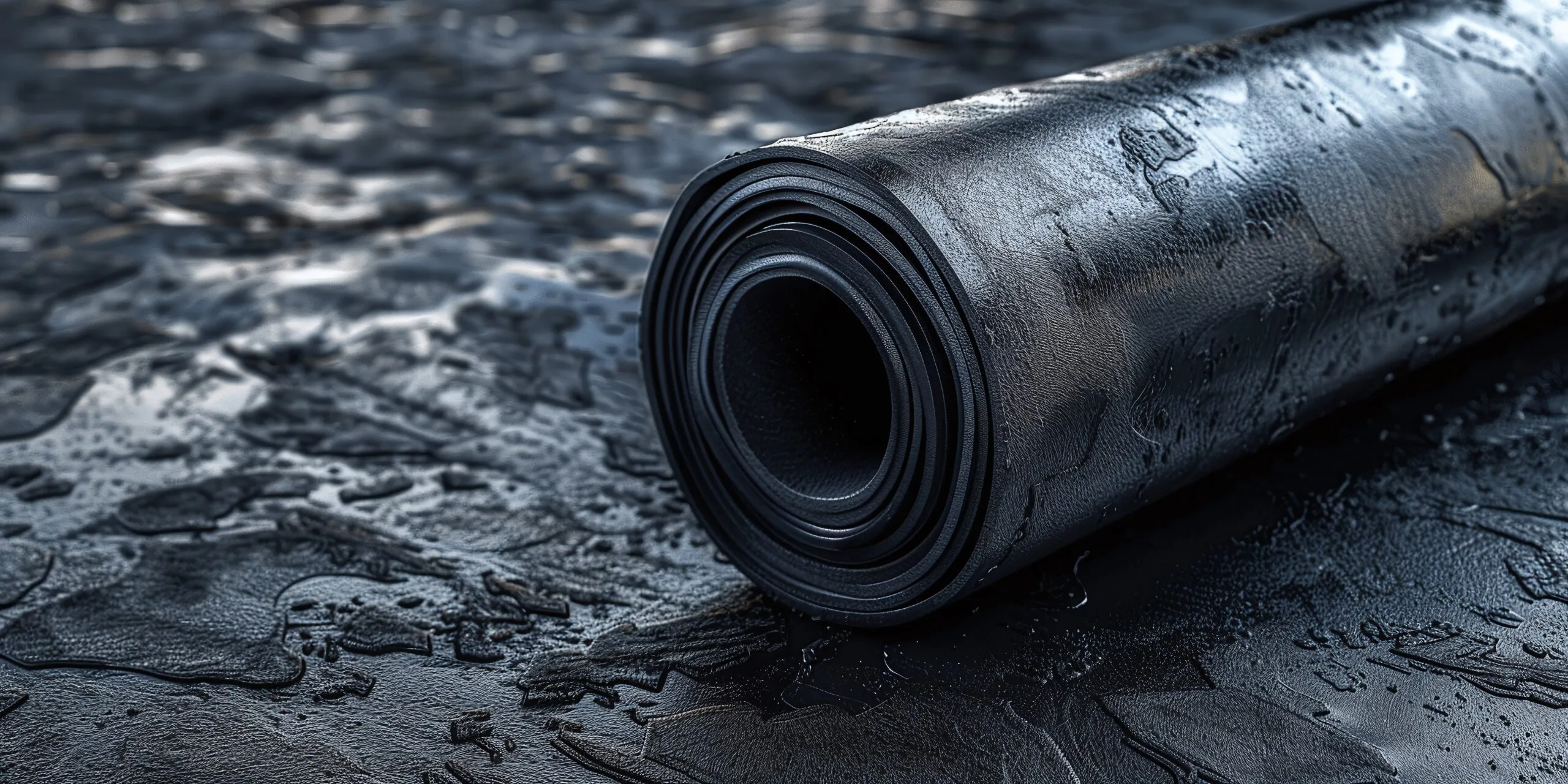
EPDM stands for ethylene propylene diene monomer, a synthetic rubber single-ply membrane used as the waterproofing layer on low-slope roofs. Sheets are supplied in widths from about 7 to 50 feet, rolled out across the roof, and joined at seams with splice tape or splice adhesive. The membrane sits on top of insulation and a deck, with edge metal, flashings, and accessories completing the system.
EPDM membrane types you'll see in bids
ASTM D4637 defines three sheet types for EPDM roofing membranes:
- Type I (non-reinforced): A homogeneous rubber sheet without internal scrim. Common on adhered and ballasted systems.
- Type II (reinforced): A polyester scrim is bonded inside for puncture and tear resistance. Standard for mechanically fastened systems.
- Type III (fabric-backed): A fabric layer bonded to the underside, used in specific adhered applications.
ASTM D4637 sets minimum physical requirements (thickness, breaking strength, tensile strength, elongation, ozone resistance, weather resistance) for each type. Bids that don't reference the standard are flagging that something is off.
Thickness, color, and what they actually mean
Membranes come in 45-mil, 60-mil, 75-mil, and 90-mil thicknesses. Thicker is not automatically better. It buys puncture resistance, hail performance, and warranty terms, but adds material cost and weight. A 45-mil non-reinforced sheet is appropriate for many fully adhered applications; 60-mil reinforced is the typical mechanically fastened spec; 90-mil is for high-traffic or extreme-exposure roofs.
Black EPDM is the standard for non-cool-roof applications. It absorbs heat (which can shorten cooling savings in hot climates) but stays warmer and more flexible in cold climates. White EPDM is co-extruded or laminated with a reflective surface for cool-roof performance.
For a broader view of how EPDM compares to other membranes, see the JobNimbus overview of residential roofing materials.
EPDM system options: fully adhered, mechanically fastened, and ballasted
Three assembly methods dominate EPDM roofing, and the decision between them drives more long-term performance than any other single specification choice.
Fully adhered EPDM systems
Fully adhered systems bond the membrane directly to the insulation or cover board with adhesive. The result is a smooth, continuous surface with no fasteners penetrating the membrane and no ballast adding weight. Adhered roofs perform best in high-wind zones and on roofs with complex geometry because uplift forces transfer evenly across the surface rather than concentrating at fastener heads.
Adhesive options include solvent-based bonding adhesive, low-VOC water-based adhesive, and self-adhered membranes with factory-applied bonding tape. Cold-weather installation limits and VOC restrictions can drive the choice. The most common failure mode is adhesion voids from poor substrate prep, wet insulation, or rushed application; substrate dryness verification and adhesive coverage checks belong in your QC protocol.
Mechanically fastened EPDM systems
Mechanically fastened systems anchor the membrane (and the insulation beneath it) to the deck with screws and barbed plates along seam laps. Wind uplift resistance comes from the fastener pattern and seam strength rather than adhesion to the substrate.
Fastened systems install faster than adhered systems and tolerate cooler temperatures, which makes them the default on large warehouse, distribution, and industrial roofs where speed and cost matter most. The tradeoff is "fluttering" or telegraphing in high winds (the membrane between fasteners can lift slightly), which can be felt or heard inside the building below. Engineered fastener patterns specified for the project's wind zone are the difference between a fastened roof that performs and one that does not.
Ballasted EPDM systems
Ballasted systems lay loose membrane over the insulation and hold it down with stone, pavers, or paver blocks (typically 10 to 25 pounds per square foot). They install fast, eliminate fasteners through the membrane, and create no penetrations in the field of the roof.
The catches are structural and operational. The deck has to carry the ballast load, which often requires engineering review on retrofits. Drift loads at parapets and equipment screens can exceed design assumptions if not properly modeled. Foot traffic, HVAC service, and solar installation all become more complicated because crews work on stone instead of membrane.
Design essentials: decks, insulation, slope, and drainage
The membrane is the visible part of an EPDM roof. The deck, insulation, slope, and drainage decide whether it lasts 15 years or 40.
Deck compatibility and substrate readiness
Steel decks need a cover board (gypsum, perlite, or high-density polyiso) between the steel ribs and the membrane to provide a smooth, puncture-resistant substrate. Concrete decks need to be dry, primed where necessary, and free of curing compound residue that interferes with adhesion. Wood and gypsum decks bring their own fastening and moisture management considerations.
On reroof projects, recover (installing new membrane over existing) is faster and cheaper than full tear-off, but only if existing insulation is dry and deck attachment is sound. Infrared moisture surveys before bid are the standard approach. Hidden wet insulation found mid-project is one of the most common change-order triggers; the JobNimbus guide to price a roofing job covers how to scope deck repair allowances cleanly.
Insulation strategy and tapered systems
Polyisocyanurate (polyiso) is the dominant insulation under EPDM membranes because of its R-value per inch, fire performance, and broad code acceptance. R-value targets vary by climate zone and energy code, but most modern commercial roofs land between R-25 and R-40.
Tapered insulation systems create slope on a structurally flat deck so water drains rather than ponds. A standard taper is 1/4 inch per foot toward drains, with crickets behind curbs and equipment to break up flat spots. Ponding water by itself does not destroy EPDM (the membrane is tolerant of standing water within reason), but persistent ponding accelerates seam stress, magnifies hail damage, and complicates leak detection.
The details that cause most leaks
Roof failures rarely happen in the field of the membrane. They happen at:
- Perimeters and corners. Edge metal securement and termination details fail under wind uplift before the field membrane does.
- Penetrations. Curbs, pipes, conduits, and equipment supports each need flashing detailed to manufacturer specifications.
- Drains and scuppers. Clamping rings need to be properly torqued, sumped to drain water positively, and supplemented with overflow drainage where code requires it.
A bid that itemizes these details by type and quantity gets reviewed; one that lumps them as "all flashings included" invites disputes.## Seams, flashings, and rooftop coordination
If assembly method drives performance, seam and flashing quality drives realized service life. Two roofs installed by different crews using identical materials can perform decades apart based on how the transitions and joints were executed.
Seam technology choices
EPDM seams are joined with splice adhesive (a contact cement applied to both surfaces, then mated) or seam tape (a factory-cured adhesive strip). Modern seam tape has largely replaced field-mixed splice adhesive on quality projects because tape produces more consistent results and is less weather-sensitive.
Field seam testing (probe testing or peel adhesion checks) and photo documentation belong in your QC protocol on every job. Seams are also where future repairs happen, so a roof that gets routine seam inspection lasts decades longer than one that does not.
Flashings and transitions
Inside corners, outside corners, parapet caps, and wall-to-roof transitions all use pre-formed accessories or field-fabricated flashings to handle stress concentrations. EPDM compatibility with adjacent materials matters: contact with bituminous products (asphalt, coal tar) and certain plasticizers can degrade the membrane, so primers and separator sheets are required at those interfaces. Walkway pads and protection mats around HVAC equipment, hatches, and service paths are not optional on roofs that see traffic.
Rooftop equipment coordination
HVAC, solar, and roof-mounted electrical work damages more EPDM membranes than weather. The fix is sequencing and ownership clarity in the contract: who installs equipment supports, who flashes them, who is liable if the membrane is damaged after the roofer has left.
Performance: wind uplift, fire ratings, and weathering
Three performance categories shape most procurement and code conversations.
Wind uplift performance for low-slope roofs
Wind uplift on low-slope roofs is highest at corners and perimeter zones, where pressures can be three to five times the field value. Specifications should cite a tested assembly with FM Approvals (RoofNav) or UL listings, not a generic "wind-rated" claim. The same membrane installed with different fastener patterns and edge details can carry wildly different uplift ratings. A spec that calls for the same attachment density across the entire roof is a red flag.
Fire classification and code acceptance
UL 790 (also published as ASTM E108) is the standard test method for roof covering fire performance, and it produces Class A, B, or C ratings for the assembly, not for the membrane alone. An EPDM roof's fire rating depends on the membrane, the underlayment or cover board, the insulation, and the deck working together. Provide tested assembly numbers in your bids, not marketing claims about "Class A membrane."
Weathering and climate fit
EPDM's UV and ozone resistance is the reason 30-year-old roofs are still passing physical property tests. The 2025 EPDM Roofing Association service life review consolidated decades of field data and lab testing to establish 38 years as the expected service life for properly installed EPDM membranes.
Cold-weather flexibility is a particular EPDM strength: the material remains pliable at temperatures where some thermoplastics become brittle, which protects against hail and thermal cycling damage.
EPDM cost drivers and total cost of ownership
EPDM prices vary widely for the same nominal material. Five variables move the bid most.
What affects EPDM roof cost per square foot
- Assembly choice. Fully adhered runs higher per square foot than mechanically fastened or ballasted; labor and adhesive cost adds up.
- Membrane thickness and reinforcement. A 90-mil reinforced sheet costs noticeably more than a 45-mil non-reinforced sheet.
- Insulation scope and tapered system. R-value targets, cover boards, and tapered slope packages can equal or exceed the membrane line item.
- Tear-off and deck condition. Existing layers, hidden moisture, and deck repairs are common scope expanders.
- Roof complexity. Penetrations, parapets, expansion joints, and equipment curbs each multiply labor and material waste.
For accurate scope and pricing on commercial low-slope projects, the JobNimbus roof estimating software guide breaks down what to include in a defensible bid.
Bid leveling and total cost of ownership
Two bids on the same EPDM project can come in 30% apart because each contractor scoped different deck prep, different insulation, different drainage allowances, or different warranty terms. Knowing what an experienced commercial customer or property manager will compare line by line lets you submit a bid that holds up under scrutiny instead of getting torn apart in the spreadsheet review:
- Membrane spec (manufacturer, type, thickness, color)
- Insulation R-value, cover board presence, taper quantity
- Edge metal, flashing scope, and termination details
- Drain/scupper retrofit and overflow allowances
- Warranty terms (material, labor, system, NDL or prorated)
Total cost of ownership shifts the conversation from install price to lifecycle cost, which is the contractor's strongest argument against a low-baller. A 60-mil fully adhered EPDM roof at a 25% premium over a 45-mil mechanically fastened system can deliver 10 to 15 additional years of service plus reduced maintenance. If you can show a commercial customer the math (and the photo documentation from your last similar job), the premium spec wins more often than the cheap one.
Service life, maintenance, and when to repair vs replace
The EPDM Roofing Association's 38-year expected service life is achievable only with maintenance discipline. Roofs that get inspected and repaired live decades longer than roofs that get attention only when they leak.
Preventive maintenance basics
Twice-yearly inspections (spring and fall) plus post-storm walks catch most issues before they propagate, and they are a recurring revenue stream for contractors who treat maintenance as a service line rather than a free favor. On every walk, document lifted or telegraphing seam edges, flashing stress at corners and penetrations, membrane cuts and abrasions, clogged drains, pooled water lasting more than 48 hours, and damage from chimney flashing, satellite mounts, or HVAC service paths. Photo documentation tied to each location protects you on warranty disputes and converts inspections into repair or restoration bids before the leak forces an emergency call.
Repair, restore, or replace
- Repair handles localized issues: punctures, small seam openings, individual flashing failures, isolated drain repairs. EPDM patches with modern seam tape are reliable when the membrane is otherwise sound.
- Restoration coatings (white acrylic or silicone) extend service life on aging EPDM that has weathered cosmetically but remains structurally intact. Coatings work best when the membrane is clean, dry, and free of widespread seam failures. They do not save a roof with saturated insulation underneath.
- Replacement is triggered by widespread seam failure, saturated insulation, repeated leaks in different areas, or accumulated damage that exceeds the cost of restoration.
Moisture surveys are the deciding tool: dry insulation usually means the roof is a candidate for repair or restoration; wet insulation usually means tear-off.
EPDM vs TPO vs PVC and cool-roof strategy
When the customer is deciding between EPDM and a thermoplastic membrane (TPO or PVC), three factors usually tip the balance.
Decision criteria that matter
Risk profile. EPDM excels at puncture tolerance, repairability, and cold-weather flexibility. PVC excels at chemical resistance and is the standard over restaurants, food processing, and grease-heavy exhaust. TPO is the commercial workhorse where reflectance and weldable seams are priorities.
Energy strategy. Black EPDM has very low solar reflectance; white EPDM and TPO/PVC are reflective by default. According to the EPA, cool roofs can reduce peak cooling demand by 11 to 27% in air-conditioned buildings, which makes membrane color a real ROI lever in cooling-dominated climates.
Installability. Adhered and tape-seamed EPDM has a wider temperature window than hot-air-welded TPO or PVC, which can matter on cold-region projects with tight schedules.
When white EPDM changes the equation
White EPDM is the contractor's answer to a customer shopping you against a TPO bid for energy reasons. It delivers cool-roof reflectance with the EPDM track record and repairability you already know how to install. The Cool Roof Rating Council publishes initial and aged solar reflectance values, which is the data you put in front of a customer to neutralize a TPO competitor's energy claim. Aged values matter most: thermoplastic and EPDM membranes both lose some reflectance to soiling over the first three years, so apples-to-apples comparison comes from year-three numbers, not the spec sheet.
Contractors who carry both EPDM and TPO close more bids than ones who only sell what they prefer. The customer's grease load, traffic profile, and energy goals decide the right product.
Specs, warranties, and how to win EPDM bids
A great EPDM roof is the result of a good spec, a credible warranty, and a contractor who can execute both. For roofing companies bidding commercial work, all three need attention before the proposal goes out the door.
Spec framework that prevents scope gaps
A defensible EPDM specification covers four layers:
- Material standards. ASTM D4637 referenced explicitly, with sheet type (I, II, III) and thickness called out.
- System performance targets. Wind uplift rating with tested assembly number, fire classification with assembly listing, attachment method.
- Detail standards. Edge metal, perimeter and corner enhanced attachment, expansion joints, penetration flashings, drain retrofits.
- Submittal and closeout requirements. Shop drawings, product data, tested assembly documentation, photo documentation, final walk and punchlist.
A bid that itemizes these four layers wins more work than one that quotes a flat per-square number. For contractors building proposals to commercial owners, roofing sales software that produces templated, branded bids tightens the close rate without expanding back-office work.
Warranty mechanics worth explaining to the customer
EPDM warranties come in three flavors:
- Material-only warranties cover the membrane if it fails in service, typically for 20 to 30 years prorated.
- System warranties cover the membrane plus accessories (insulation, edge metal, flashings) when installed by an authorized contractor.
- NDL (no dollar limit) labor and material warranties are the strongest tier and require manufacturer-authorized contractors, inspections, and detailed maintenance compliance.
Customers reading warranties for the first time are often surprised by what is excluded: ponding water beyond a stated duration, third-party damage (HVAC service, satellite installs), unauthorized repairs, and lapsed maintenance. Walking the customer through these exclusions during the sales conversation builds trust and protects you from the "but I thought it was covered" call two years later. It also gives you a natural opening to sell a maintenance program that keeps the warranty intact.
How to compete on EPDM bids
Three things separate contractors who consistently win EPDM bids from ones who chase margin on every job:
- Manufacturer authorization at the level required for the warranty being sold. NDL warranties require authorized installer status, which is your moat against any contractor who can't offer the same warranty tier.
- Crew specialization by assembly method. A fully adhered EPDM crew is not interchangeable with a mechanically fastened crew. If you want to sell adhered, train and certify crews on it specifically.
- Quality control documentation. Daily reports, seam testing logs, and photo records turn a closeout package into a marketing asset for the next bid.
Customers shopping bids on price alone are not your customers. The ones who ask for tested assembly numbers, FM Approval listings, and warranty terms are the ones where your investment in spec and documentation pays back.
Run EPDM roofing projects smarter with JobNimbus
EPDM projects involve bid leveling, material orders, crew scheduling, photo documentation, seam test logs, warranty registration, and ongoing maintenance handoff. Contractors who track all of that in scattered spreadsheets and text threads lose hours and lose bids.
The JobNimbus roofing CRM guide describes the platform built for this workflow:
- Track every EPDM project by assembly type, scope, and stage in a single visual pipeline.
- Document substrate prep, seam testing, and flashing details with photos pinned to the right job automatically.
- Send branded proposals and contracts in minutes, with line items that match how a fully adhered, mechanically fastened, or ballasted bid should each be priced.
- Manage warranty registration, code-compliance documentation, and FM assembly records for handoff to the customer.
- Keep crews, subs, and office staff connected in one mobile app from estimate to final inspection.
Try JobNimbus free for 14 days to see why thousands of roofing contractors run their commercial and residential business on the platform.

Frequently Asked Questions
PDM is ethylene propylene diene monomer, a black synthetic rubber single-ply membrane known for cold-weather flexibility and a long commercial track record.
The EPDM Roofing Association reports an expected service life of 38 years for properly designed, installed, and maintained EPDM membranes, with field-verified roofs reaching 45 to 50 years.
ASTM D4637 is the active standard specification for EPDM sheet used in single-ply roof membrane. It defines minimum physical requirements for non-reinforced (Type I), reinforced (Type II), and fabric-backed (Type III) sheets.
Fully adhered systems bond the membrane to the substrate with adhesive across the entire surface. Mechanically fastened systems anchor the membrane and insulation to the deck with screws and plates along seam laps. Adhered performs better in high-wind zones and complex geometry; fastened installs faster and tolerates cooler temperatures.
Neither is universally better. EPDM has a stronger long-term track record, better cold-weather flexibility, and easier repairs. TPO is reflective by default, has welded seams, and often costs less per square foot. The right choice depends on climate, traffic, and chemical exposure."Rubber roofing" is the casual industry term for EPDM. EPDM is a specific synthetic rubber chemistry; in commercial low-slope context "rubber roof" almost always means EPDM.

Blog / Guide Title CTA
Once you've created a strong Linkedin profile, you can leverage it as part of your broader marketing strategy. Use your Linkedin to share content, join industry groups, and network with others in the contracting space.
If you're looking for additional marketing support, consider partnering with JobNimbus Marketing to maximize your business growth. Schedule a call with our team to learn how to boost your marketing efforts today.
Blog / Guide Title CTA
Once you've created a strong Linkedin profile, you can leverage it as part of your broader marketing strategy. Use your Linkedin to share content, join industry groups, and network with others in the contracting space.
If you're looking for additional marketing support, consider partnering with JobNimbus Marketing to maximize your business growth. Schedule a call with our team to learn how to boost your marketing efforts today.
Download Our Free Tips for Recession-Proofing Your Company
We’ll show you five simple things you can do to help your business survive a recession.