

Table of Contents

Win more bids. Close more jobs. Start with our newsletter.
Get exclusive insights, tips, and trends your competition doesn't want you to know.

Key takeaways
- TPO (Thermoplastic Polyolefin) is the most widely installed commercial flat roofing membrane in North America, favored for its balance of cost, durability, and reflective energy performance.
- White TPO membranes meet ENERGY STAR and CRRC standards, reducing cooling loads and supporting sustainability goals for commercial facilities.
- Installed TPO costs typically range from $5 to $12 per square foot, depending on membrane thickness, system type, and whether tear-off is required.
- A well-maintained TPO roof can last 15 to 30 years, with manufacturer warranties ranging from 10 to 30 years including No Dollar Limit (NDL) coverage tiers.
- The right installation method matters as much as the membrane itself—mechanically attached, fully adhered, and ballasted systems each carry distinct performance and cost implications.
- Roofing contractors who use tools like roofing software can deliver more accurate bids and tighter project execution on complex commercial TPO jobs.
Introduction
TPO roofing has quietly become the default choice for commercial flat roofs across North America. It is not flashy, but it is reliable, energy-efficient, and cost-competitive in a way that other single-ply membranes simply are not.
For commercial property owners, facility managers, and the roofing contractors who serve them, the decision to install or replace a TPO roof is a significant capital commitment. Getting it right means understanding the material, the installation system, the cost drivers, and the long-term performance expectations all before the crew sets foot on the roof.
This guide covers all of it.
What is TPO roofing and how thermoplastic polyolefin membranes work
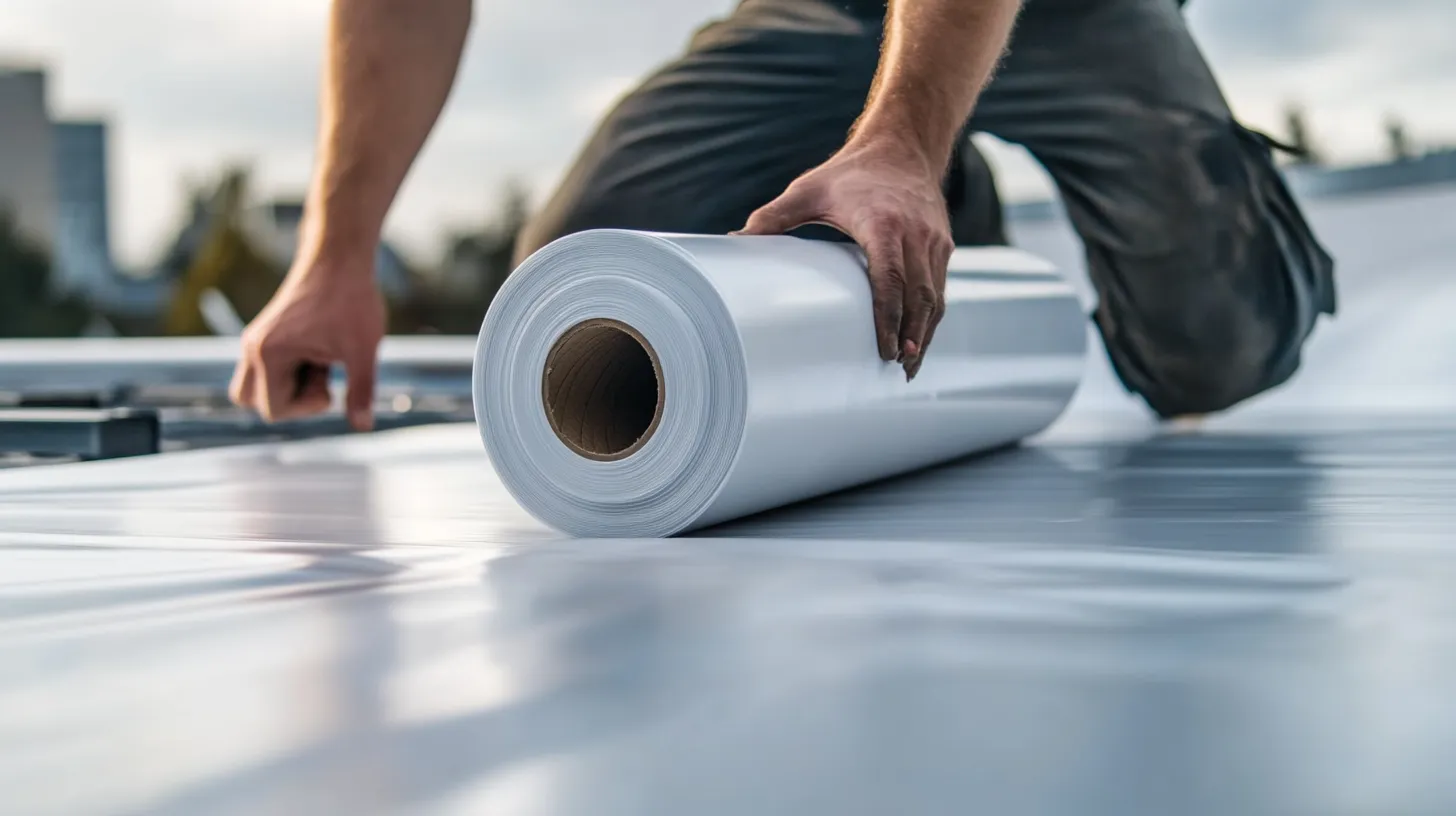
TPO roofing is a single-ply membrane system made from thermoplastic polyolefin, which is a blend of polypropylene and ethylene-propylene rubber. It is manufactured in large rolls and installed over low-slope or flat roof substrates on commercial, industrial, and institutional buildings.
What makes TPO different from EPDM and PVC?
The key differences come down to chemistry and the seaming method.
EPDM (Ethylene Propylene Diene Monomer) is a rubber-based membrane bonded with adhesives or tape with no heat involved. PVC (Polyvinyl Chloride) is also heat-weldable, but its formulation includes plasticizers that can leach over time, raising long-term durability and environmental concerns.
TPO threads the needle: it is heat-weldable like PVC, producing stronger seams than taped EPDM systems, but without the plasticizer concerns. Its white surface reflects solar radiation rather than absorbing it, which is a meaningful advantage over traditional black EPDM in warm climates.
Key material characteristics:
- Flexibility: Remains pliable across a wide temperature range without cracking
- UV resistance: Formulated to resist degradation from prolonged sun exposure
- Chemical stability: Resistant to ozone, algae, and many common rooftop contaminants
- Heat-weldable seams: Hot-air welding creates monolithic, watertight joints that outperform adhesive bonds
ASTM D6878: the standard that governs TPO quality
Not all TPO membranes are equal. ASTM International's D6878 standard sets the performance requirements for TPO roofing membranes, covering breaking strength, elongation, puncture resistance, and weathering performance.
TPO membranes come in three primary thicknesses:
Reinforced membranes include a polyester or fiberglass scrim layer sandwiched within the TPO compound, significantly increasing tensile and tear resistance. Non-reinforced membranes are less common in commercial applications and generally not recommended for mechanically attached systems.
Why TPO has become the dominant commercial flat roofing membrane
TPO has captured the largest share of the commercial low-slope roofing market in North America for a straightforward reason: it delivers competitive performance at a price point below PVC and with easier installation than some alternatives.
Large-footprint buildings such as warehouses, distribution centers, retail facilities, and healthcare campuses benefit most. The material's white reflective surface directly reduces HVAC loads, and its heat-welded seam system supports large-scale, fast-moving installation crews. For facility managers balancing capital budgets and energy costs, the value proposition is hard to argue with. Make sure that you can easily measure the savings by using custom roofing estimating software that incorporates different materials and approaches to each job.
Energy efficiency benefits of TPO roofing for commercial buildings
Reflective roofing is not just a trend. It is increasingly a code requirement, a rebate trigger, and a line item in ESG reporting. TPO's white surface is purpose-built for this environment.
How reflective TPO roofing reduces cooling Lloads
White TPO membranes reflect a significant portion of incoming solar radiation rather than converting it to heat inside the building envelope. This is measured by the Solar Reflectance Index (SRI) — a composite metric accounting for both reflectance and thermal emittance.
The U.S. Department of Energy and Oak Ridge National Laboratory have documented that reflective roofing membranes can measurably reduce peak cooling demand in commercial buildings, with the greatest impact in warmer climate zones. Buildings in the South and Southwest, in particular, can see material reductions in HVAC runtime during summer months.
TPO also contributes to urban heat island mitigation, which is an issue of growing concern for municipalities across the country, as large commercial roof surfaces collectively elevate ambient temperatures in dense areas.
ENERGY STAR, CRRC ratings, and code compliance
ENERGY STAR sets minimum performance thresholds for reflective roofing products. For low-slope roofs, the program requires an initial solar reflectance of at least 0.65 and a thermal emittance of at least 0.90. Most commercial-grade white TPO membranes comfortably clear these benchmarks.
The Cool Roof Rating Council (CRRC) provides third-party testing and labeling for reflective roofing products. CRRC certification matters in several concrete ways:
- It is required for Title 24 compliance in California
- It is referenced in ASHRAE 90.1 energy standards
- It supports LEED credit eligibility under the Energy and Atmosphere category
- It is often required for utility rebate programs
Before specifying a TPO membrane, verify its CRRC rating. That single data point can affect rebate eligibility, code compliance, and LEED credit calculations simultaneously.
ROI for commercial building owners
The energy savings argument for TPO is strongest in high-cooling-load climates and large facilities. A 100,000-square-foot warehouse in Phoenix or Dallas will see meaningfully different returns than the same building in Minnesota.
Lifecycle cost modeling—factoring in material cost, installation, expected maintenance, energy savings, and warranty value—consistently favors TPO over conventional dark-surfaced systems in Zones 1 through 4. CFOs and facility directors evaluating capital roofing projects should request this analysis from their roofing consultant before committing to a system.
How to install TPO roofing: methods and system details
Installation quality is where TPO jobs succeed or fail. A premium 80-mil membrane installed incorrectly will underperform a standard 60-mil membrane installed by an experienced, manufacturer-certified crew.
Mechanically Attached vs. Fully Adhered Systems
There are three primary attachment methods for TPO roofing:
- Mechanically attached: Fasteners and plates are driven through the membrane and insulation into the roof deck at prescribed intervals. Membrane sheets overlap and are heat-welded at seams. This is the most common and cost-effective method for large commercial roofs.
- Fully adhered: The membrane is bonded to the substrate using an approved adhesive. Offers superior wind performance and a flatter appearance, but at higher labor cost.
- Ballasted: Membrane is laid loose and held in place with stone ballast or pavers. Lower labor cost, but adds dead load to the structure and requires structural verification.
For high-wind regions and hurricane-prone coastal areas, fully adhered systems or mechanically attached systems with enhanced fastening patterns are the standard. FM Approvals wind uplift ratings, not just cost, should drive system selection in these environments.
Heat-welded seams: where Waterproofing lives or dies
The seam is the most critical element of any single-ply roofing system. TPO seams are created using hot-air welding equipment that fuses overlapping membrane edges into a single, continuous bond.
A properly welded TPO seam is actually stronger than the surrounding membrane. The heat-fused joint creates molecular bonding rather than a surface adhesion. The NRCA (National Roofing Contractors Association) recommends seam widths of at least 1.5 inches for field welds.
Common seam failure causes:
- Insufficient weld temperature or speed
- Contamination (moisture, dirt, silicone) on the membrane surface
- Welding in ambient temperatures outside the manufacturer's acceptable range
- Inadequate probe testing after welding
Quality control requires probing every seam with a screwdriver-style tool post-weld. This is not optional on a well-run commercial project.
Insulation, cover boards, and substrate preparation
TPO does not function as a standalone system. What sits beneath the membrane directly affects thermal performance, long-term durability, and warranty eligibility.
- Polyisocyanurate (polyiso) insulation is the most common choice for commercial TPO systems, offering high R-value per inch
- Tapered insulation is used to create positive drainage slopes on otherwise flat decks which is critical for preventing ponding water
- Cover boards (typically high-density polyiso, gypsum, or wood fiber) protect insulation from membrane fastener pull-through and provide a stable welding surface
- Vapor retarders are specified based on climate and interior humidity conditions
Substrate preparation—cleaning, priming, and ensuring a flat, dry, structurally sound deck—is not glamorous work, but shortcuts here create warranty voids and premature failures.
TPO roofing costs, lifespan, and warranty considerations
How much does TPO roofing cost per square foot?
Installed TPO roofing typically ranges from $5 to $12 per square foot, depending on:
- Membrane thickness (45-mil vs. 60-mil vs. 80-mil)
- Attachment system (ballasted is cheapest; fully adhered is most expensive)
- Insulation type and R-value requirements
- Roof complexity (penetrations, HVAC equipment, parapets)
- Tear-off and disposal of existing roofing
- Regional labor markets
A basic overlay project on a simple rectangular roof will sit at the lower end of that range. A full tear-off and replacement on a complex healthcare facility roof with significant penetration work will push toward the top.
Contractors using roofing estimating software can produce more accurate bids on commercial TPO projects by systematically accounting for all these variables, reducing the margin of error that leads to unprofitable jobs.
TPO roof lifespan expectations
A properly installed and maintained TPO roof carries an expected service life of 15 to 30 years. Several factors influence where a given installation falls in that range:
- Membrane thickness: 80-mil membranes outlast 45-mil under equivalent conditions
- UV exposure: High-altitude and high-sun-hour locations accelerate oxidation
- Ponding water: Standing water longer than 48 hours after rain accelerates degradation
- Rooftop foot traffic: HVAC maintenance access without walk pads shortens membrane life
- Installation quality: The single biggest variable in long-term performance
Annual professional inspections and prompt attention to minor repairs are the most reliable path to maximizing service life.
Manufacturer warranties and NDL coverage
TPO warranty tiers from major manufacturers typically include:
NDL (No Dollar Limit) warranties are the premium tier. Unlike standard warranties that cap reimbursement at the original material cost, NDL coverage commits the manufacturer to the full cost of repair or replacement—labor and material—regardless of what that costs at claim time.
NDL warranties typically require manufacturer-certified installation, pre-job design review, and documented maintenance. They also include exclusions that property owners should review carefully: most exclude damage from unauthorized modifications, ponding water caused by improper drainage design, and mechanical damage from third-party contractors.
Comparing TPO roofing to EPDM and PVC membrane systems
TPO vs. EPDM
EPDM has a longer track record and performs exceptionally well in cold climates, where its flexibility at low temperatures reduces stress cracking. Its lower cost makes it attractive for budget-constrained projects.
The tradeoff: black EPDM absorbs heat, which increases cooling loads. Seams rely on adhesives and butyl tape rather than fusion welding, making them statistically more prone to failure over time. In hot climates or energy-conscious facilities, TPO's reflectivity and welded seam system offer a meaningful edge.
TPO vs. PVC
PVC and TPO are the most similar of the three systems. Both are heat-welded thermoplastics with reflective surfaces. PVC's primary advantage is chemical resistance, making it the preferred choice for restaurants, food processing facilities, and industrial buildings where roof drainage carries grease or harsh chemicals.
TPO does not perform as well as PVC in prolonged grease exposure. For most other commercial applications, TPO delivers comparable performance at lower cost. The plasticizer migration concern with PVC, which can cause membranes to become brittle over decades, is not a factor with TPO.
Which system Is right for your building?
The honest answer is: it depends on what you are protecting against.
- Use EPDM if cost is the primary driver and the climate is cold
- Use PVC if grease or chemical exposure is a real risk
- Use TPO for most other commercial low-slope applications as it is the best all-around balance of performance, energy efficiency, and cost
Common TPO roofing problems and preventative maintenance
What causes TPO roof failures?
The most common failure modes for TPO systems are:
- Seam separation: Usually caused by poor installation quality, thermal movement stress, or age-related bond degradation
- Membrane shrinkage: Can pull flashings away from walls and penetrations, creating water entry points
- Punctures: Most often caused by foot traffic without walk pads or falling tools during rooftop equipment service
- Flashing failures: Detail work around HVAC curbs, drains, and parapets is the most failure-prone zone on any roof
The good news: most of these problems are either preventable or caught early with routine inspection.
Inspection and maintenance best practices
A sound TPO maintenance program includes:
- Annual professional inspection: Walk the full roof surface, check all seams, flashings, drains, and penetrations
- Post-storm inspection: High winds and hail can damage membranes that appear intact from a distance
- Infrared moisture scanning: Identifies wet insulation beneath the membrane before it spreads and causes structural damage
- Drain clearing: Blocked drains cause ponding, which accelerates membrane degradation and can void warranties
- Walk pad installation: Protect membrane in high-traffic zones around HVAC equipment
Contractors managing multiple commercial maintenance accounts can streamline inspection workflows using roofing apps that document conditions, flag issues, and generate inspection reports in the field.
Repair vs. replace: how to make the call
When damage is isolated, such as a failed seam, a puncture, a lifted flashing, repair is usually the right answer. TPO patches and seam repairs are straightforward with proper materials and technique.
When to consider re-roofing:
- More than 25% of the roof area has wet or compromised insulation (confirmed via core sampling or infrared)
- Widespread seam failures indicate systemic installation or material quality issues
- The membrane has exceeded 20+ years and shows brittleness or consistent shrinkage-related problems
- Restoration coatings have reached the end of their useful service life
A professional condition assessment before committing to either path is not optional. It is the definition of measuring twice.
TPO roofing and sustainable building strategy
TPO fits naturally into ESG-focused capital planning. Its reflective surface reduces Scope 2 emissions from building electricity consumption, and the Cool Roof Rating Council provides the third-party documentation that sustainability reporting frameworks require.
Several major manufacturers now offer Environmental Product Declarations (EPDs) for their TPO membranes, providing transparent lifecycle impact data. Membrane recycling programs are also expanding, and some manufacturers accept end-of-life TPO rolls for reprocessing, reducing landfill impact compared to disposal of EPDM or modified bitumen systems.
Looking ahead, TPO installations are increasingly being designed with rooftop solar compatibility in mind. Fully adhered systems provide a clean, stable substrate for ballasted PV panel mounting systems, and some manufacturers now offer TPO membranes with factory-installed walkway surfaces designed to reduce installation friction for solar contractors.
Choosing the right TPO roofing contractor and manufacturer
A high-quality membrane installed by the wrong contractor is a liability. A mid-tier membrane installed by an experienced, manufacturer-certified crew will outperform it every time.
What to look for in a commercial roofing contractor
Before signing a contract, verify:
- State licensing and insurance: Confirm current general liability and workers' compensation certificates, not just promises
- Manufacturer certification: Major TPO brands (GAF EverGuard, Carlisle SynTec, Firestone, Johns Manville, Holcim Elevate) all have certified installer programs; certification is typically required for premium warranty tiers
- Commercial project portfolio: Ask for references on comparable building types and project sizes
- Safety record: Request OSHA 300 logs or EMR (Experience Modification Rate) data for larger projects
- Warranty support history: Ask how many warranty claims they have submitted and how those were resolved
Contractors who invest in job management software and systematic project tracking tend to run tighter commercial jobs. Documentation, scheduling, and subcontractor coordination are all better managed. They also can easily provide evidence of their certifications and record with TPO roofing.
Evaluating TPO manufacturers
The leading TPO manufacturers in North America include:
- GAF EverGuard: Broad product line, strong warranty terms, wide contractor network
- Carlisle SynTec: One of the most established commercial roofing brands; known for technical support
- Firestone Building Products: Strong wind uplift ratings and consistent manufacturing standards
- Johns Manville: Competitive warranty options, solid regional distribution
- Holcim Elevate (formerly Sika Sarnafil): Premium pricing, strong European testing heritage
Key manufacturer evaluation criteria:
- Warranty terms and NDL availability
- Technical representative access for project design support
- Supply chain reliability in your region
- Membrane consistency across production runs (ask contractors about batch variation experience)
Bid evaluation and project planning checklist
When reviewing contractor bids for a TPO project, verify that each proposal specifies:
- Membrane manufacturer, product name, and thickness
- Attachment method and fastening pattern
- Insulation type, R-value, and cover board specification
- Warranty tier being provided and eligibility requirements
- Tear-off scope and disposal method
- Flashing details for all penetrations and perimeter conditions
- Projected timeline with milestone dates
- Payment schedule tied to project milestones, not calendar dates
Comparing bids that specify different membranes, different insulation packages, and different attachment systems is like comparing apples to framing lumber. Get specifications aligned before comparing prices.
Roofing firms using roofing software can produce detailed, specification-compliant proposals faster and with fewer errors, which matters both for winning commercial bids and for protecting margin once a job is underway.
The bottom line on TPO: decisions worth getting right
TPO has earned its market-leading position. It delivers a compelling combination of reflective energy performance, installation flexibility, durable heat-welded seams, and cost-competitiveness that no other single-ply system fully matches for general commercial applications.
But the membrane is only part of the equation. Substrate preparation, attachment system selection, seam quality, and ongoing maintenance determine whether a TPO roof performs for 15 years or 30. For property owners, that means partnering with contractors who treat specification as seriously as installation. For roofing contractors, it means bringing the systems, certifications, and project management discipline that commercial clients require.
The decisions made before the first roll is unloaded matter most. Measure twice.
Contractors ready to streamline how they manage, estimate, and execute commercial roofing projects can Request a JobNimbus demo or explore JobNimbus reviews from roofing professionals already using the platform.

Frequently Asked Questions
TPO stands for Thermoplastic Polyolefin — a blend of polypropylene and ethylene-propylene rubber formed into single-ply roofing membrane sheets.
TPO is a thermoplastic membrane with a white reflective surface and heat-welded seams. EPDM is a rubber membrane, typically black, bonded with adhesives or tape. TPO reflects more solar heat; EPDM has a longer track record and performs better in extreme cold.
Both are heat-welded thermoplastic membranes. PVC offers superior chemical resistance, making it preferred for grease or industrial chemical exposure. TPO costs less and avoids the plasticizer degradation concerns associated with aging PVC membranes.
With proper installation and regular maintenance, TPO roofs typically last 15 to 30 years. Membrane thickness, climate, rooftop traffic, and drainage management all affect actual service life.
NDL stands for No Dollar Limit. An NDL warranty covers the full cost of repair or replacement — labor and materials — without capping reimbursement at original material value. NDL warranties require manufacturer-certified installation and documented maintenance.
Mil refers to membrane thickness. One mil equals one-thousandth of an inch. TPO membranes come in 45-mil, 60-mil, and 80-mil thicknesses. Thicker membranes offer greater puncture resistance and durability but at higher cost.
SRI is a composite measure of a roofing material's ability to reject solar heat, combining solar reflectance and thermal emittance into a single score. Higher SRI values indicate a cooler roof surface. White TPO typically achieves SRI values well above the ENERGY STAR minimum threshold for low-slope roofs.
Seam failures most commonly result from poor welding technique, surface contamination during installation, extreme thermal movement stress, or age-related bond degradation. Proper hot-air welding temperature control and post-weld probe testing prevent most field failures.
If moisture intrusion affects more than 25% of the roof area, if seam failures are widespread rather than isolated, or if the membrane is beyond 20 years and showing systemic brittleness, replacement is typically the more cost-effective long-term decision. A professional infrared moisture scan and core sampling provide the data needed to make that call confidently.
TPO is primarily designed for commercial and low-slope applications. It can be used on flat or low-slope residential roofs — additions, garages, and flat-roof homes — but residential contractors less familiar with commercial-grade installation systems should seek manufacturer training or partner with experienced commercial crews.
The Cool Roof Rating Council (CRRC) is an independent organization that tests and rates reflective roofing products. CRRC certification is required for code compliance in several states, qualifies products for utility rebate programs, and supports LEED credit documentation. Verifying a membrane's CRRC rating before specification prevents compliance problems after installation.

Blog / Guide Title CTA
Once you've created a strong Linkedin profile, you can leverage it as part of your broader marketing strategy. Use your Linkedin to share content, join industry groups, and network with others in the contracting space.
If you're looking for additional marketing support, consider partnering with JobNimbus Marketing to maximize your business growth. Schedule a call with our team to learn how to boost your marketing efforts today.
Blog / Guide Title CTA
Once you've created a strong Linkedin profile, you can leverage it as part of your broader marketing strategy. Use your Linkedin to share content, join industry groups, and network with others in the contracting space.
If you're looking for additional marketing support, consider partnering with JobNimbus Marketing to maximize your business growth. Schedule a call with our team to learn how to boost your marketing efforts today.
Download Our Free Tips for Recession-Proofing Your Company
We’ll show you five simple things you can do to help your business survive a recession.