

Table of Contents

Win more bids. Close more jobs. Start with our newsletter.
Get exclusive insights, tips, and trends your competition doesn't want you to know.

Updated on August 14, 2026
Quick answer
Roofing postcards are targeted direct mail pieces that promote your roofing company to homeowners in a specific area. They work best when you mail them to carefully chosen neighborhoods, keep the design visual, and add a clear offer. Postcards earn a 4.4% average response rate, the strongest of any direct mail format, which makes them a smart add-on to your lead generation mix.
Direct mail still works, even in a world of nonstop digital ads. Physical postcards land in a homeowner's hands, get noticed, and stick around. In fact, 84% of marketers say direct mail delivers the highest ROI of any channel they use. So how do you put that to work for your roofing business?
The truth is, there are several ways roofers can generate leads. Door-to-door roofing sales is a great strategy, but it should not be your only lead generation tool. In this guide, we will focus on roofing postcards and what you need to know to send mailers that actually book jobs.
Key takeaways
- Postcards get the highest response rate of any direct mail format, so they are a low-cost way to reach homeowners near your jobs.
- Targeting beats volume. Mail to specific neighborhoods and homes that show roof wear instead of blasting a random list.
- Design for the eye. Use big photos of your work, keep the text short, and add one clear offer and call to action.
- Postcards are one channel, not a whole plan. Pair them with door knocking, referrals, and online marketing for steady lead flow.
What are roofing postcards?
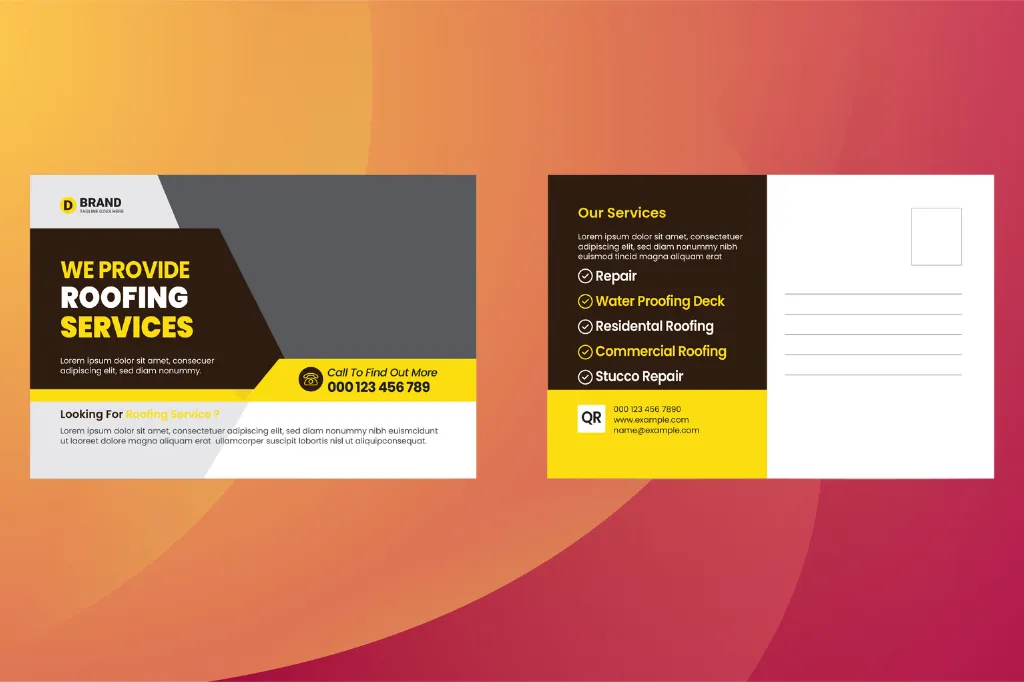
Roofing postcards are printed mailers with your company's information that you send to homeowners. No, they are not the postcards you send from a vacation in Cancun. They are a marketing tool roofers use to introduce their business, show off their work, and generate leads in a chosen area.
You can tailor your postcards to different neighborhoods. Target a storm-hit area with damage repair info, or reach older homes with signs of roof wear and how you fix them.
Do roofing postcards actually work?
Yes. Postcards get the highest response rate of any direct mail format, and the numbers back it up. Postcards earn a 4.4% average response rate, and mailings to past customers can hit 5% to 9%. Direct mail sent to a house list also returns about 161% ROI on average, which is higher than most digital channels.
Response rates depend on who you mail. Here is what roofers can expect by list type.
The takeaway for roofers is simple. Tighter targeting and a clear offer move you toward the high end of these numbers.
What should you include on a roofing postcard?
Include big photos of your work, one clear offer, and your contact info. Roofing postcards should not be text-heavy. They should be visually interesting and show real roofs you have worked on.
To earn more callbacks, add a special promotion, coupon, or deal. Adding a clear call to action matters too. Postcards with a call to action see response rates rise by about 25%.
Every postcard should include your business name, phone number, and website. Make it easy for a homeowner to reach you the moment they pick up the card.
How do you get addresses for direct mail?
Build a targeted list by choosing neighborhoods on purpose instead of mailing at random. Roofing postcards are a type of direct mail, which also includes brochures, roofing flyers, letters, and catalogs.
Be intentional about who gets your mail. If you send postcards to homeowners who do not need roof work, you waste time and money on people who are unlikely to call.
Treat it like door knocking. Drive a neighborhood, look at the roofs, and write down the addresses of homes that clearly need repair. A focused list beats a big list every time.
How do you address roofing postcards to homeowners?
Use online tools to find homeowner names, or address the card to “Current homeowner” if you cannot. A few tools can help you match names to addresses:
- PropertyRadar (paid tool)
- SPOTIO (paid tool)
- County parcel search (free tool)
Personalized mailers work best. But if you cannot find a name, “Current homeowner” is fine. For the return address, use your business location. If you do not have one, use your home address.
What are the best roofing postcard templates?
You do not need to be a designer. Several online tools offer ready-made roofing postcard templates. Here are a few places to start:
Before you design, answer one question: why are you sending this postcard? Maybe a storm just rolled through and you repair damage. Maybe you want to introduce your company to a new neighborhood. Let that reason shape the photo, the offer, and the words.
How do roofing postcards fit into a bigger marketing plan?
Postcards are one channel, not a complete plan. They work best alongside referrals, reviews, and online marketing. Leaning on any single source leaves gaps in your lead flow. The data shows how much roofers rely on word of mouth. According to Peak Performance 2026 by JobNimbus, half of all roofing companies say referrals are their number one source of new business, and 90% of homeowners read reviews before calling a roofing company.
Postcards help you reach homeowners who have not heard of you yet, while referrals and reviews build trust with the rest. Round out the plan with a strong online presence. Pairing direct mail with roofing marketing like SEO, a high-converting website, and paid ads gives you steady leads all year, not just after a storm.
A mix of channels is the key to sustained growth. The more ways homeowners can find and trust you, the stronger your pipeline stays.
Want to turn your marketing into a predictable source of booked jobs? Schedule a strategy call with JobNimbus Marketing.

Frequently Asked Questions
A good response rate for roofing postcards is 4% or higher. Postcards average a 4.4% response rate across all campaigns, the highest of any direct mail format. Mailings to past customers can reach 5% to 9%, while lists of new homeowners usually land between 2% and 4.4%. Tight targeting and a clear offer push you toward the high end.
Roofing postcards usually cost between about 30 cents and $1 per piece, including printing and postage. Oversized and personalized cards cost more, but they stand out in the mailbox and often earn higher response. Your total depends on quantity, postcard size, and how targeted your mailing list is.
Send enough to make your results meaningful, usually at least 500 to 1,000 postcards per neighborhood campaign. Direct mail works on repetition, so plan to mail the same area more than once. A smaller, well-targeted list mailed a few times beats one giant blast to a random list.
The best time to send roofing postcards is right after a storm or heading into your busy season. Homeowners respond most when roof damage is already on their mind. Sending a second postcard a few weeks later keeps your company top of mind when they are ready to call.

Blog / Guide Title CTA
Once you've created a strong Linkedin profile, you can leverage it as part of your broader marketing strategy. Use your Linkedin to share content, join industry groups, and network with others in the contracting space.
If you're looking for additional marketing support, consider partnering with JobNimbus Marketing to maximize your business growth. Schedule a call with our team to learn how to boost your marketing efforts today.
Blog / Guide Title CTA
Once you've created a strong Linkedin profile, you can leverage it as part of your broader marketing strategy. Use your Linkedin to share content, join industry groups, and network with others in the contracting space.
If you're looking for additional marketing support, consider partnering with JobNimbus Marketing to maximize your business growth. Schedule a call with our team to learn how to boost your marketing efforts today.
Download Our Free Tips for Recession-Proofing Your Company
We’ll show you five simple things you can do to help your business survive a recession.