


Table of Contents

Win more bids. Close more jobs. Start with our newsletter.
Get exclusive insights, tips, and trends your competition doesn't want you to know.

Updated on August 18, 2026
Most roofing business owners have a general sense of if they're making money or not. Far fewer can tell you their gross margin by job type, their actual overhead rate, or how their numbers stack up against what a healthy roofing operation looks like on paper.
That gap is expensive. You can run a busy company, close plenty of jobs, and still end the year with less than you expected because the margins were never where you thought they were. Worse, without tracking the right numbers, you won't know where the problem is. You'll just notice that the money isn't there.
This guide breaks down:
- Every profit margin type a roofing business owner needs to understand
- Shows you how to calculate each one with real examples
- Gives you practical ways to improve those profit margin numbers that matter most
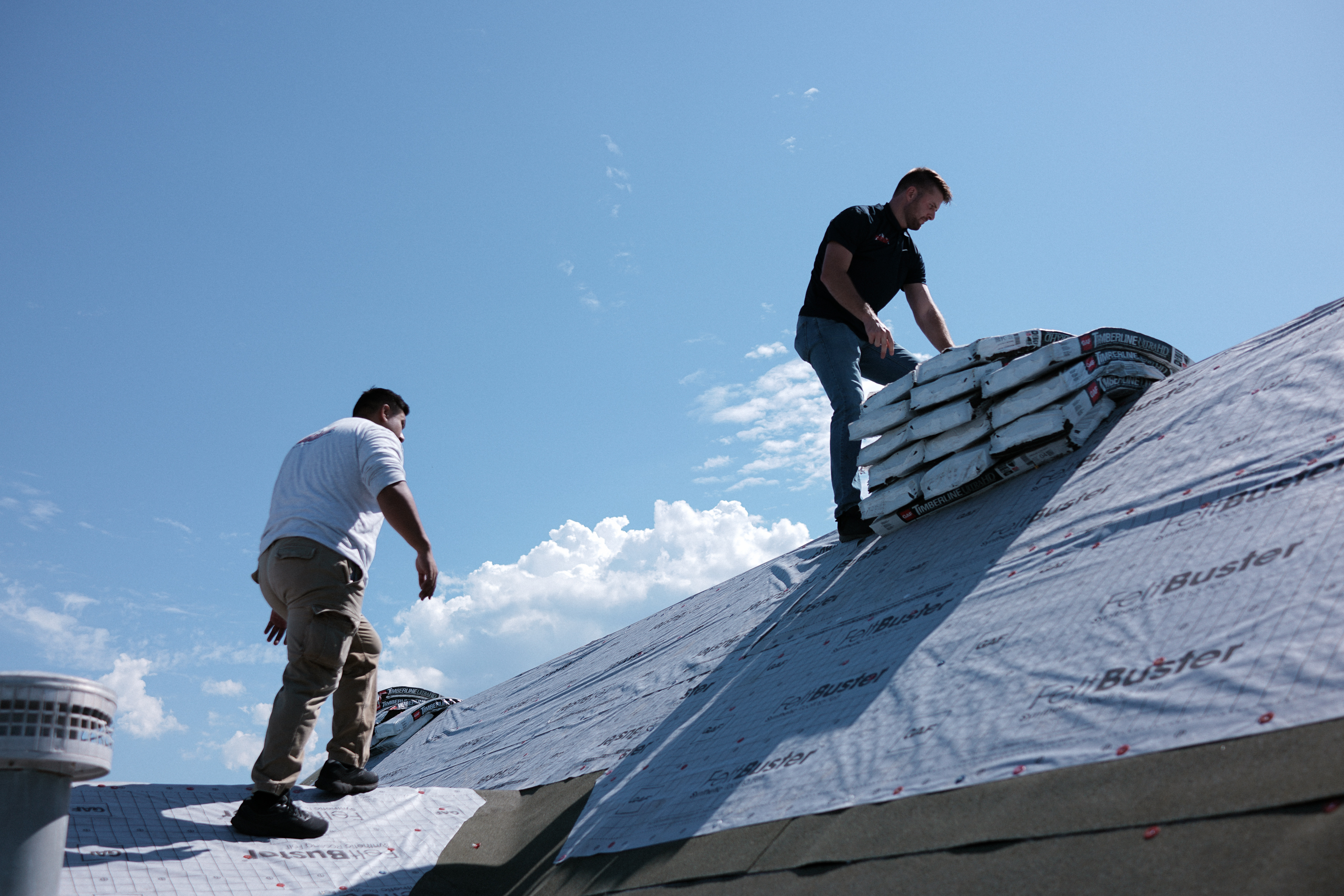
What Are the Different Types of Profit Margins a Roofing Company Should Know?
Not all profit margins tell the same story. Each one isolates a different layer of your business, and looking at only one gives you an incomplete picture. Here's the full set:
- Gross profit margin: What's left after subtracting direct job costs (materials, labor, subcontractor costs) from revenue. This tells you whether your pricing and job-level execution are in the right range.
- Operating profit margin: What's left after subtracting operating expenses (e.g., office rent, admin staff, marketing, vehicles, software) from gross profit. This tells you how efficiently your business runs beyond the job itself.
- Pretax profit margin: Operating profit adjusted for interest income or expense, before taxes. Useful for comparing your business to industry benchmarks apples-to-apples, since effective tax rates vary by entity type and location.
- Net profit margin: The bottom line. What's left after every expense, including taxes, has been paid. Your net profit margin is what determines if your business can grow, reinvest, and build real wealth for you.
The reason you need all four: a strong gross margin can completely mask a terrible net margin. It's entirely possible to run a company with a healthy-looking 35% gross margin and end the year barely ahead because overhead has crept up and nothing is tracking it. Each margin type catches a different kind of problem.
How to Calculate Roofing Profit Margins
You know what types of roofing business profit margins are important. Now take a look at how you can get the exact numbers for each of these to track performance.
Gross Profit Margin
Gross profit margin measures what's left after direct job costs come out. It doesn’t include your overhead, which is the key distinction.
Formula: (Revenue - Direct Job Costs) / Revenue x 100
Direct job costs include:
- Roofing materials
- Crew wages
- Subcontractor costs
- Equipment rentals tied to specific jobs
- Sales commissions
Example:
- Monthly revenue: $200,000
- Materials: $70,000
- Labor and subcontractors: $60,000
- Total direct job costs: $130,000
- Gross profit: $70,000
- Gross profit margin: 35%
Gross profit margins in the roofing industry generally range from 25% to 40%, depending on job type and revenue mix. Service and repair work typically lands at the higher end. Large commercial and new construction jobs often land lower because of the added complexity, longer timelines, and competitive bidding dynamics.
Operating Profit Margin
Operating profit margin shows what's left after you pay your overhead: the fixed costs of running the business that aren't tied to a specific job.
Formula: (Revenue - Direct Job Costs - Operating Expenses) / Revenue x 100
Operating expenses include:
- Office rent
- Administrative and office salaries
- Marketing and advertising
- Business insurance
- Vehicle costs not allocated to jobs
- Software subscriptions
- Other fixed overhead
Example (continuing from above):
- Gross profit: $70,000
- Operating expenses: $40,000
- Operating profit: $30,000
- Operating profit margin: 15%
Overhead for roofing companies typically runs 18-24% of revenue. If your overhead is consuming a larger share than that, this is usually where margin problems originate, even when your job-level gross margins look fine.
Pretax Profit Margin
Pretax profit margin captures your profitability after operating expenses and interest, but before taxes. It's particularly useful when comparing your performance to industry benchmarks or other businesses, since it removes the variability introduced by different tax structures and rates.
Formula: (Operating Profit +/- Interest Income or Expense) / Revenue x 100
Example (continuing from above):
- Operating profit: $30,000
- Interest expense: $2,000
- Pretax profit: $28,000
- Pretax profit margin: 14%
For most roofing business owners, pretax margin matters most when talking to investors, preparing for a potential acquisition, or benchmarking against published industry data, which typically uses pretax figures.
Net Profit Margin
Net profit margin is the full picture. It accounts for everything: direct costs, overhead, interest, and taxes. This is what you actually take home and what the business actually retains.
Formula: Net Income / Revenue x 100
Example (continuing from above):
- Pretax profit: $28,000
- Taxes: $7,000
- Net income: $21,000
- Net profit margin: 10.5%
Net profit margins for roofing companies generally land between 6% and 12% after overhead and taxes. Well-run operations can reach 12-15%. The industry average runs lower than most owners realize, which is why tracking your own trend over time matters more than any single snapshot.
Why the Difference Matters
Each margin type answers a different question. Using only one to evaluate your business is like checking only one gauge on the dashboard.
The most powerful habit you can build is tracking gross margin by job type, not just overall.
Residential repairs and maintenance carry far higher gross margins than full residential replacements. A leak repair with modest materials and a few hours of crew time can hit 50% gross margin, while a full replacement on the same crew might run 25-30%. If you're only looking at your blended monthly gross margin, you can't see which work is actually making you money, and which is just keeping your crews busy.
What's the Best Way for a Roofing Business to Use Profit Margins
Knowing your margins is only useful if you do something with them. Here's how to put the numbers to work at an operational level:
- Track gross margin by job type, not just overall. Separate residential repair, residential replacement, and commercial jobs. Meaningful differences almost always show up. Those differences should inform how you price, prioritize, and sell.
- Set margin targets before you bid, not after. Know your minimum acceptable gross margin going into a job, and build it into your estimate. Chasing jobs that come in below your threshold is a slow way to erode profitability.
- Review net margin monthly, not quarterly. Roofing is seasonal, and a quarterly review smooths over months where overhead crept up or a bad job dragged down your numbers. Monthly visibility gives you time to course-correct.
- Use operating margin to evaluate overhead decisions. Adding a truck, a new hire, or a bigger office? Model how that expense affects operating margin at your current revenue level before committing. Good overhead decisions are made with data, not gut feel.
- Benchmark against your own history first. Industry benchmarks are useful context, but your own trend line matters more. Are your margins improving over time? Staying flat? Slowly compressing? That trajectory tells you more than any single comparison to a published average.
- Build your owner salary into overhead at market rate. If you're paying yourself below market and treating that as "keeping costs low," your P&L looks healthier than it really is. A well-structured business should generate its target net margin with a realistic owner salary already accounted for.
What Influences Profit Margin in the Roofing Industry
Margins don't exist in a vacuum. A lot of factors push them up or down, some within your control and some not.
Understanding what's driving your numbers helps you focus on the levers you can actually pull.
Job Type and Revenue Mix
This is one of the highest-impact variables in roofing profitability and one that gets the least attention. Residential repairs and service work are almost always your highest-margin jobs. New construction and large commercial work often look impressive on revenue but erode margins when you factor in true overhead absorption, longer payment cycles, and the complexity of managing larger crews.
Your revenue mix matters as much as your total revenue. Shifting even a portion of it toward higher-margin work can move net margin meaningfully without adding a dollar of revenue.
Material Costs
Roofing materials represent a significant share of every job's cost, and prices are volatile. Material cost swings of 2-3% can move net margin by a similar amount.
To keep costs reasonable here, you’ll want to keep an eye on:
- Supplier relationships
- Volume purchasing
- Accurate waste factors
- On-site material management
All of these affect how much materials cost you relative to what you're charging. Renegotiating supplier terms or tightening waste factor calculations are often faster wins than raising prices.
Labor Costs and Crew Productivity
Labor is the other major cost driver. Watch out for:
- Crew efficiency
- Subcontractor rates
- Turnover
All feed into labor costs and crew productivity directly.
Experienced crews that work efficiently and make fewer mistakes have a measurable impact on margins, not just from a productivity standpoint but because errors and callbacks eat into job profitability after the fact. High turnover is also expensive in ways that don't always show up clearly on a P&L.
Geography and Local Market Conditions
Labor costs, material costs, and competitive pricing pressure all vary by region. A company operating in a high cost-of-living market faces structurally different cost pressures than one in a lower-cost area, even when doing the same type of work.
Local competition also shapes how much pricing flexibility you have. Know your market, and price accordingly rather than benchmarking to national averages that may not reflect your reality.
Business Size and Overhead Efficiency
Scaling your revenue doesn't automatically improve margins. Gross margin stays relatively stable as you grow, because it's driven primarily by variable costs. What changes is overhead efficiency, and that only improves if you're actively managing it.
Many roofing companies grow revenue significantly and find their net margin stays flat or compresses because overhead grows proportionally. Growth without margin discipline is just more work.
Storm Cycles and Seasonal Demand
Storm-driven operators can hit strong margins in active seasons, then see those numbers collapse when weather is quiet. If a significant portion of your work is storm-dependent, your profitability is partially at the mercy of weather patterns.
Try diversifying your offers to smooth volatility and protect your business during slower cycles across:
- Residential replacement
- Repairs
- Commercial or maintenance work
Insurance Work and Supplement Capture
Insurance jobs introduce payment delays and negotiation complexity that affect both cash flow and realized margin. If you're doing significant insurance volume, supplement capture deserves dedicated attention.
Line items are commonly missed or left on the table during the adjuster process, like:
- Code upgrades
- Drip edge
- Ice and water shield
- Ventilation corrections
Assigning ownership of the supplement process and reviewing your recent insurance jobs for missed items can be one of the fastest margin improvements available.

How to Improve Your Roofing Company's Profit Margin
Understanding your margins is the first step. Here's where to focus once you're ready to move the numbers.
Implement Job-Level Cost Tracking
A monthly P&L shows how the business is performing overall, but it doesn’t break things down far enough to be useful operationally. It won’t tell you which jobs are profitable, which crews are underperforming, or which job types consistently erode margin.
Job-level costing fixes that by showing gross margin at the individual job level.
This is one of the highest-impact changes roofing companies can make. It exposes problems that are usually hidden in blended reporting, and most companies start seeing margin issues within the first 90 days—issues that were always there, just not visible.
Update Your Pricing Strategy
Many roofing companies are working off pricing that hasn't been seriously revisited in years, even as material costs, labor costs, and overhead have all increased. Make sure you’re always:
- Reviewing your pricing at least annually.
- Aware of your target gross margin before you build an estimate
- Confirming your waste factor, labor rates, and overhead allocation reflect current reality
If you've been competing on price and wondering why margins are thin, this is the place to start. Pricing discipline is the fastest path to margin improvement that doesn't require cost cuts or operational changes.
Upsell to Existing Customers
Some of the highest-margin work in roofing comes from existing customers, especially in repair and service work. These customers already know and trust your business, which makes additional work significantly easier to upsell.
A simple, consistent follow-up process can create meaningful incremental revenue:
- Past customer check-ins
- Seasonal maintenance outreach
- Post-storm or weather-driven follow-ups
The key advantage here is efficiency. You’re not paying acquisition costs for these jobs, which makes the margin profile substantially stronger than new replacement work.
Train Your Client-Facing Employees
Your sales reps and project managers have a direct impact on margin—often in ways that don’t show up until after the job is complete.
Discounting to close deals, missing scope items, or overpromising timelines all quietly erode profitability.
Training should focus on three things:
- Writing complete scopes
- Maintaining pricing discipline
- Communicating value instead of competing on price
When possible, tying compensation to gross profit instead of revenue helps align incentives with outcomes that actually matter. Even small behavioral changes here compound across every job your team touches.
Improve Overhead Management
Overhead is one of the easiest places for margin to quietly leak out of a business.
A yearly line-by-line review helps identify expenses that no longer serve a clear purpose. These are often subscriptions, tools, or services that were useful at one point but are now underutilized or redundant.
In many roofing companies, 1–3% of revenue can be reduced without impacting operations. At scale, that flows directly to the bottom line.
This isn’t about cutting aggressively—it’s about removing friction and waste that builds up over time.
Track Performance with the Right Tools
You can't manage what you can't see. If your job costs, estimates, and actuals are scattered across different systems or tracked manually, you'll always be reacting to numbers after the fact rather than making decisions from them in time to matter. Bringing your estimates, job tracking, and customer communication into one place makes it possible to catch margin problems early and stay ahead of them.
JobNimbus gives roofing contractors a single platform to manage estimates, jobs, and communication, so the data you need to run a tighter operation is actually accessible when you need it. So no matter if you're trying to get better visibility into job-level profitability, speed up your estimating process, or reduce the operational friction that quietly eats into margin, the right system makes all of it more manageable.
Build a More Profitable Roofing Operation
Margin improvement isn’t a one-time project. It’s an ongoing discipline: knowing your numbers, understanding what drives them, and making deliberate decisions about pricing, job mix, overhead, and operations. The roofing companies that build lasting profitability treat financial visibility as a core business function, not something reviewed once a year at tax time.
If you’re ready to get clearer visibility into your jobs, pricing, and profitability—and put the systems in place to actually act on that data—explore how JobNimbus helps roofing contractors run more profitable operations.
Start with the numbers you can see clearly right now. Then build the systems that make improving them possible.
Book your JobNimbus demo today!
Want to learn more about what JobNimbus can do for your business? Fill out the form below schedule your demo:

Frequently Asked Questions
AI tools like EagleView and Nearmap identify aging commercial roofs through aerial imagery. Weather tracking platforms trigger automated outreach after storm events. CRM tools with AI-driven lead scoring help prioritize follow-up on prospects most likely to convert.
Well-run roofing companies typically target 25 to 40 percent gross margin and 8 to 15 percent net margin. Net margins below that range usually point to a pricing or overhead problem rather than a sales problem.
Markup is added to the cost to get the price. Margin is the percentage of price that is profit. A 30 percent markup produces a 23 percent gross margin, not 30 percent, so confusing the two leads to consistent underbidding.
Being fully booked is a pricing signal, not a ceiling. Raise rates 10–20% first. Your best clients will stay, and you'll make the same revenue with fewer jobs. Build a waitlist rather than turning people away. Then document your repeatable work and delegate it to free capacity for higher-value activities.
Yes. JobNimbus has Analytics AI, which lets you ask questions about your data in plain language instead of building reports or pulling in an analyst. The standard Analytics dashboards are free on every plan; Analytics AI is a paid add-on that goes past what happened and answers the follow-ups—which rep, why, how it compares to last month.

Blog / Guide Title CTA
Once you've created a strong Linkedin profile, you can leverage it as part of your broader marketing strategy. Use your Linkedin to share content, join industry groups, and network with others in the contracting space.
If you're looking for additional marketing support, consider partnering with JobNimbus Marketing to maximize your business growth. Schedule a call with our team to learn how to boost your marketing efforts today.
Blog / Guide Title CTA
Once you've created a strong Linkedin profile, you can leverage it as part of your broader marketing strategy. Use your Linkedin to share content, join industry groups, and network with others in the contracting space.
If you're looking for additional marketing support, consider partnering with JobNimbus Marketing to maximize your business growth. Schedule a call with our team to learn how to boost your marketing efforts today.
Download Our Free Tips for Recession-Proofing Your Company
We’ll show you five simple things you can do to help your business survive a recession.