

Table of Contents

Win more bids. Close more jobs. Start with our newsletter.
Get exclusive insights, tips, and trends your competition doesn't want you to know.

Updated on July 21, 2026
Whether you're estimating a reroof or checking an aerial measurement report, knowing how to calculate roofing squares is a fundamental roofing skill. Accurate measurements help you order the right materials, build more accurate estimates, and avoid expensive surprises once work begins.
We’ll cover what a roofing square is, how to calculate it, and the additional factors you should consider when calculating.

What is a roofing square?
Before you can estimate materials or price a roofing job, you need to know how many roofing squares a project requires.
A roofing square is the standard unit of measurement used throughout the roofing industry. One roofing square equals 100 square feet of roof surface. Contractors, suppliers, and manufacturers all use roof squares because they simplify estimating materials, labor, and costs. Knowing the number of squares helps determine:
- Material quantities
- Labor requirements
- Project timelines
- Job pricing
1 roofing square = 100 square feet of roof surface
How to calculate roofing squares
Step 1: Measure the roof
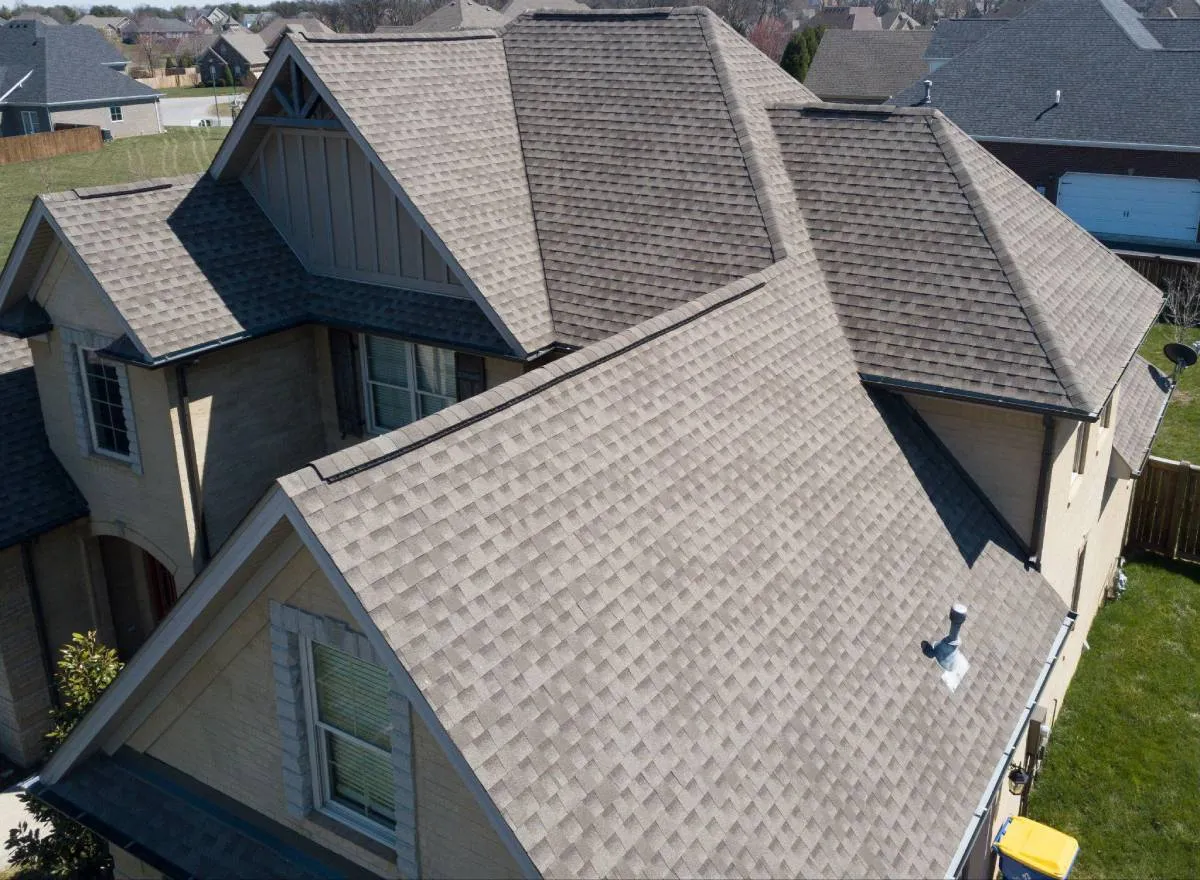
Start by measuring each section of the roof separately. Most roofs aren't just one large rectangle, so you'll need to measure every roof plane—including dormers, additions, or other sections—before adding everything together.
Step 2: Calculate the total roof area
Once you've measured each roof plane, multiply the length by the width to find its square footage. Then add the square footage of every section together to calculate the total roof area. This number is the foundation for estimating materials and labor, so carefully measuring can prevent costly mistakes later.
Step 3: Convert square footage into roofing squares
Once you know the total square footage, the math gets easy. Divide that number by 100 to find the total number of roofing squares you'll need. That's the number you'll use when estimating materials.
What else should you account for?
Roof pitch
Roofs aren't flat. A steep roof has more surface area than its footprint on the ground.
If your measurements come from a home's footprint or an aerial measurement that hasn't already accounted for roof pitch, apply the appropriate pitch multiplier below to estimate the actual roof surface area. Many aerial measurement tools already include roof pitch, so be sure to check your report before making additional calculations.
Roof square footage × pitch multiplier = Adjusted roof square footage
Waste
No roofing project uses materials perfectly. Shingles need to be cut around hips, valleys, chimneys, skylights, and other features, which creates unavoidable waste. Before ordering materials, add an appropriate waste factor based on the roof's complexity to help prevent shortages and unnecessary delays.
Measuring success leads to accurate estimates
Calculating roofing squares isn't complicated once you understand the process. Measure each roof plane, calculate the total square footage, divide by 100, and account for factors like roof pitch and waste. Taking a few extra minutes to double-check your numbers can help you build more accurate estimates, order the right materials, and avoid costly surprises on the job.
When you're ready to turn those measurements into professional estimates, JobNimbus helps you create proposals, manage projects, and get paid, all from one place.
Start your free JobNimbus trial today.

Frequently Asked Questions
One roofing square equals 100 square feet of roof surface. Roofing materials are commonly sold and priced by roofing squares rather than by individual square feet.
If the roof surface measures 2,000 square feet, it contains 20 roofing squares. If 2,000 square feet refers to the home's footprint rather than the roof surface, you'll also need to account for roof pitch.
Yes. Steeper roofs have more surface area than flatter roofs with the same footprint. Roof pitch, along with waste from cuts around valleys, hips, and other roof features, can increase the amount of material you'll need.
A simple roof may only require about 10% extra material, while a more complex roof with multiple valleys, dormers, or other features may require 15–20%. Your exact waste factor will depend on the roof's design and the roofing material you're installing.
Not accurately. A home's square footage or footprint can provide a rough starting point, but it doesn't account for roof pitch, overhangs, dormers, or other design features. For the most accurate estimate, measure the roof surface or use a trusted aerial measurement report.

Blog / Guide Title CTA
Once you've created a strong Linkedin profile, you can leverage it as part of your broader marketing strategy. Use your Linkedin to share content, join industry groups, and network with others in the contracting space.
If you're looking for additional marketing support, consider partnering with JobNimbus Marketing to maximize your business growth. Schedule a call with our team to learn how to boost your marketing efforts today.
Blog / Guide Title CTA
Once you've created a strong Linkedin profile, you can leverage it as part of your broader marketing strategy. Use your Linkedin to share content, join industry groups, and network with others in the contracting space.
If you're looking for additional marketing support, consider partnering with JobNimbus Marketing to maximize your business growth. Schedule a call with our team to learn how to boost your marketing efforts today.
Download Our Free Tips for Recession-Proofing Your Company
We’ll show you five simple things you can do to help your business survive a recession.