

JNSS 2026 starts in -- days
Save Your Seat
Construction moves fast. Your CRM should keep up. Unlike all-in-one tools that break as complexity grows, JobNimbus connects your leads, crews, jobs, and payments in one platform so you spend less time managing tools and more time running jobs.
You already have tools. The problem? They don't talk to each other. Every gap between systems is a place where jobs slow down, handoffs break, and money walks out the door.

.avif)
Whether you're running a three-person remodeling crew or managing 15 subs across multiple job sites, your construction CRM should give you visibility across all of it. JobNimbus is the all-in-one system built to fit every stage, so the tool you start with is the tool you scale with. That's why 8,000+ contractors trust us to help run their business. Here's how we handle every phase.
You're spending real money on leads. Without a system tying that spend to what closes, you're guessing. JobNimbus connects marketing to pipeline so you know which sources drive revenue, and which don't.
Construction bids are competitive and high-stakes. Slow proposals lose jobs. JobNimbus standardizes estimating so yours go out fast, look sharp, and give homeowners everything they need to say yes.
Your jobs don't live behind a desk. Neither does JobNimbus. Our 4.8-star mobile app gives crews live job status, photos, change orders, and auto-syncing updates from any phone. Office and field, finally on the same page.
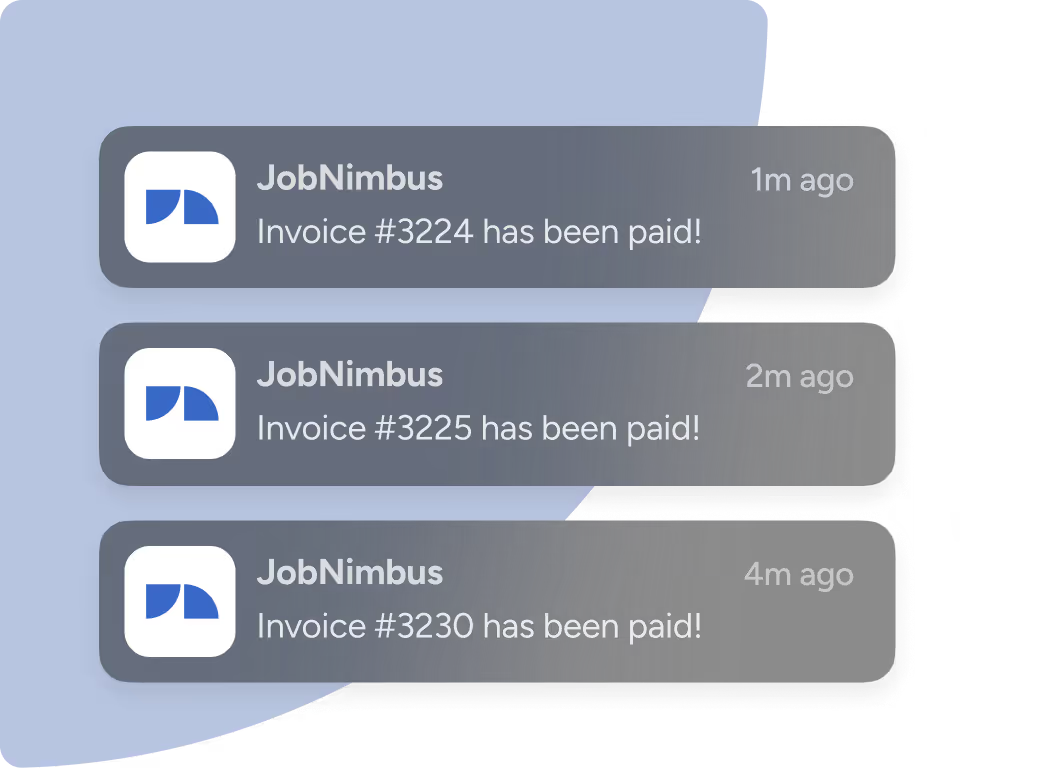
You finished the job. Your bank account shouldn't still be waiting. JobNimbus automates invoicing at every milestone, supports draw billing, and uses Text2Pay so customers pay on the spot.
You feel it before you can name it. Jobs hit snags. Information lives in too many places. Invoices go out late or not at all. That's what happens when your tools stop talking.
A construction CRM fixes it by connecting what should already be connected: pipeline to production, office to field, estimate to paid invoice.
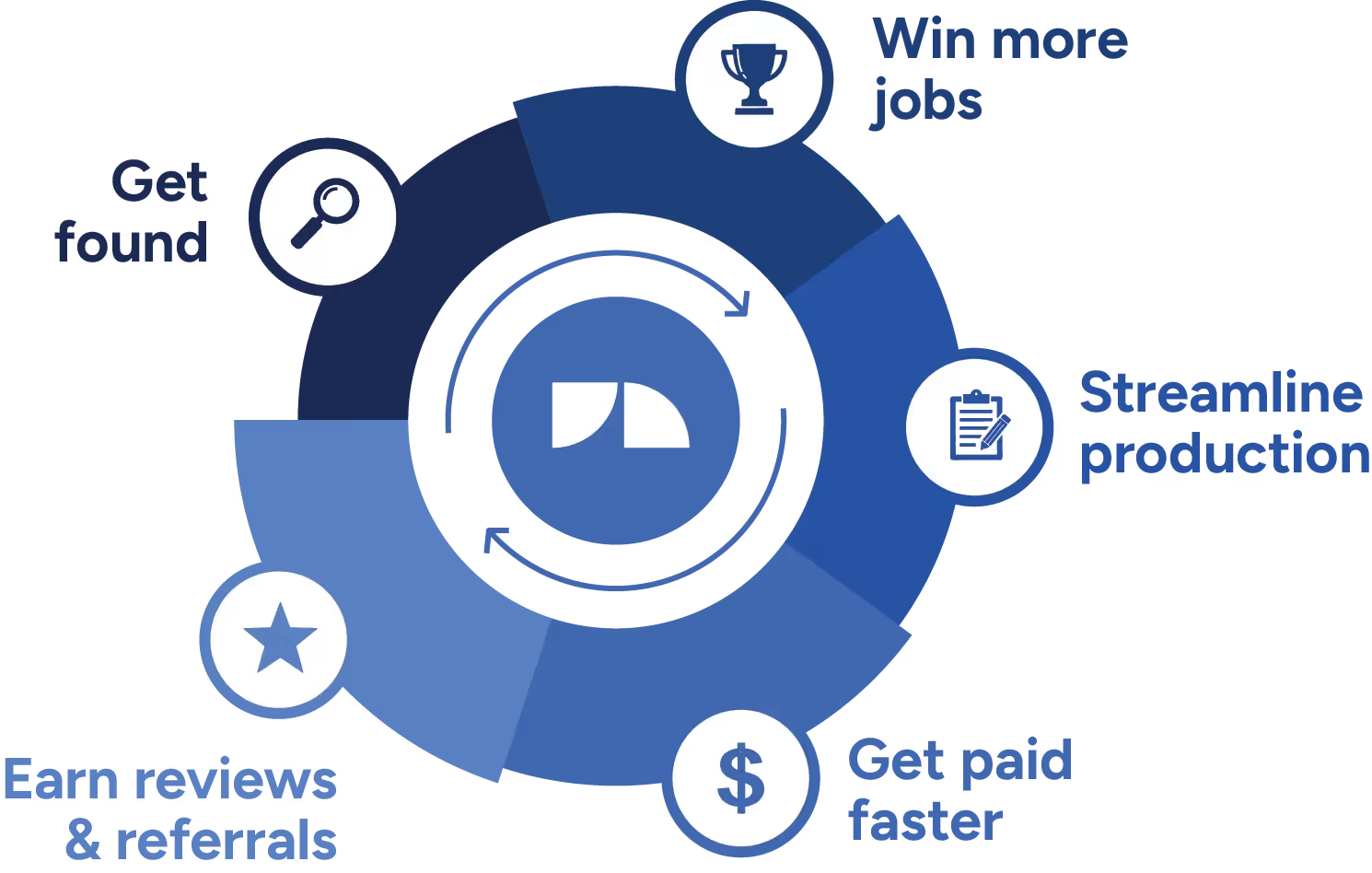
A construction CRM runs your whole operation from one place. Leads, estimates, schedules, crews, invoices, payments: all of it. One system handles the full job, from first call to final check.
The payoff: fewer dropped balls, faster billing, and a clear read on what's making you money.
Most CRMs were built for sales reps in cubicles, not crews on rooftops. Before you commit to one, here's what actually matters:

Your construction CRM should handle the complexities of the job out of the box, not force you to twist a generic sales tool into something it was never built for.
Save your office from endless catch-up calls by giving your crews the power to update jobs, capture photos, and access customer details directly from the job site.
QuickBooks, EagleView, Hover, ABC, SRS, all sync automatically. No double entry.
Follow-ups, status updates, and review requests should trigger on their own instead of depending on someone remembering to send them.
Getting paid shouldn’t make you lose sleep at night. Look for milestone billing, draw schedules, and easy-pay options that get money in your bank account faster.
Outgrowing your software is expensive. A construction CRM should scale with you, whether you're adding crews, expanding into new trades, or opening another location.
Your tools should be making the job easier. If these situations sound familiar, your tools aren't helping anymore.
Jobs are falling through the cracks because no single system shows the full picture or every system shows a different version of it.
Your software is either too rigid to match how your business actually runs or so disconnected your team builds workarounds to fill the gaps.
Field crews are working off outdated info, and the office is finding out about problems hours or days later.
You're paying enterprise prices for a platform that still can't handle a custom workflow without a six-week implementation.
Your team is entering the same information into three different tools or fighting one tool that won't let them enter the right information at all.
You can't tell which lead sources are producing revenue, which jobs are actually profitable, or where work is stalling in the pipeline.
Most CRMs are built for someone else. JobNimbus is built specifically for exterior construction. Here's how we stack up.
A construction CRM built for exterior trades? Finally. Roofing. Siding. Gutters. Fencing. Exterior remodeling. JobNimbus is the construction CRM purpose-built for the way your business actually runs, not adapted from a generic platform and called good enough.
“JobNimbus is such an integral part of my business. I can’t even imagine how I would do business without it. We’d be dead in the water.”
Amy Feller — Roofer Chicks
“It has doubled my revenue in the past three years — from $2M to $4M to $8M this year.”
Arturo Cuarao — Dynomite Roofing




Every disconnected tool costs your team time. JobNimbus is the construction CRM that connects directly with your accounting, measurement, and materials platforms so your data flows automatically and your team stays focused on the job.








On average, our users see a 43% increase in revenue, teams save 8 hours per person per week, and companies collect 25% more payments.
A construction CRM is a platform that manages your business end to end, from the first lead to the last invoice paid. It pulls leads, estimates, crews, jobs, and collections into one connected system instead of scattering them across tools.
On average, our users see a 43% increase in revenue, teams save 8 hours per person per week, and companies collect 25% more payments.
The best one connects your leads, jobs, and payments without forcing your crew to learn software designed for a different industry. For roofing and exterior contractors, JobNimbus is the answer, with a 4.7/5 rating on G2.
On average, our users see a 43% increase in revenue, teams save 8 hours per person per week, and companies collect 25% more payments.
Project management software picks up after the job is sold. A construction CRM covers the full lifecycle, before the sale, during the build, and after the payment, so you're not juggling multiple platforms to run a single job.
On average, our users see a 43% increase in revenue, teams save 8 hours per person per week, and companies collect 25% more payments.
You bet! And it does the things spreadsheets and whiteboards can't, like triggering automated follow-ups, managing crew handoffs, and collecting payments without manual chasing.
On average, our users see a 43% increase in revenue, teams save 8 hours per person per week, and companies collect 25% more payments.
Not quite. Contractor management software focuses on scheduling, subs, and field operations. A CRM handles the customer-facing side: leads, estimates, communication, and collections. JobNimbus brings both together, so you're running one platform instead of patching multiple systems.
On average, our users see a 43% increase in revenue, teams save 8 hours per person per week, and companies collect 25% more payments.
It depends on your crew size and the features you need. See our current JobNimbus plans.
On average, our users see a 43% increase in revenue, teams save 8 hours per person per week, and companies collect 25% more payments.
Most contractors are running jobs in JobNimbus within a few days. There's no IT team or outside consultant required. Our onboarding team works directly with you to configure the platform around how your business already operates, so you're not overhauling your workflow just to adopt new software.
On average, our users see a 43% increase in revenue, teams save 8 hours per person per week, and companies collect 25% more payments.
Yes. It's built for exterior trades: roofing, siding, gutters, fencing, and exterior remodeling.
On average, our users see a 43% increase in revenue, teams save 8 hours per person per week, and companies collect 25% more payments.
Your data comes with you. JobNimbus supports full data migration, and the onboarding team will walk you through what that looks like for your specific situation, whether you're moving off AccuLynx, Jobber, or a folder of spreadsheets.
Join 8,000+ construction businesses that replaced their disconnected tools with JobNimbus and finally have everything running in sync.
Manage more jobs, more crews, and more complexity, all from one platform.

%201.avif)