

Table of Contents

Win more bids. Close more jobs. Start with our newsletter.
Get exclusive insights, tips, and trends your competition doesn't want you to know.

Key takeaways
- Facebook still owns the roofing buyer's attention. 71% of U.S. adults use Facebook according to Pew Research, and home and home improvement advertisers see a platform-wide average cost per click of about $0.99, which makes Facebook one of the most cost-effective channels a contractor can run.
- Targeting beats budget every time. Homeowners between 30 and 65, filtered by service area radius, interests like home renovation, and retargeting pools of past site visitors, will always outperform a bigger budget aimed at everyone in a zip code.
- Creative does the selling. Before-and-after photos, time-lapse videos, and testimonial clips drive the clicks. Generic stock images of shingles do not.
- Seasonality is a lever, not a limitation. Storm season creates urgency and off-season creates capacity, and both deserve their own ad strategy.
- Metrics tell you what to keep and what to kill. Click-through rate, cost per lead, and return on ad spend should guide every budget decision, and JobNimbus helps roofing teams track those leads from first click all the way to signed contract.
Facebook marketing for roofing is the practice of running paid ads, organic posts, and audience targeting on Facebook and Instagram to generate qualified homeowner leads for a roofing business. The short version: it still works, and in many markets it outperforms Google for lower-funnel lead capture.
Why Facebook marketing for roofing still works in 2026
Here is the math. Pew Research Center's 2025 survey found that 71% of U.S. adults use Facebook, making it the second most widely used online platform after YouTube. That audience skews toward the exact age band that owns roofs and pays for them. WordStream's 2025 Facebook Ads benchmarks, based on more than 1,000 campaigns, show the home and home improvement category pays an average cost per click of $0.99, compared with an average Google Ads CPC of $5.26. Traffic-objective campaigns across all industries averaged a 1.71% click-through rate and a $0.70 CPC.
Translation: a roofing company can land in front of thousands of local homeowners for less than the price of a drive-thru coffee. The hard part is not getting impressions. The hard part is converting them into calls, estimates, and signed contracts. That is what the rest of this playbook is for.
The roofing buyer is already scrolling
Homeowners do not shop for a roofer the way they shop for sneakers. They notice a stain on the ceiling, see a neighbor get a new roof, a storm rolls through, and suddenly the search begins. That window is short and noisy, and Facebook is where a huge slice of the decision-making happens. Pew data shows Facebook use stays remarkably strong among adults 30 to 64, the prime roof-buying age. An ad does not have to catch them at the exact moment of need. It needs to stay top of mind until the need arrives.
Facebook vs Google for roofing lead generation
Both platforms work, and most roofing companies that scale use both. They just do different jobs.
Benchmark data from WordStream's 2025 Facebook Ads Benchmarks report.
Facebook fills the top of the funnel and warms homeowners up. Google captures people who already decided they need a roof today. Use both. For the wider lead-generation playbook that pairs with a Facebook strategy, see these contractor lead generation strategies.
Build a roofing brand story that earns the click
Homeowners scroll past a dozen home services ads every day, and most look interchangeable. A consistent visual story is the difference between thumb-stopping recognition and a swipe.
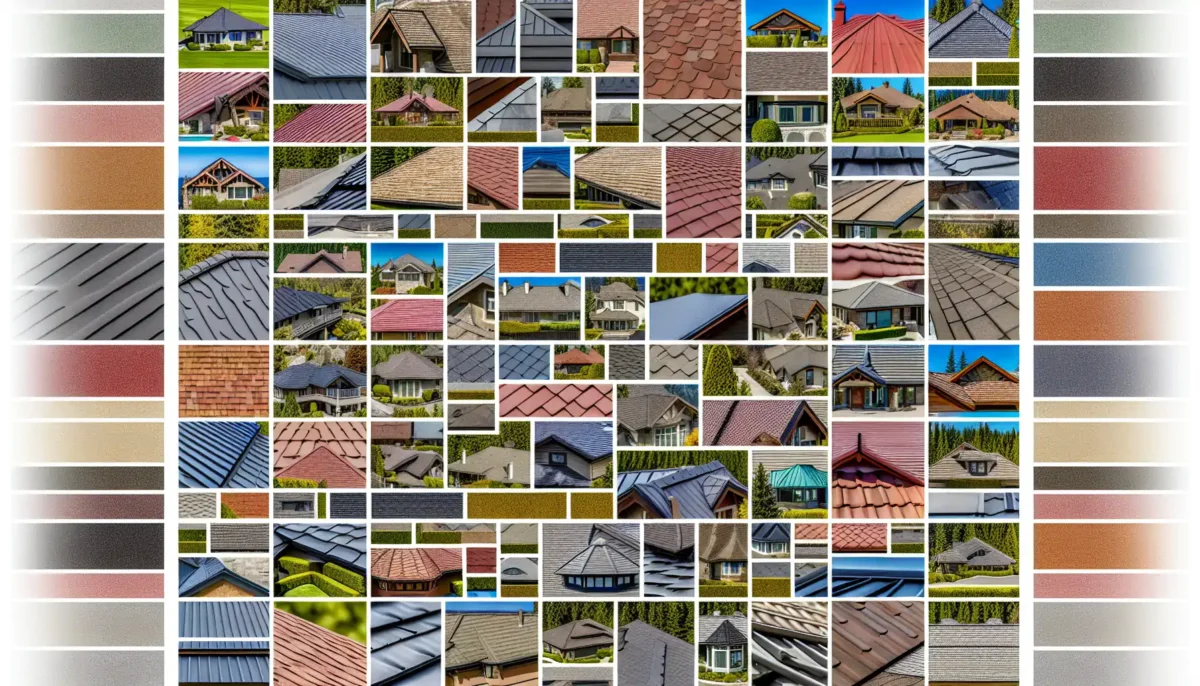
A strong visual identity has three anchors: a memorable logo that looks good small, consistent typography that reads on a phone screen, and a cohesive color palette that survives translation from yard sign to Facebook ad.
Choose images that sell the roof, not the roofer's ego
Stock photos of generic shingles do not sell roofing jobs. Real photos of real work in real neighborhoods do.
The most effective roofing ad images share a few traits:
- Natural daylight, shot from the ground up so the roofline reads clearly
- Crews in branded shirts, which reinforces professionalism
- Homes that look like the target audience's homes, not magazine covers
- Minimal text overlay, because Facebook still favors ads that let the image do the talking
Build a library of these images over time and rotate them every two to three weeks to fight ad fatigue. The fundamentals of taking your own roofing pictures translate directly into better ad creative.
Before-and-after photos that prove the work
Before-and-after photos do more heavy lifting than any ad copy. A homeowner looking at a tired, moss-covered roof next to a crisp new architectural shingle install understands the value proposition in about two seconds.
Tips that separate pro-level before-and-afters from the mediocre ones:
- Shoot both photos from the same angle and similar lighting, so the transformation is the star
- Stage the "after" shot with the yard cleaned up and the driveway clear
- Add a short caption with project details: roof size, materials, timeline
- Stitch them together as a slider or side-by-side for maximum impact
Customer satisfaction as social proof
Featuring real homeowners through a quote card, a short video clip, or a five-star review screenshot signals trust faster than a cold sales pitch ever will. Always get written consent before using a customer's name, face, or home in an ad. It is both the ethical play and the legal one. Need more reviews to pull from? Build a simple post-job text automation that asks for one. JobNimbus customers do this inside the platform.
Facebook ad targeting for roofers: how to reach actual homeowners
Targeting is where most roofing Facebook ads win or lose. A perfectly designed ad shown to the wrong audience is a perfectly designed waste of money. Use the scalpel, not the cleaver.
Demographic targeting essentials
- Location: The actual service radius, not the whole state. If crews travel 30 miles, target 30 miles.
- Age: 30 to 65 captures the bulk of homeowners, with the 35 to 54 band historically converting best for roofing.
- Homeowner status: Facebook allows targeting by home ownership in some markets, which filters out renters who will not buy.
- Income proxies: Behaviors like "frequent travelers" correlate loosely with disposable income.
Refine over time using performance data. If the 25 to 34 age bucket has a 0.3% click-through rate and the 45 to 54 bucket is hitting 2.1%, move budget accordingly.
Interest-based targeting for home services
Interest targeting reaches people who have shown interest in home improvement, HGTV, real estate, gardening, DIY projects, or specific brands like The Home Depot and Lowe's. These are not perfect proxies for "needs a new roof," but they narrow the audience to people who think about their home regularly.
Categories that tend to perform well for roofing:
- Home improvement and home renovation
- First-time home buyers
- HGTV and home makeover shows
- Gardening and landscaping (correlates with single-family homeownership)
- Storm preparedness and home insurance topics
Layer two or three interests for tighter targeting, but avoid stacking so many filters that the audience drops below 50,000 people. Facebook's algorithm needs room to optimize.
Retargeting past visitors and warm leads
Retargeting is the single most profitable Facebook tactic most roofers ignore. It shows ads to people who already visited the website, watched a video, or engaged with the page. A homeowner who spent 90 seconds on a residential roofing page is worth ten times a cold audience member. A tight retargeting setup typically includes:
- Website visitors from the last 30 to 90 days
- Video viewers who watched at least 50% of an ad
- Page engagers who liked, commented, or messaged
- Lead form abandoners who started a quote request and did not finish
- Uploaded customer lists for lookalike targeting and reactivation
Install the Meta Pixel on the website before running anything else. Without it, the warmest leads stay invisible.
Anatomy of a high-performing roofing Facebook ad
Every good roofing ad has the same three moving parts: the image stops the scroll, the copy earns the click, the call to action closes the loop.
Headlines that stop the scroll
A headline has about a second and a half to do its job. Go narrow, specific, and benefit-forward. Some reliable formats:
- Pointed question: "Will your roof make it through hurricane season?"
- Clear benefit: "Lifetime warranty. Local crew. Free estimate this week."
- Honest urgency: "Spring roof inspections, only $79 through May 15."
- Specific neighborhood: "Homeowners in Tampa: is your roof on the Beryl repair list?"
Avoid the classics every other roofer uses ("Quality roofing you can trust"). Nobody has ever clicked on that.
Ad copy that sells the roof, not the shingle
Homeowners do not care about the weight per square of a shingle. They care about their basement not flooding, their insurance premium staying low, and their house looking good for the neighborhood Christmas party.
Strong roofing ad copy almost always includes:
- A specific pain point, named plainly
- A clear promise about how the work solves it
- A form of social proof (review snippet, jobs completed, warranty)
- A time-sensitive reason to act now
- A single, clear next step
Keep it short. Facebook caps primary text visibility at around 125 characters before truncation.
Calls to action that convert browsers to bookings
The CTA is the handle on the door. Make it easy to grab. The best-performing roofing CTAs are low-friction and value-forward:
- Get my free roof inspection
- Book a 10-minute estimate call
- Check if my roof qualifies for insurance
- See if we serve my zip code
- Claim my storm-damage assessment
"Contact us" and "Learn more" convert at half the rate of anything specific. Specificity wins.
Video ads: the storytelling edge most roofers underuse
Video is the most underutilized format in roofing Facebook marketing. If an ad image is a handshake, a video ad is a living room conversation. A smartphone, a cheap tripod, and a willing foreman will outperform most polished agency videos, because authentic video feels like a neighbor.
Three video formats that consistently work for roofing:
- Tutorials that teach homeowners something useful ("three signs your shingles are past their prime"). Position the company as the expert, not the salesperson, and pre-sell services without ever asking for the sale. Keep tutorials under 90 seconds.
- Customer testimonial videos of 20 to 30 seconds, where the homeowner names a specific problem in their own words and a specific result. A natural close, not a coached one.
- Time-lapse job videos that compress a multi-day project into 30 seconds of visible progress. Set up a phone on a tripod at the start of the job and let it run.
Seasonal campaigns: timing Facebook ads for maximum impact
Roofing demand is not evenly distributed across the calendar. NOAA's National Centers for Environmental Information documented 27 billion-dollar weather and climate disasters in the U.S. in 2024, including 17 severe storm events. Severe storms are historically the most frequent disaster type in the NOAA record. That means urgency shows up in predictable seasonal waves, and a Facebook ad strategy should ride those waves instead of fighting them.
Preparing for storm season
The best storm-season campaigns start before the storm. Severe thunderstorm risk peaks across the Central and Southeast states from March through May, while Atlantic hurricane risk climbs from June into October. Build creative and audiences in February so the team is not scrambling in April.
A storm-season campaign usually includes:
- Preemptive "is your roof storm-ready" awareness ads in the weeks before peak season
- Rapid-response ads in the 48 hours after a major event, targeting affected zip codes
- Insurance-claim education content, because most homeowners do not know their policy covers a storm-damaged roof
- Retargeting of past storm-season website visitors with fresh urgency
The goal is to be the roofer homeowners already recognize when the shingles hit the lawn.
Off-season promotions that keep the pipeline full
Running Facebook ads through the winter valley is how to avoid the lead drought that kills cash flow in January and February. Off-season strategies that work:
- Discounted inspections: Low-cost offers that fill the calendar and convert into full replacements later
- Winter-specific services: Ice dam prevention, attic ventilation checks, gutter cleaning
- Financing-forward messaging: Homeowners have tax refund cash in Q1, and financing makes the pitch easier
- Schedule-now-install-in-spring promotions: Lock in jobs while competitors are quiet
A steady off-season presence also improves CPC during peak season, because Facebook's algorithm rewards consistent activity over spiky accounts.
Carousel ads for educational content
Carousel ads pack multiple images or videos into a single swipeable post, and they are the most versatile format for educational roofing content. They tend to outperform single-image ads for consideration-stage audiences, which is exactly where most roofing buyers live. Three carousel angles consistently work for roofing:
- Step-by-step roofing guides: A five-slide carousel walking through tear-off, underlayment, install, and cleanup. Each card gets one concept that advances the buyer closer to a call.
- Material comparisons: Asphalt vs. metal, with lifespan, cost range, and curb appeal on each card. Close with a "which one is right for your home" CTA.
- Maintenance tips: A six-slide "roof maintenance checklist by season" gives value without asking for anything, and it earns the follow for retargeting later.
Key metrics and budgeting for roofing Facebook ads
A monthly glance at a few key numbers shows whether the program is working or quietly falling apart. Realistic benchmarks below come from WordStream's 2025 data and industry norms.
How much should roofing companies spend on Facebook ads
Small and newer operations usually start between $500 and $1,500 per month. That range is enough to gather statistically meaningful data within 30 days without lighting money on fire. As performance stabilizes, most growth-focused roofing companies land between $2,500 and $10,000 per month, often scaling further during storm season. The rule is simple: scale budget on campaigns that already hit target CPL, and leave the experiments at a modest test budget.
A/B testing and when to scale
What to test, in order of impact:
- Creative (image or video): The single biggest performance lever. Test one new image per week.
- Headline: Swap the opening hook while keeping the creative constant.
- CTA button: "Get Quote" vs "Learn More" vs "Book Now."
- Audience: Test interest stacks against lookalike audiences.
- Landing page: The page the ad sends people to matters as much as the ad itself.
Once a variant wins by a meaningful margin over five to seven days, promote it and retire the loser. Scale budget by 20% to 30% at a time on winners, not 100% jumps, because aggressive scaling resets Facebook's learning phase and tanks performance.
Quick start checklist: launch your first roofing Facebook ad
- Set up Meta Business Manager and connect the Facebook page and Instagram account.
- Install the Meta Pixel on the website to track conversions and build retargeting audiences.
- Define the service-area audience using radius, age 30 to 65, and homeowner or home improvement interests.
- Build three ad creatives: one before-and-after image, one short testimonial video, one time-lapse job clip.
- Write three headline variations using the formats above.
- Set a daily budget of $20 to $40 for the first week of learning.
- Launch with a clear CTA tied to a conversion-optimized landing page.
- Let it run five to seven days before making changes, so the algorithm has time to learn.
- Review metrics weekly against the benchmarks in the table above.
- Scale winners, kill losers, and test one new variable per week.
Follow this for 60 days and the data tells the whole story for the specific market the team serves. Smart contractors also plug that inbound lead flow into a system that actually manages follow-up, because a steady stream of Facebook leads only pays off if someone calls them back quickly.
From clicks to closed roofs: making Facebook a reliable lead source
Facebook marketing for roofing is not a shortcut and it is not a gamble. It is a system. Build a brand worth recognizing, target real homeowners in real neighborhoods, show real work with real photos, time campaigns around how the market actually buys, and measure everything from click to contract. Done consistently, Facebook stops feeling like an expense and starts feeling like a reliable lead engine.
See how JobNimbus closes the loop from first click to final invoice, so every dollar of Facebook spend has a place to land, a crew ready to respond, and a system that turns leads into signed contracts.

Frequently Asked Questions
Yes. Facebook Ads are one of the most cost-effective paid channels for roofing companies, particularly for targeting specific zip codes after storm events or during seasonal peaks. The average cost per lead for local home services campaigns runs $30–$60, which compares favorably to other paid channels
The Meta Pixel is a small piece of code that lives on the website and tracks what visitors do after they click an ad. It powers conversion tracking, retargeting audiences, and lookalike audiences. Without it, Facebook's algorithm cannot optimize campaigns toward actual leads.
Most well-built roofing Facebook campaigns begin producing leads within the first 7 to 14 days. Facebook's algorithm needs about 50 conversions per ad set to exit the "learning phase" and stabilize, so budgets that are too small can stretch that timeline.
Both paths work. DIY is fine for companies with time to learn and a willingness to test. An agency makes sense once ad spend crosses roughly $3,000 per month, because the returns on professional management usually outweigh the management fee at that level.
Facebook marketing for roofing is strongest alongside Google Ads for active search demand, a fast website that converts clicks into calls, a consistent organic social presence, and a CRM that catches every lead. Treating Facebook as a siloed tactic leaves money on the table. Treating it as one layer of a coordinated local marketing stack is how roofers scale.
CPC is cost per click, CPL is cost per lead, CTR is click-through rate (the percentage of viewers who click), and ROAS is return on ad spend (revenue per dollar of ad spend). CPM, occasionally seen alongside these, is the cost to show an ad to 1,000 people.

Blog / Guide Title CTA
Once you've created a strong Linkedin profile, you can leverage it as part of your broader marketing strategy. Use your Linkedin to share content, join industry groups, and network with others in the contracting space.
If you're looking for additional marketing support, consider partnering with JobNimbus Marketing to maximize your business growth. Schedule a call with our team to learn how to boost your marketing efforts today.
Blog / Guide Title CTA
Once you've created a strong Linkedin profile, you can leverage it as part of your broader marketing strategy. Use your Linkedin to share content, join industry groups, and network with others in the contracting space.
If you're looking for additional marketing support, consider partnering with JobNimbus Marketing to maximize your business growth. Schedule a call with our team to learn how to boost your marketing efforts today.
Download Our Free Tips for Recession-Proofing Your Company
We’ll show you five simple things you can do to help your business survive a recession.