

Table of Contents

Win more bids. Close more jobs. Start with our newsletter.
Get exclusive insights, tips, and trends your competition doesn't want you to know.

Updated on July 21, 2026
Quick answer
A construction manager plans, coordinates, budgets, and supervises a project from start to finish. On a roofing crew, that means owning the schedule, keeping crews and materials in sync, enforcing quality and safety, and keeping the homeowner updated from the first measurement to the final payment.
Running a roofing business gets harder the moment you add a second crew. More jobs, more moving parts, and more ways for a schedule to slip. That is where a strong construction manager earns their keep.
Employment of construction managers is projected to grow 9% between 2024 and 2034, much faster than the average for all jobs, according to the U.S. Bureau of Labor Statistics. Demand keeps climbing because this role holds a project together from the first measurement to the final payment.
Key takeaways
- A construction manager runs the build itself: schedule, crews, materials, quality, safety, and customer updates.
- Project management covers the whole job lifecycle; construction management focuses on execution.
- The role is in demand: construction manager jobs are projected to grow 9% through 2034.
- The biggest gap for most roofers is scheduling and project management tools, not lead capture.
What does a construction manager do day to day?
A construction manager plans, coordinates, budgets, and supervises a project from start to finish. On a roofing job, the role turns a signed contract into a finished roof without the chaos. Most days cover a mix of these responsibilities:
- Schedule owner
- Keeps every crew and job on track.
- Quality control
- Makes sure the work meets code and brand standards.
- Safety lead
- Protects the crew and the homeowner's property.
- Materials manager
- Gets the right materials to the right job site on time.
- Crew leader
- Keeps teams productive, informed, and supported.
- Customer contact
- Sets expectations and shares clear updates.
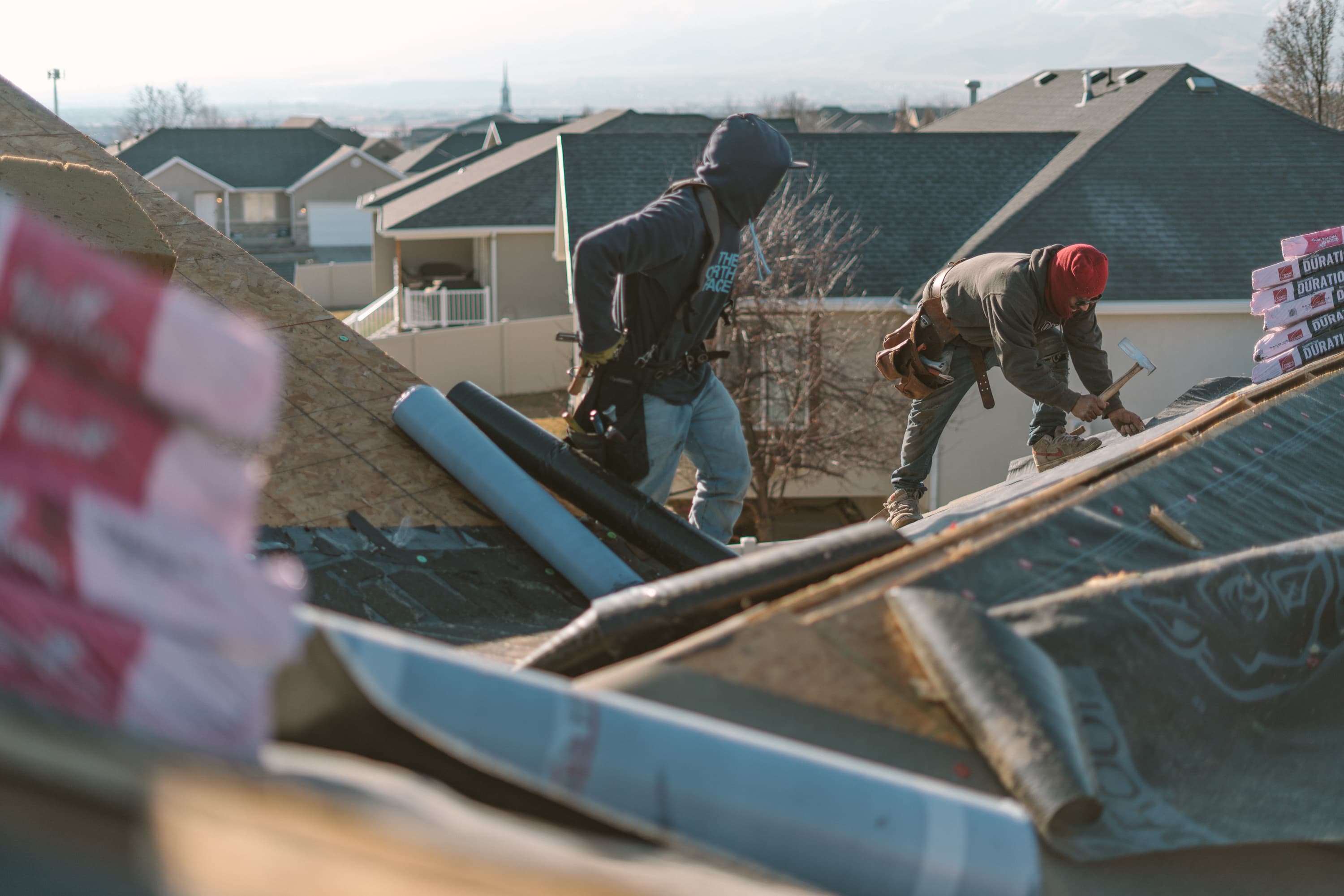
The hard part is doing all of this across several jobs at once while the office keeps full visibility. On the roof, 67% of roofing companies now keep a supervisor or project manager on-site, per the JobNimbus Peak Performance 2026 report, because someone visibly in charge signals professionalism and catches problems early.
Construction management vs. project management: what is the difference?
Project management covers the entire job lifecycle, while construction management focuses on the build itself. Project management runs from the first customer call through final payment. Construction management zeroes in on execution: making sure the work happens correctly, safely, and on schedule.
Why does the construction manager role matter more in 2026?
A tighter labor market makes skilled coordination more valuable than ever. The construction industry needs to attract an estimated 349,000 net new workers in 2026 to meet demand, according to Associated Builders and Contractors. When crews are hard to find, wasted labor hours cost you twice.
The stakes show up on the schedule. In a national survey by the Associated General Contractors of America, 45% of firms said worker shortages caused project delays. A construction manager who keeps crews moving and materials flowing protects your margin directly.
What tools does a construction manager need to run jobs?
The role runs on a single system that connects the schedule, the crew, the materials, and the customer. Peak Performance 2026 data shows most roofers have the front end covered but leave a gap right where jobs actually get managed.
That gap is the opportunity. When your construction manager can manage production from lead to final payment in one place, handoffs stop falling through the cracks. Job Boards show what is next, Workflows keep steps consistent, and Automations send the updates nobody has time to type by hand.
Field adoption is what makes it stick. If the crew can update jobs, photos, and status right from the job site, the office stays in sync without a single "did you get my text?" And with clear reporting and job visibility through Insights, you can spot a bottleneck before it becomes a callback.
How does technology improve construction management?
Technology turns scattered updates into one clear source of truth. Speed and clarity are what homeowners judge you on. 86% of roofers respond to new leads within 12 hours, but the highest-rated companies answer in under 30 minutes, according to Peak Performance 2026. The same discipline applies once the job starts.
When every message, photo, and document lives in one place, the "I never got that update" excuse disappears. Automated progress texts keep homeowners calm, digital approvals cut hours of delay, and photo documentation settles questions before they turn into disputes. Your construction manager spends less time chasing information and more time keeping jobs on track.
Because in roofing, how you manage your people and your process is how you manage your business. The right role, backed by the right system, is what lets you take on more work without losing control. That is how contractors grow from their first million to their next one hundred, without the chaos.

Frequently Asked Questions
A construction manager plans, coordinates, budgets, and supervises a project from start to finish. In roofing, that means owning the schedule, keeping crews and materials in sync, enforcing quality and safety, and keeping the homeowner updated at every stage of the job.
Project management covers the full job lifecycle, from the first customer call through final payment. Construction management focuses on the build itself: making sure the work gets done correctly, safely, and on schedule. In a small shop, one person often handles both roles, then splits them as the business grows.
The median annual pay for construction managers was $106,980 in 2024, according to the U.S. Bureau of Labor Statistics. The lowest 10% earned under $65,160 and the highest 10% earned more than $176,990. Pay varies by project type, region, and experience.
Strong construction managers pair field know-how with organization and communication. The core skills are scheduling, budgeting, quality and safety oversight, materials coordination, and clear communication with both crews and customers. Comfort with software that ties all of that together now matters just as much as time on the roof.
Most construction managers rely on a CRM and project management platform to run the schedule, coordinate crews and materials, and keep customers updated in one place. Peak Performance 2026 data shows CRM use among roofers sits at 79%, but scheduling and project management tools lag well behind, which is exactly where a connected system pays off.

Blog / Guide Title CTA
Once you've created a strong Linkedin profile, you can leverage it as part of your broader marketing strategy. Use your Linkedin to share content, join industry groups, and network with others in the contracting space.
If you're looking for additional marketing support, consider partnering with JobNimbus Marketing to maximize your business growth. Schedule a call with our team to learn how to boost your marketing efforts today.
Blog / Guide Title CTA
Once you've created a strong Linkedin profile, you can leverage it as part of your broader marketing strategy. Use your Linkedin to share content, join industry groups, and network with others in the contracting space.
If you're looking for additional marketing support, consider partnering with JobNimbus Marketing to maximize your business growth. Schedule a call with our team to learn how to boost your marketing efforts today.
Download Our Free Tips for Recession-Proofing Your Company
We’ll show you five simple things you can do to help your business survive a recession.